
How to lower the action on a Dobro-style guitar
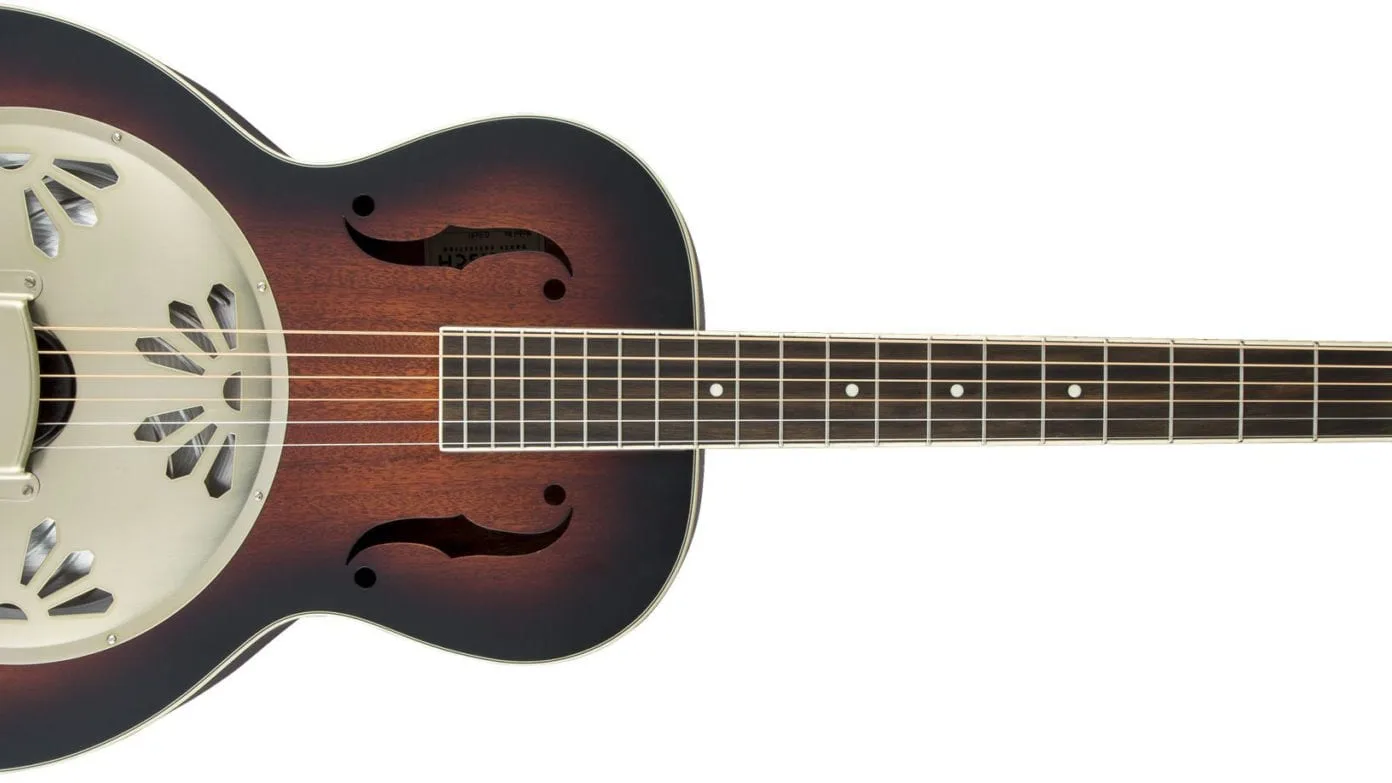
In this post I'm going to document the whole process of lowering the action on a Gretsch resonator guitar. This kind of guitar is usually meant to be played with a slide or bottleneck, but in this case the customer is clear that he's not going to play it with that technique, but like a normal guitar. I measured the string height at the twelfth fret and it's 2.6 mm. The customer wants it at 1.8 mm.
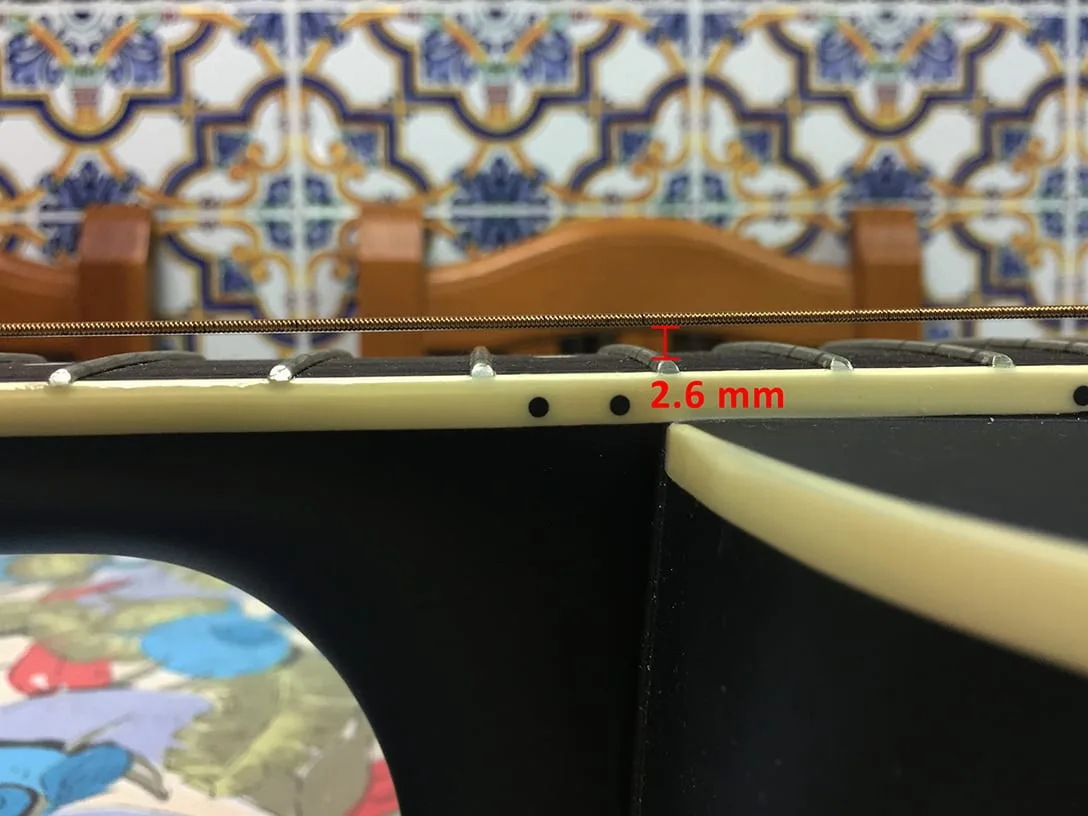
 It's not a complicated job, but it is tedious and, above all, very delicate and risky, because the pickup is glued between a piece of maple and a piece of ebony. There's a high chance it could come loose, and it's a very expensive pickup, so you have to take every possible precaution.
The first thing is to remove the resonator cover and the tailpiece too. To do this we slacken the strings with the tuners to avoid any tension. Then we remove all the screws from both the resonator cover and the tailpiece.
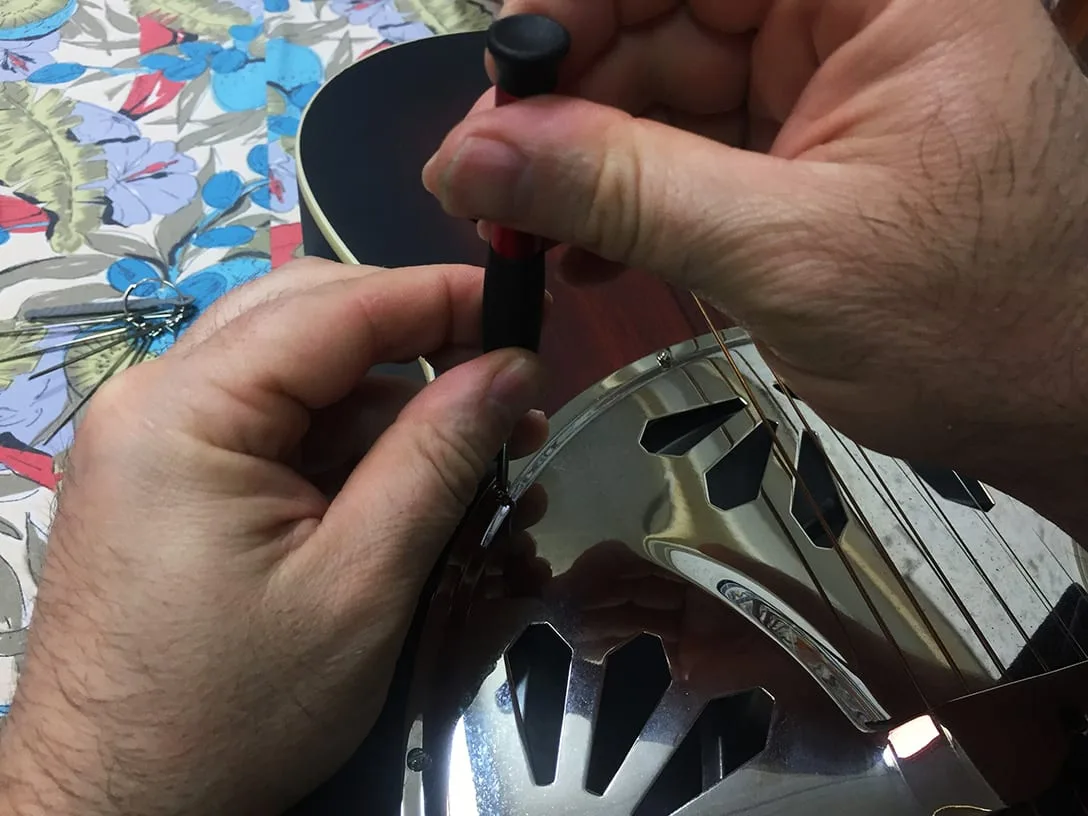
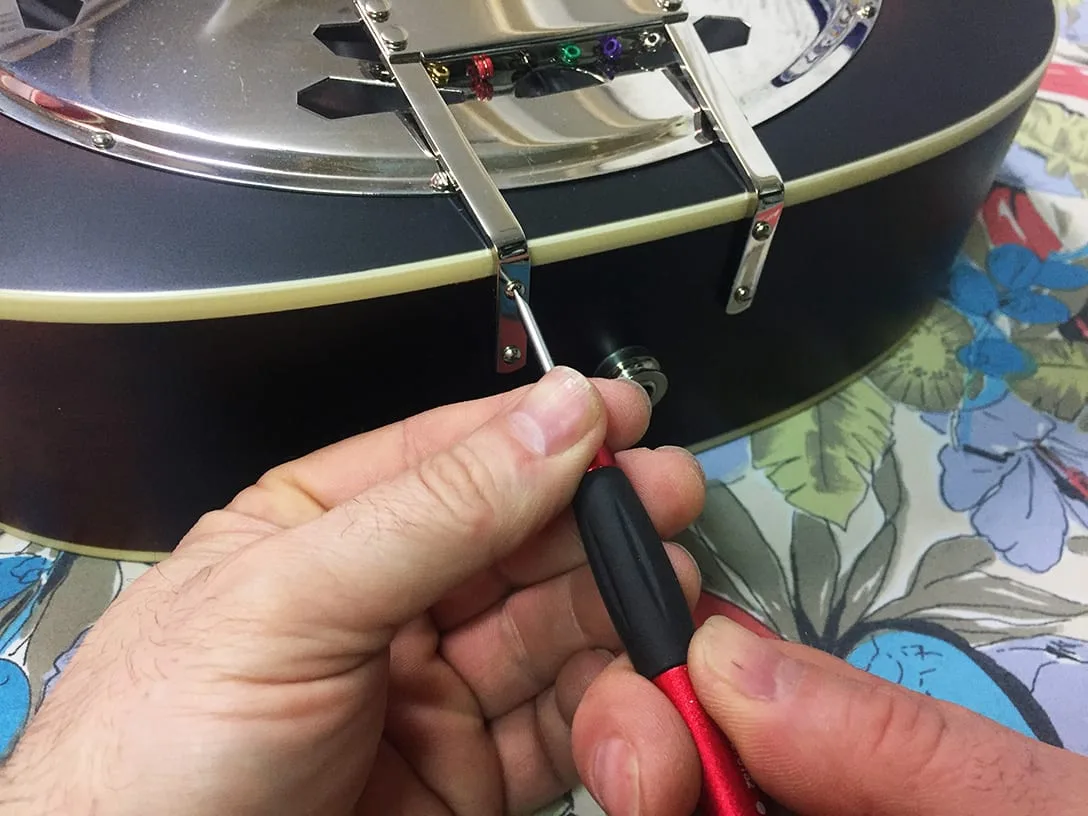
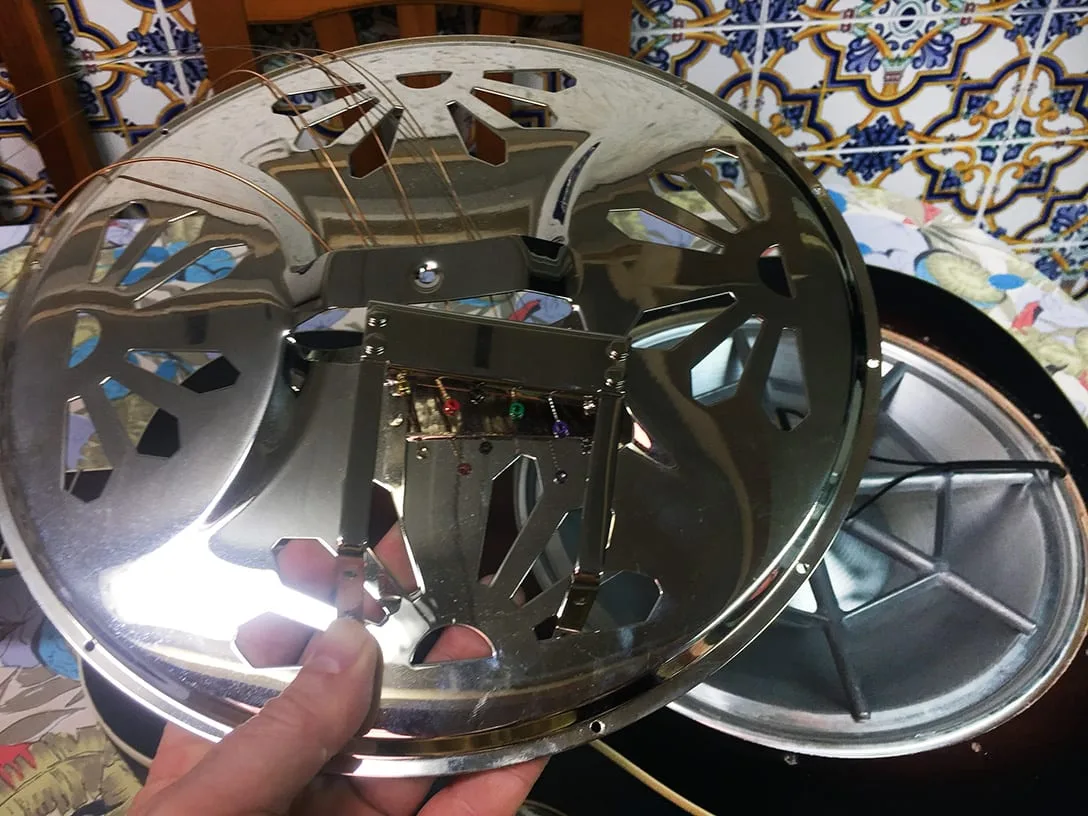
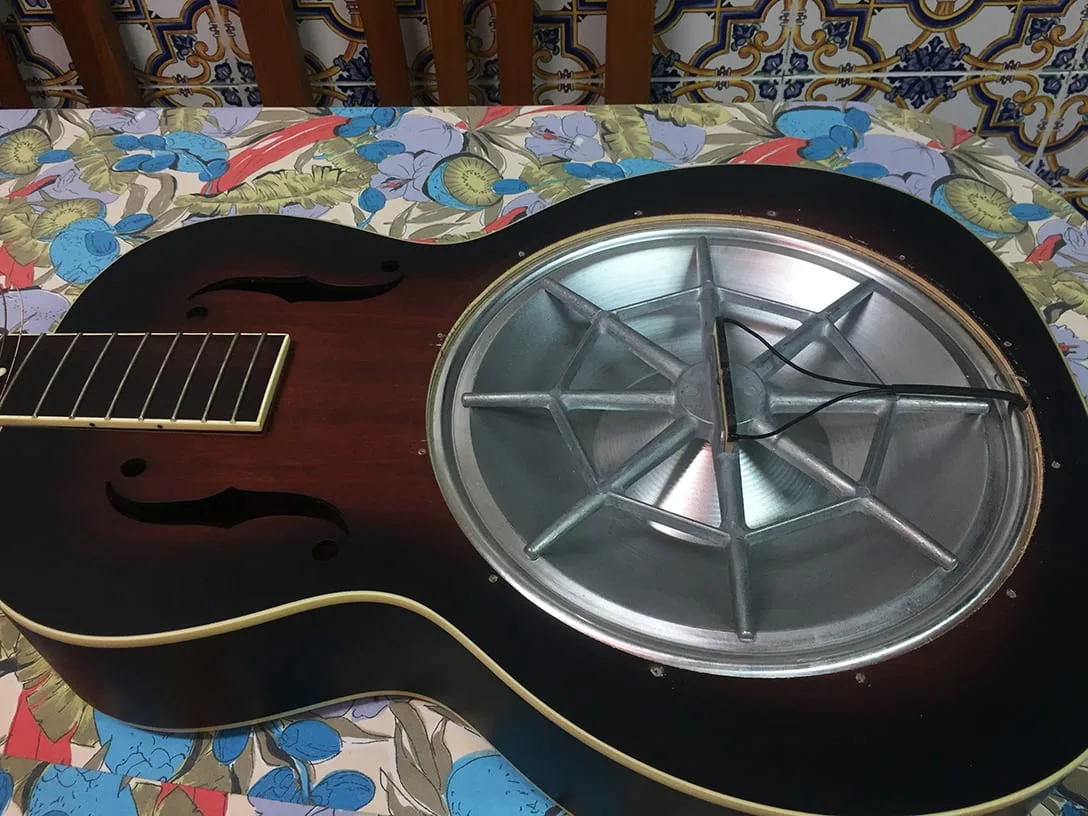
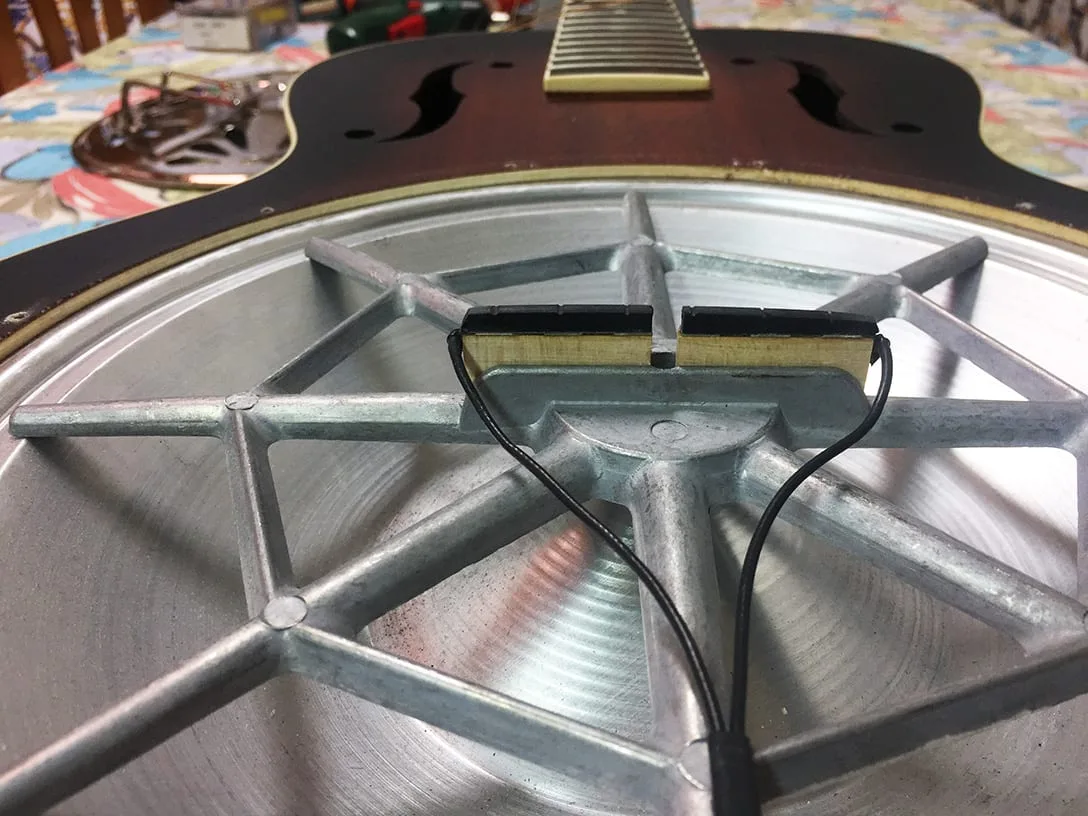
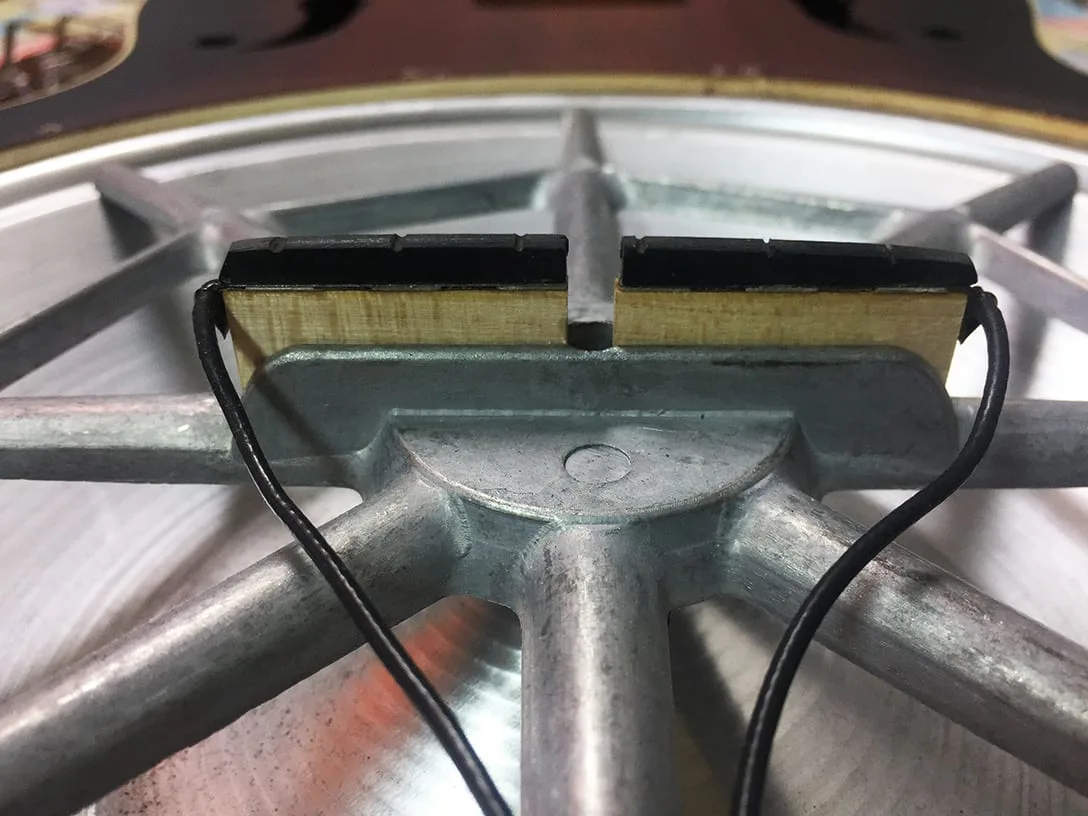 We get to the spider, the part the two saddles sit on, with their two corresponding pickups.
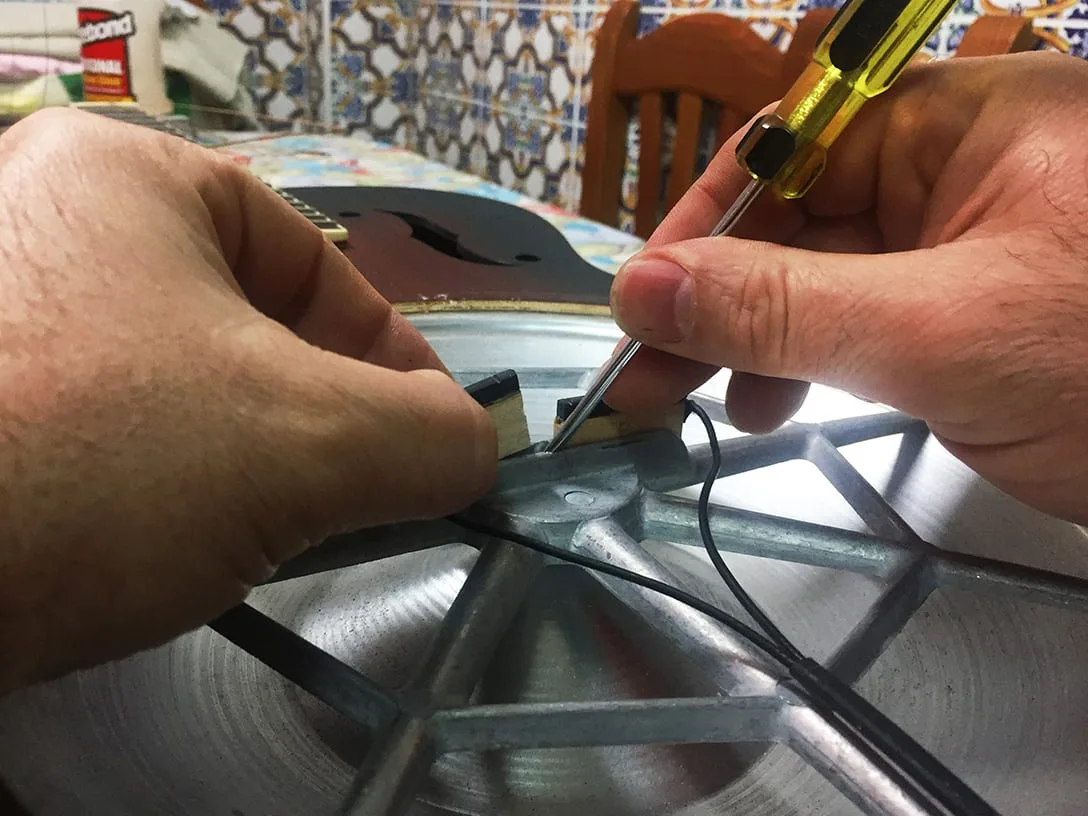
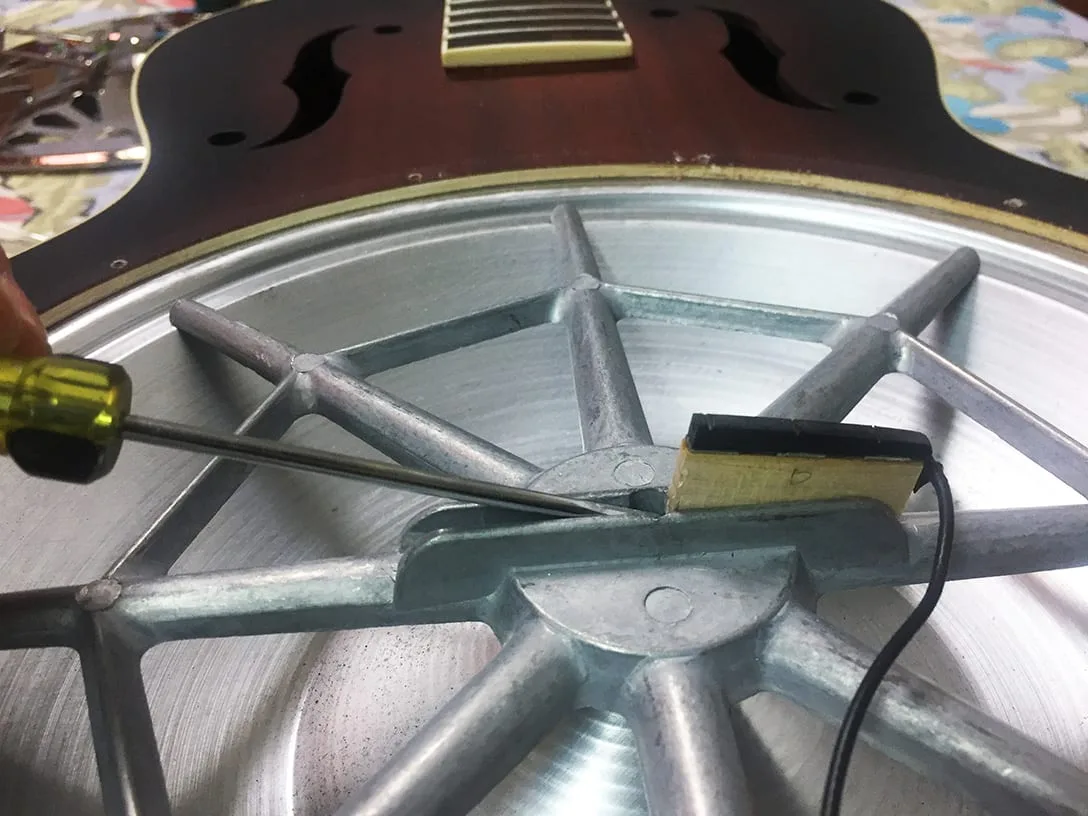
Now I take the saddles out of the spider with a small screwdriver.
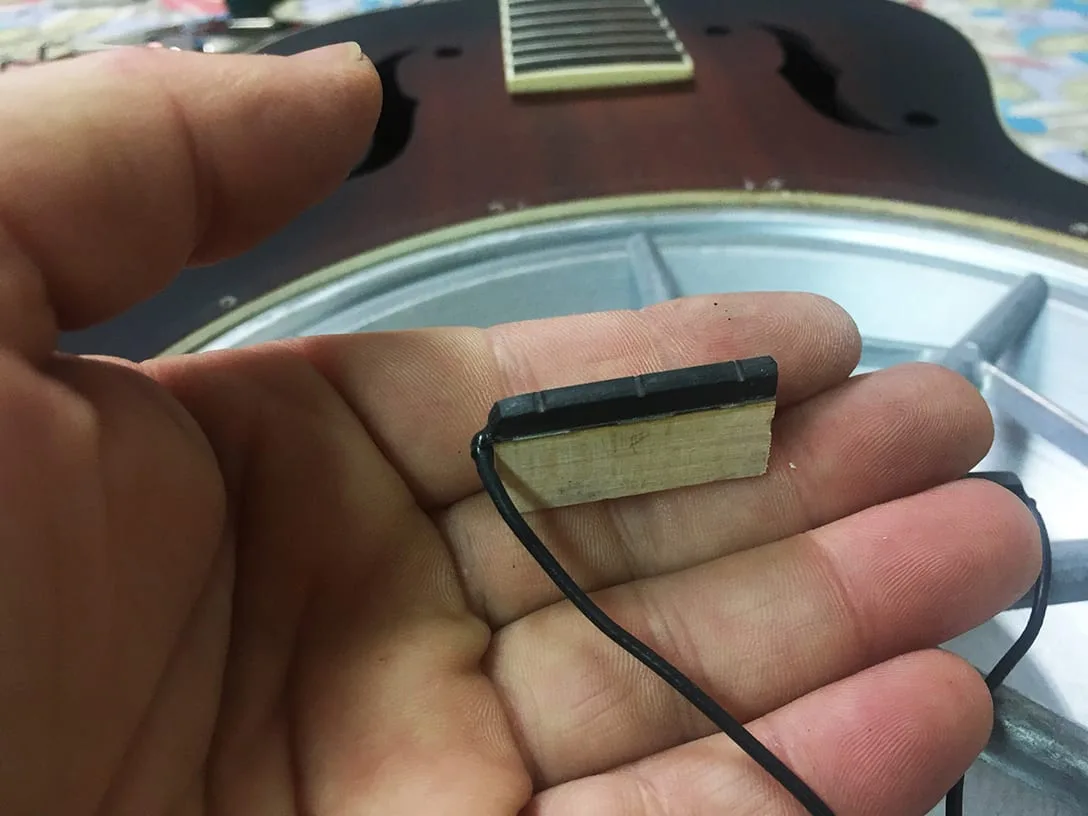
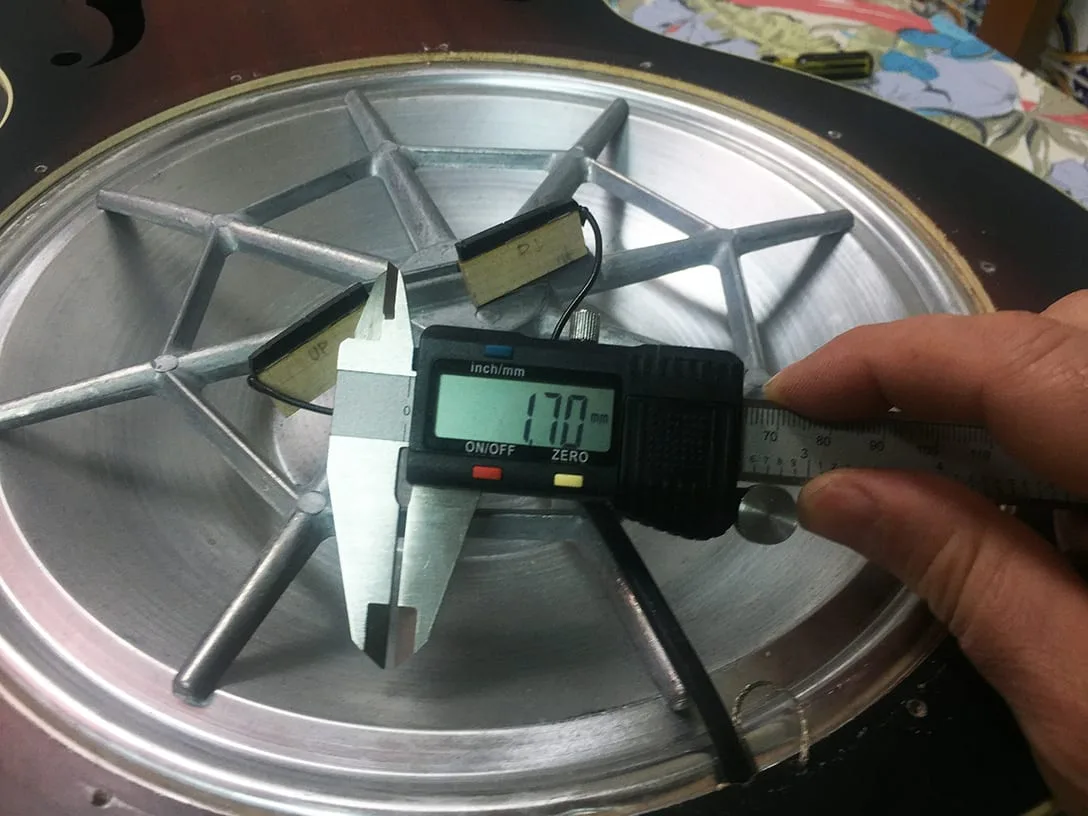
 Beforehand I'd worked out in AutoCAD how many mm the saddle had to be lowered to get the 1.8 mm action the customer wants. The calculations tell us we have to take 1.7 mm off the saddle. Knowing that, we're well on our way.
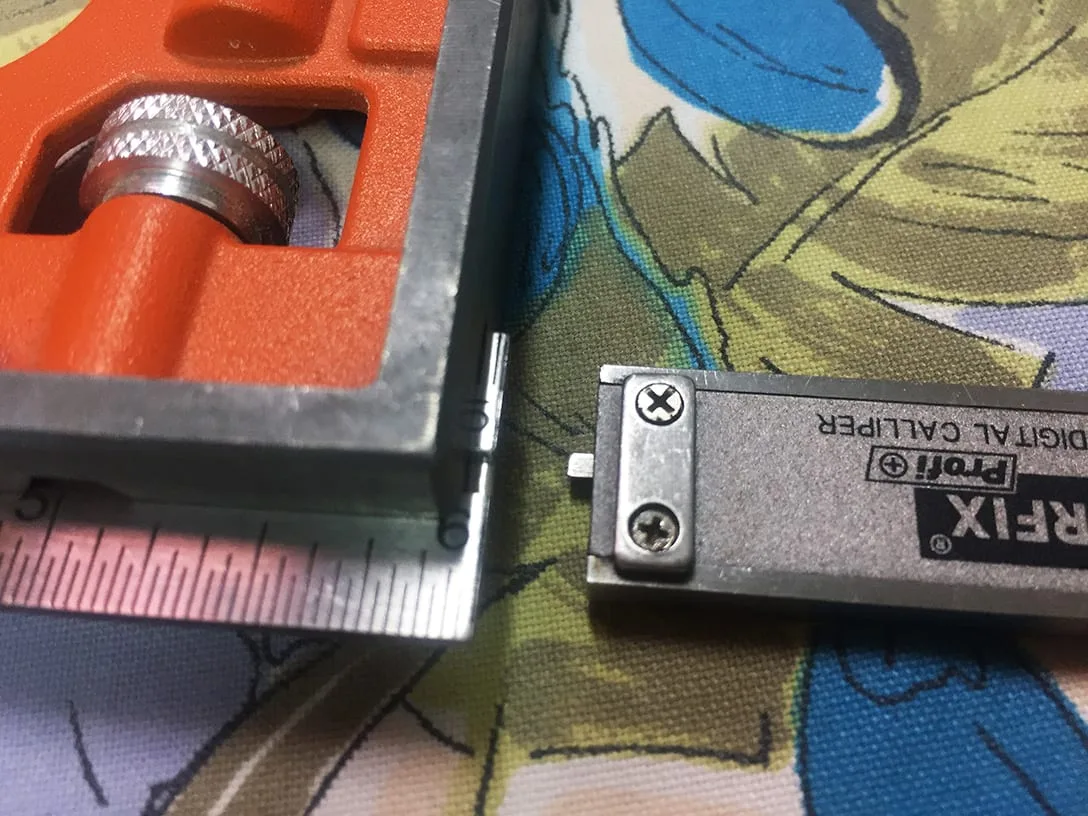
I open the calliper to 1.7 mm and lock it. Now I transfer that measurement to the try square so I can mark the maple saddles with a mechanical pencil and have the exact reference for where to remove material. I'm going to do it with the Dremel and a sanding drum.
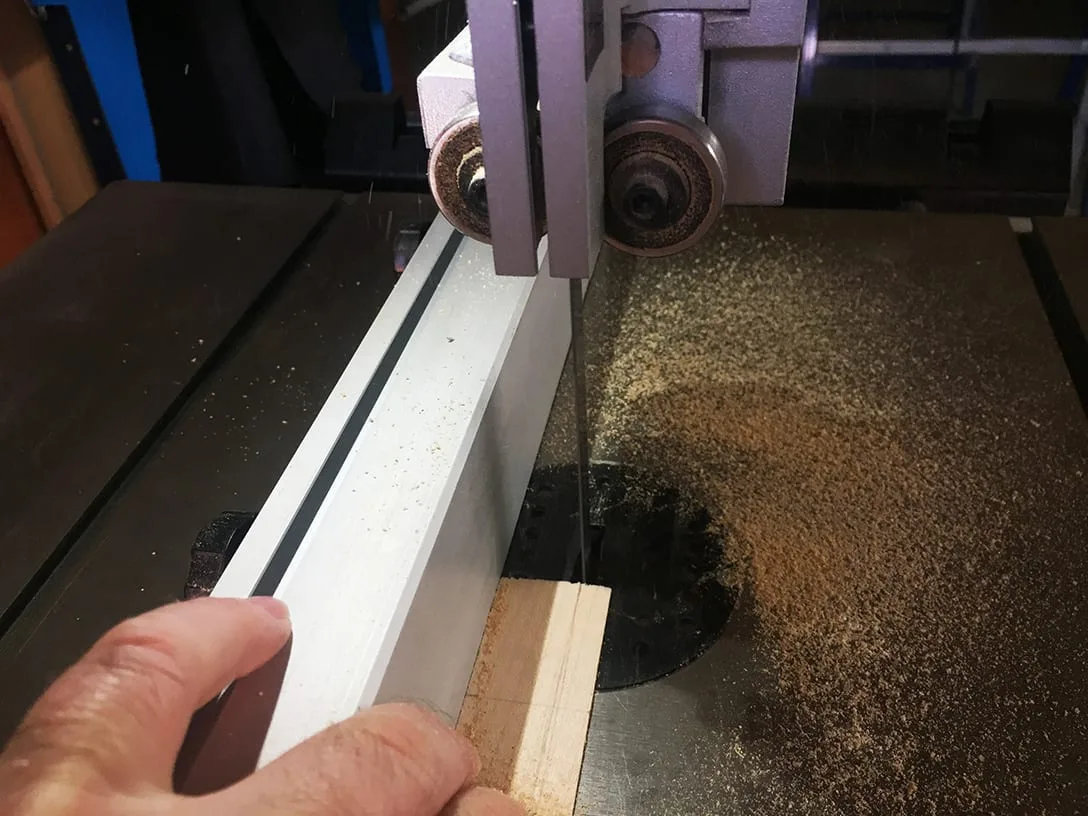
 Before going on, I'm going to cut a strip of maple about 1 mm thick on the band saw, and then we'll cut four pieces from it to act as reinforcements, so the pickups don't get damaged and we can work completely safely.
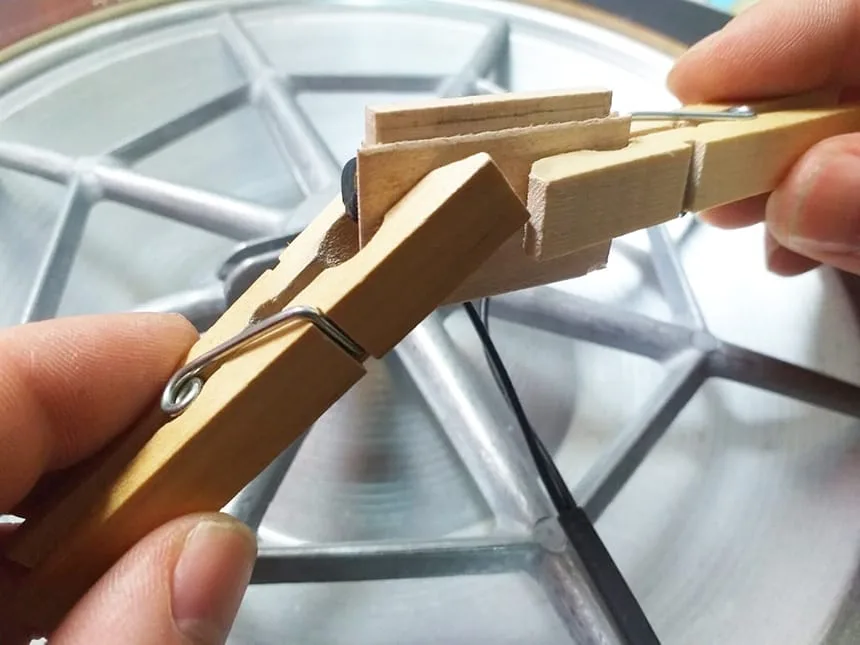
 We hold the pieces with clothes pegs and protect the guitar with a cotton cloth.
 Now comes the fun part. Everything's ready and safe so we can sand off the excess with the Dremel
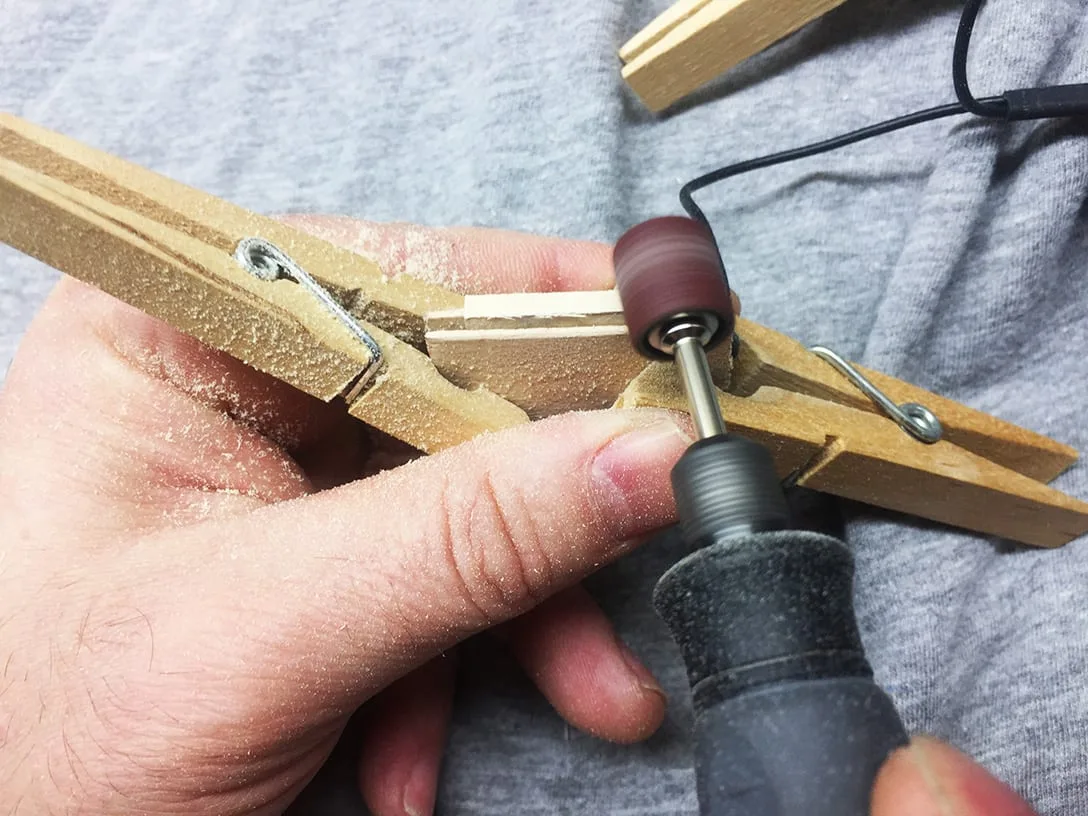 Although in this case it's not too important, because the pickup is glued in sandwich style and not under the base of the saddle as on acoustic guitars, I want to make sure the cut is completely square to the saddle. I repeat, it's not critical in this case, but if we're going to do things, we do them right... That's why I came up with a system that lets me fit a file in a holder at 90º.
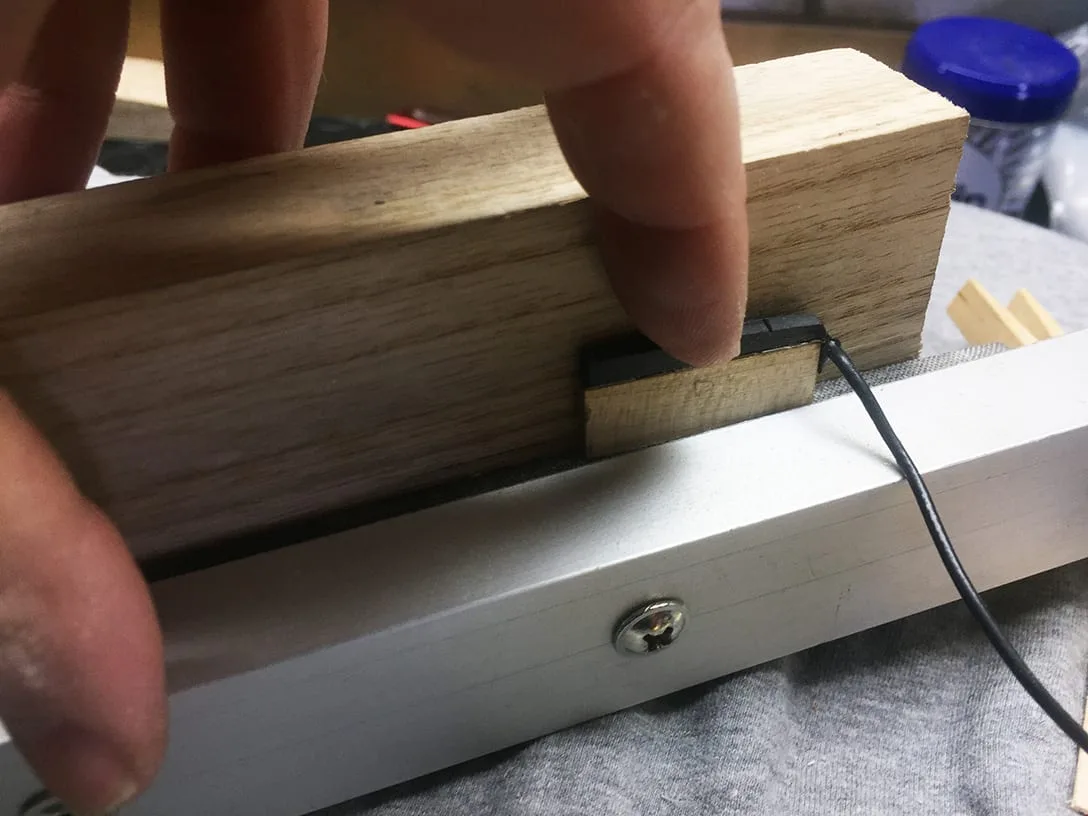
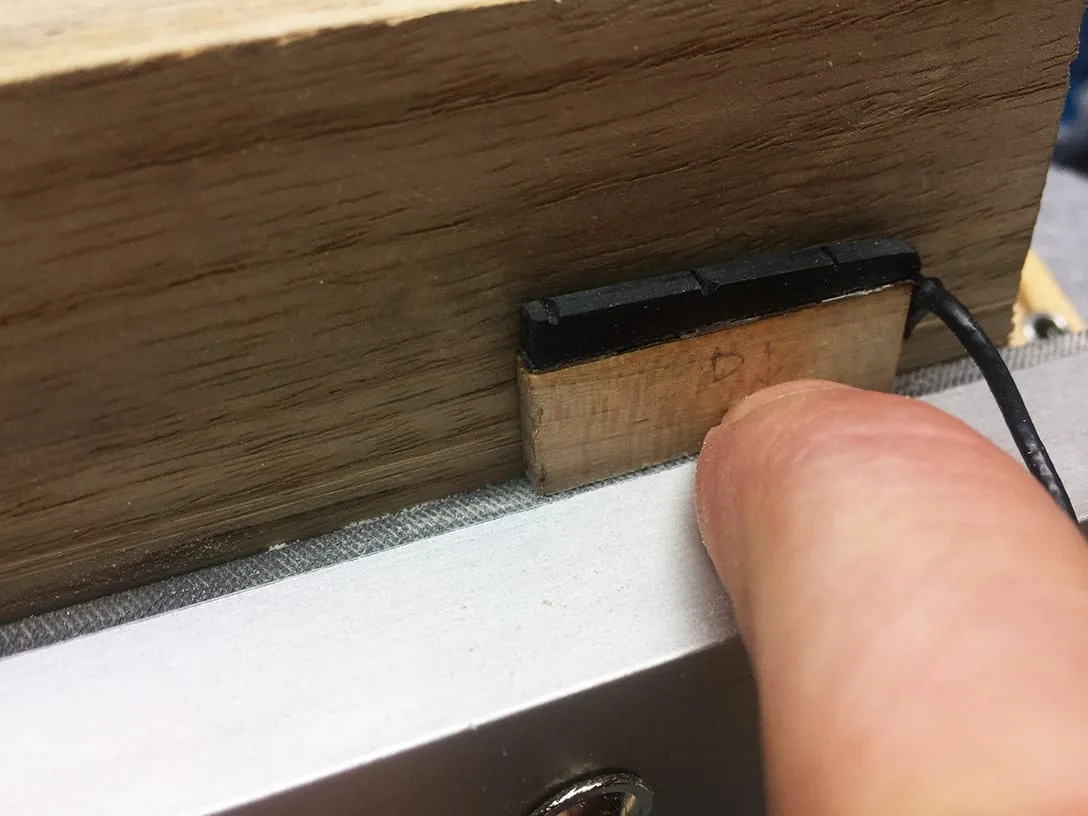 Once I've done this with both maple saddles, I put them back in place on the spider and, with a piece of veneered board with sandpaper stuck on with double-sided tape, I make sure both saddles are at the same height and with the same radius.
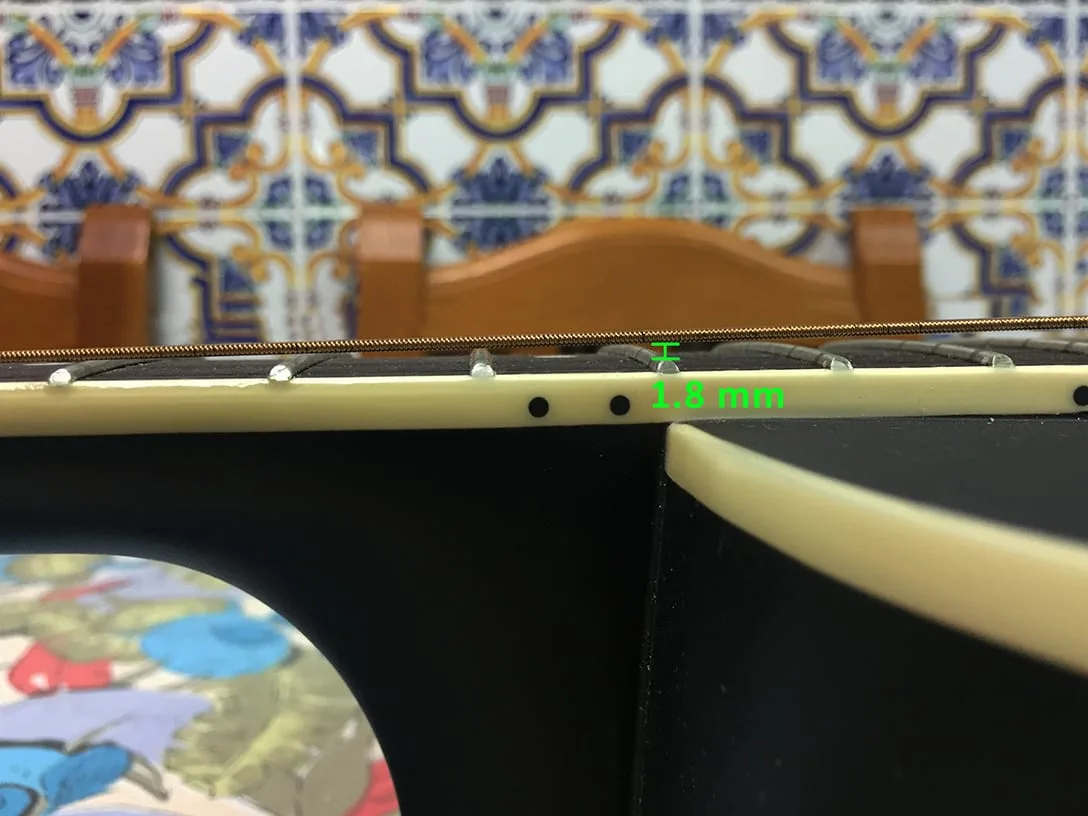
The operation was a success, so all that's left is to refit the resonator cover and the tailpiece. We tune it properly and measure again with the feeler gauges at the 12th fret. If everything has gone as expected, we should get 1.8 mm.
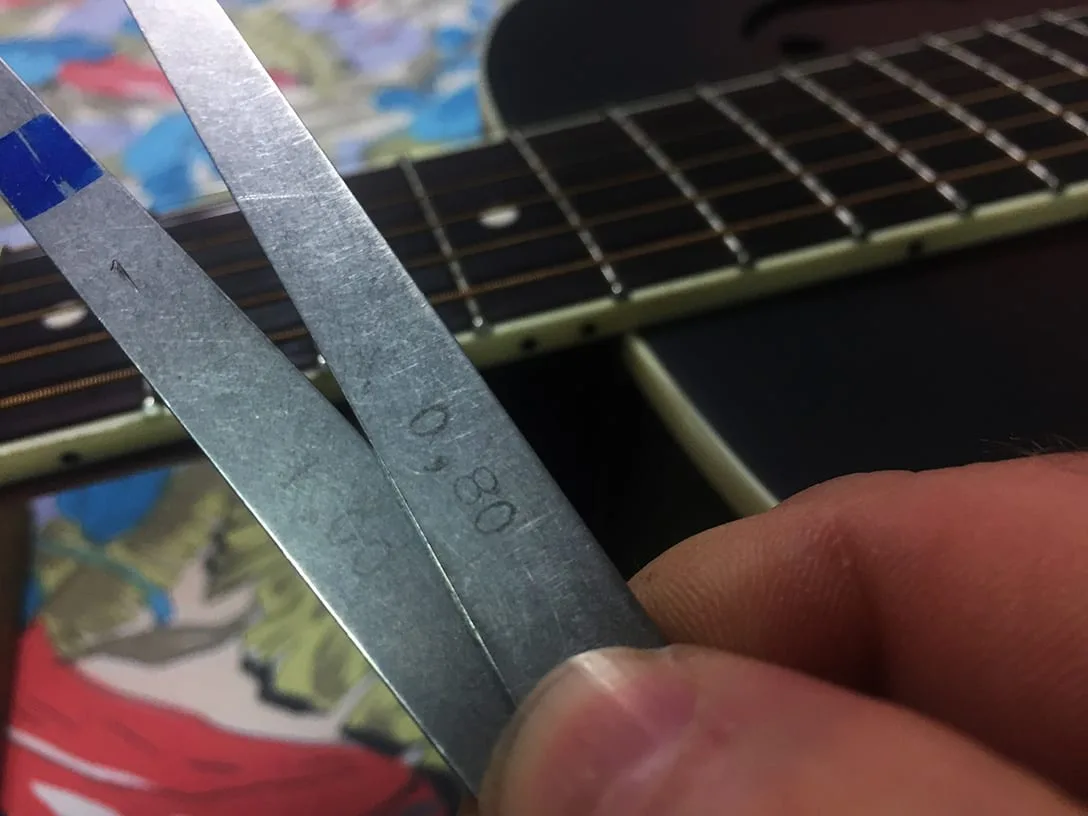
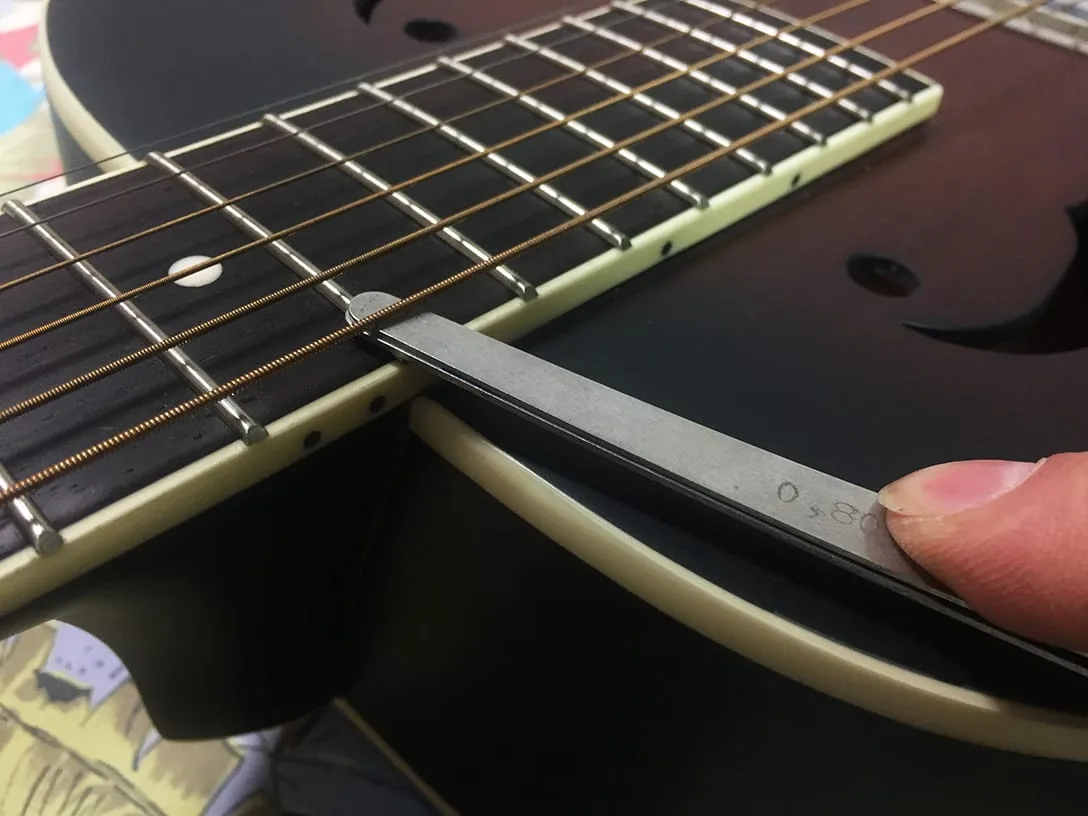 Ta-daaa, 1.8 millimetres spot on!!!
I hope you found the post interesting. As always, you can comment on anything you like. Best regards and see you next time. Have a great weekend!
Comments (0)
No comments yet.