
Impossible action setup on a 12-string acoustic guitar!
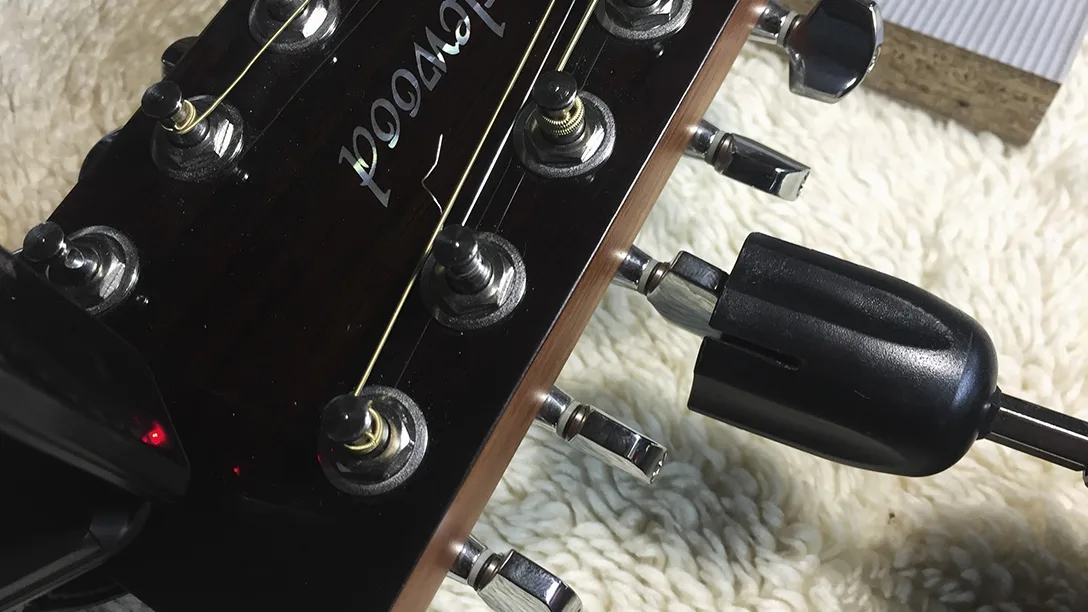
Sometimes adjusting the action on an acoustic guitar can be more or less tedious. That's the case with this 12-string acoustic guitar. The bone saddle already has a low profile, so you can't take much material off the bottom. On the other hand, the bridge (rosewood) is quite tall, so the only option left to bring down this guitar's sky-high action is to rout the slot the saddle sits in. When you do that, the saddle ends up almost completely buried in the slot, so we also have to lower the rosewood of the bridge.
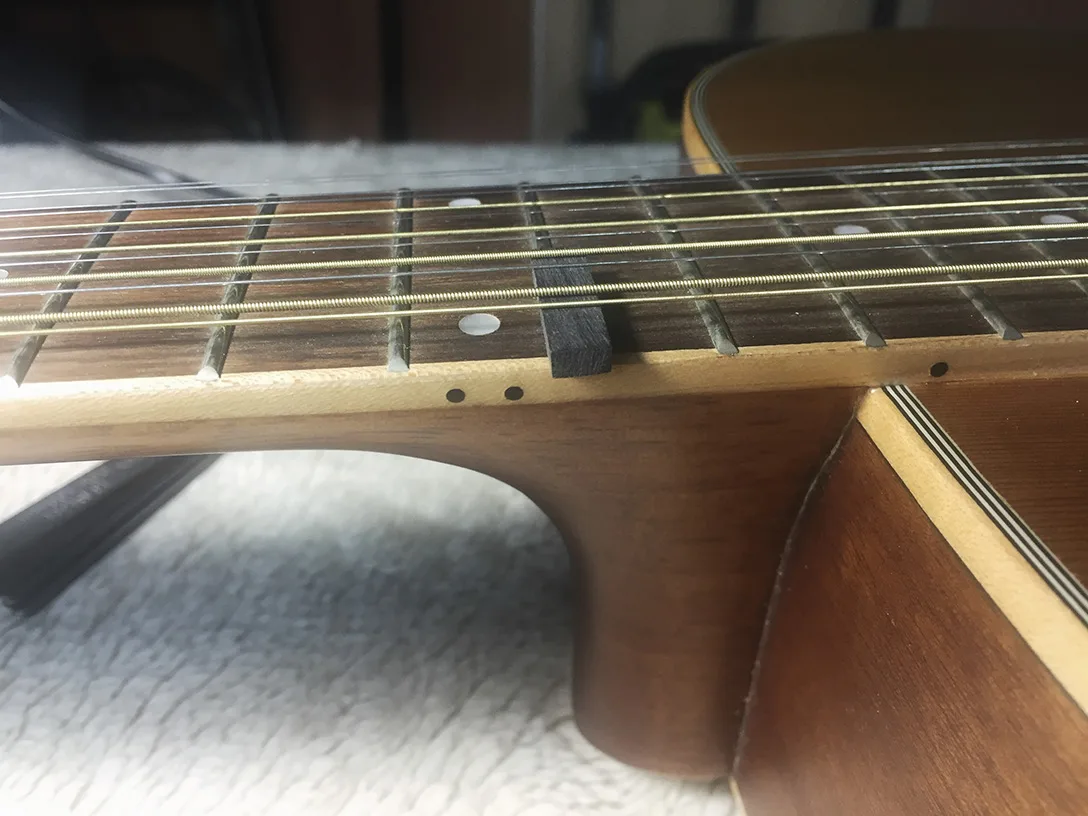
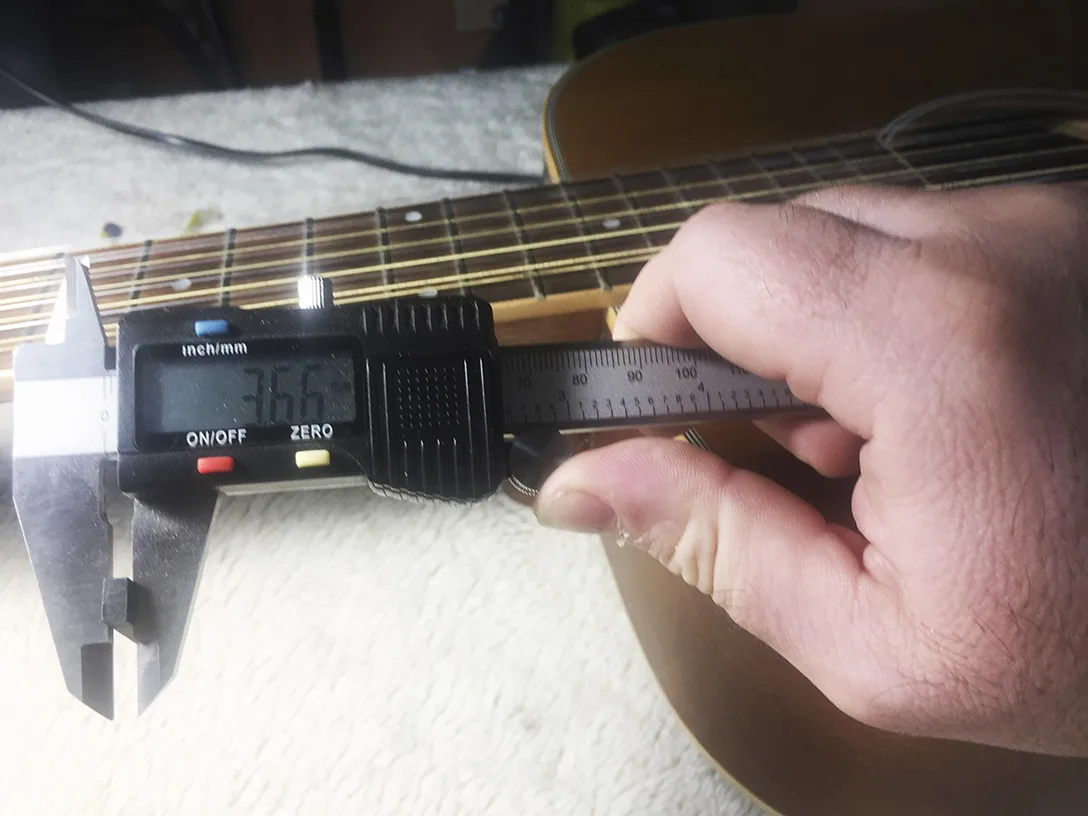
I set the truss rod relief correctly so I can measure the string height at the 12th fret accurately. To do this I slip a calibrated piece of plastic I had in the workshop between the fret and the underside of the string. I measure it with the calliper and it gives me a height of 3.66 mm, an enormous height that makes the guitar almost impossible to play.
By the way, let me mention that I'm a guitar luthier and I invite you to keep browsing my website to get to know me a bit better. Basically I devote my life to custom guitars. I hope you enjoy reading.
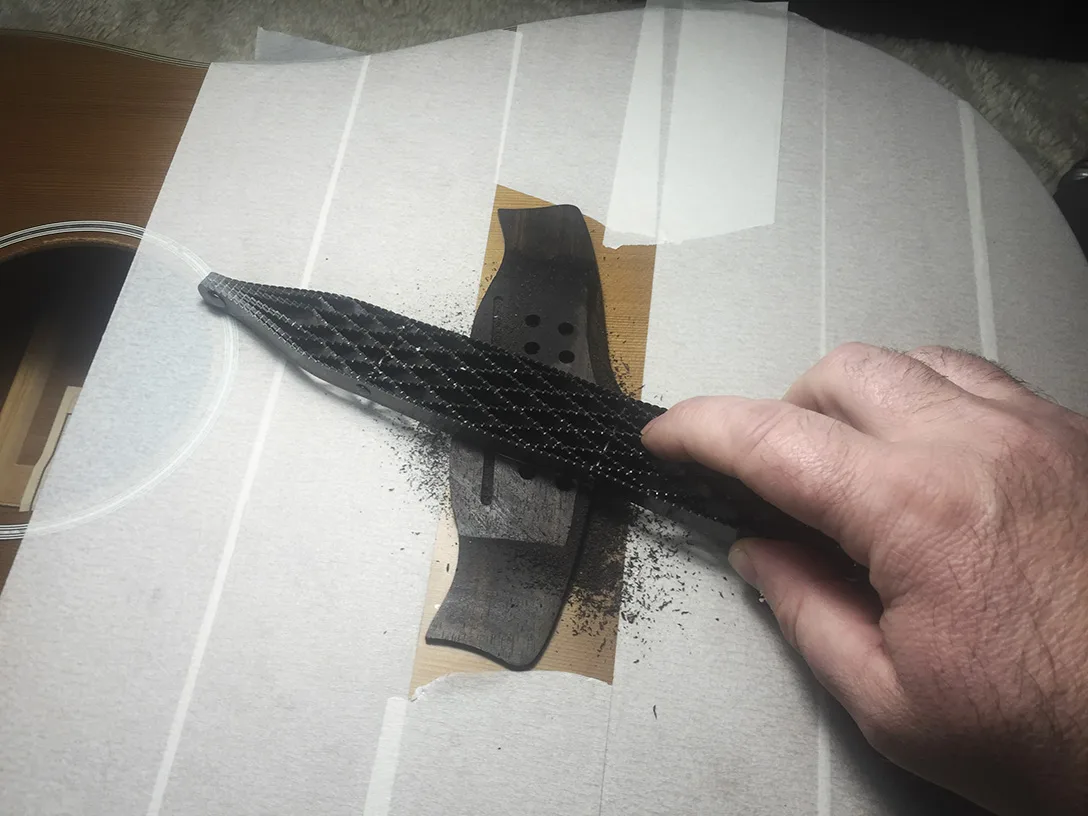
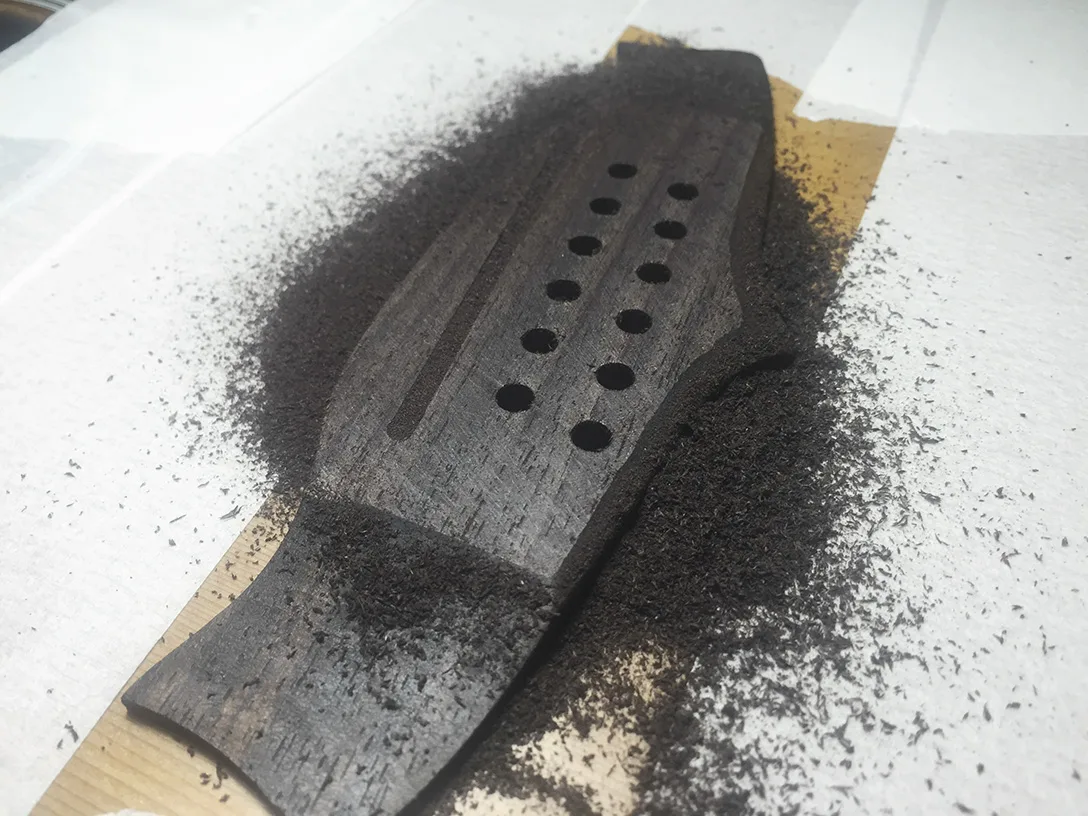
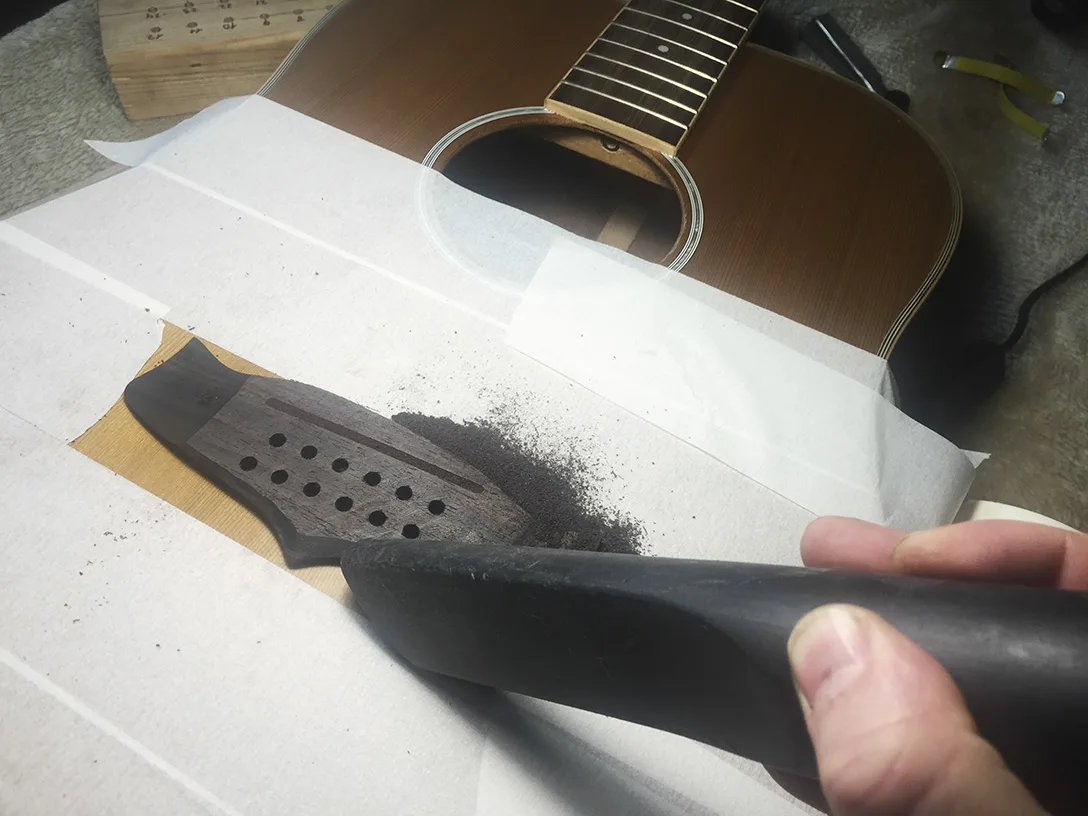
Step 1. Removing material from the bridge to lower it by about 1 mm.
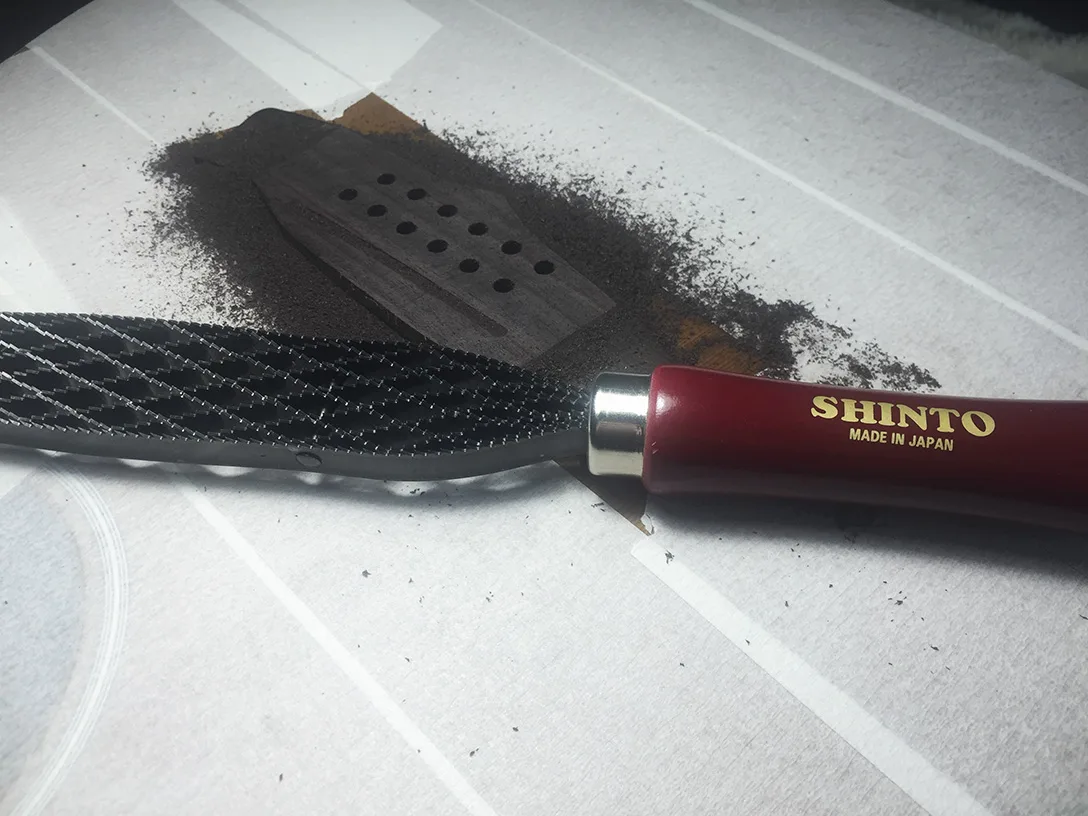
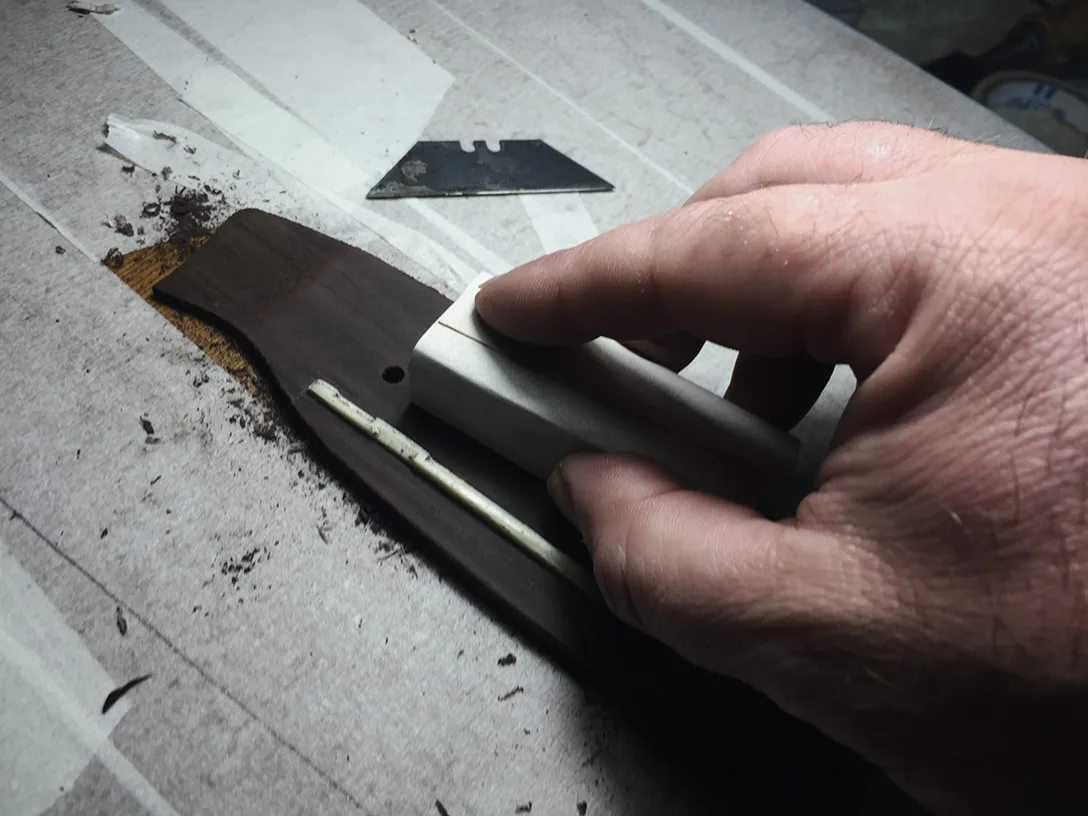
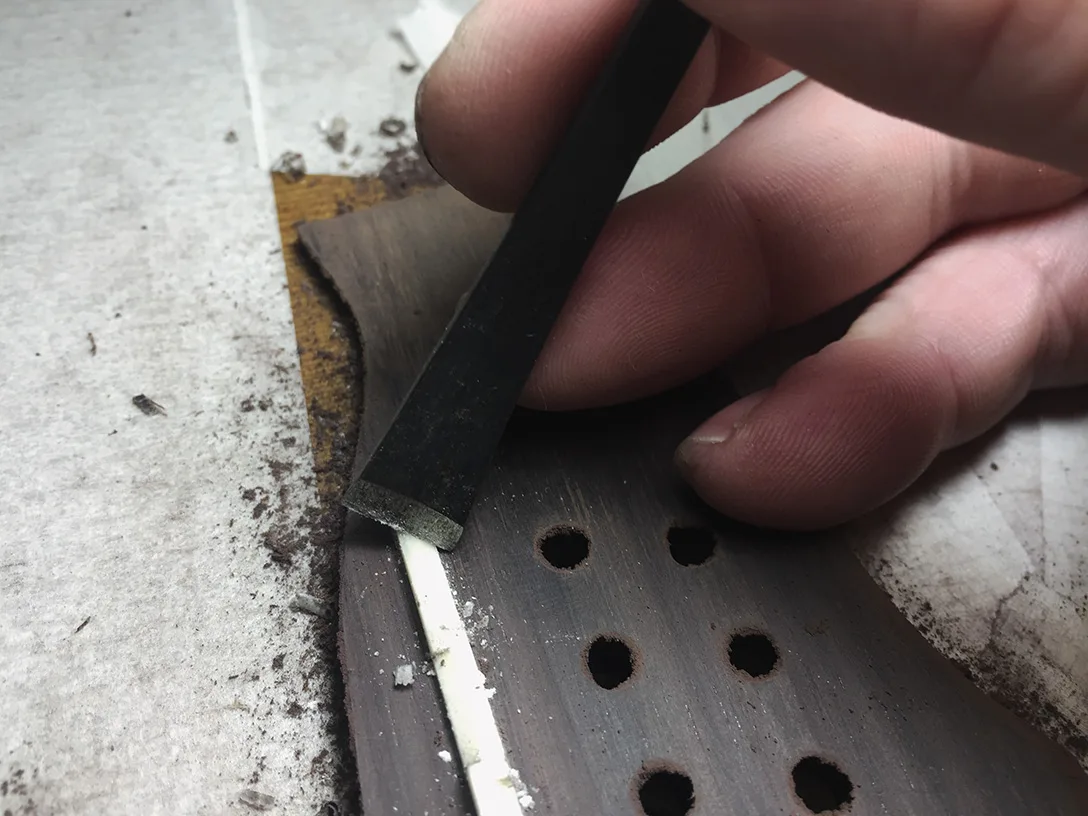
For this I had two options: use the router, or remove wood with a rasp. Luckily I have a Japanese rasp with thousands of big teeth on one side to remove lots of wood, and small teeth on the other side, which also remove quite a lot of wood but leave the surface with very few scratches, almost ready to sand.
Step 2. Deepening the saddle slot.
We need to lower the slot by about 1.6 mm. For this I use the Dremel mounted on a stainless steel base I built some time ago. The problem is guiding the router so it cuts the slot with the same angle and length it already has. I have no choice but to make a jig for this.
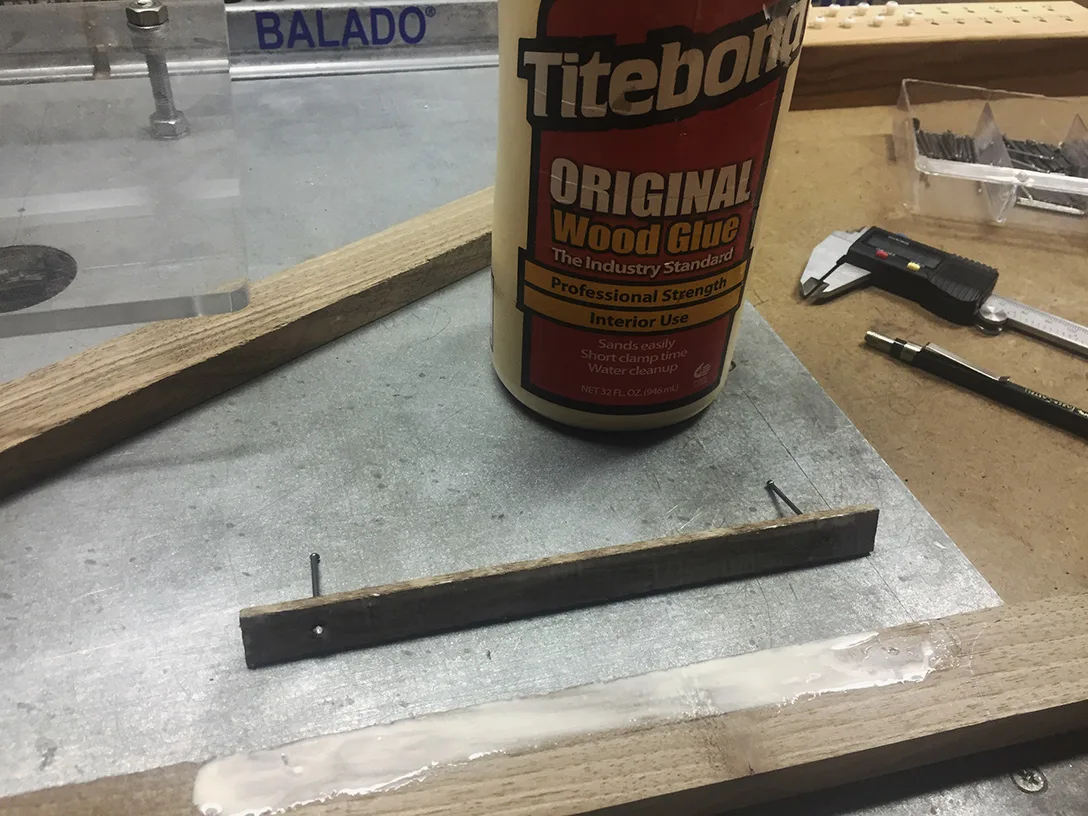
Since the router base is 4 mm steel, I cut a strip of the same thickness on the band saw and glue it onto a walnut strip I had in the workshop. Then I glue on top another piece of wood left over from cutting the strip. The idea is to make a kind of rail for the router base to fit into, so it can follow the line of the bridge with total precision. Here are some photos of how I made the jig:
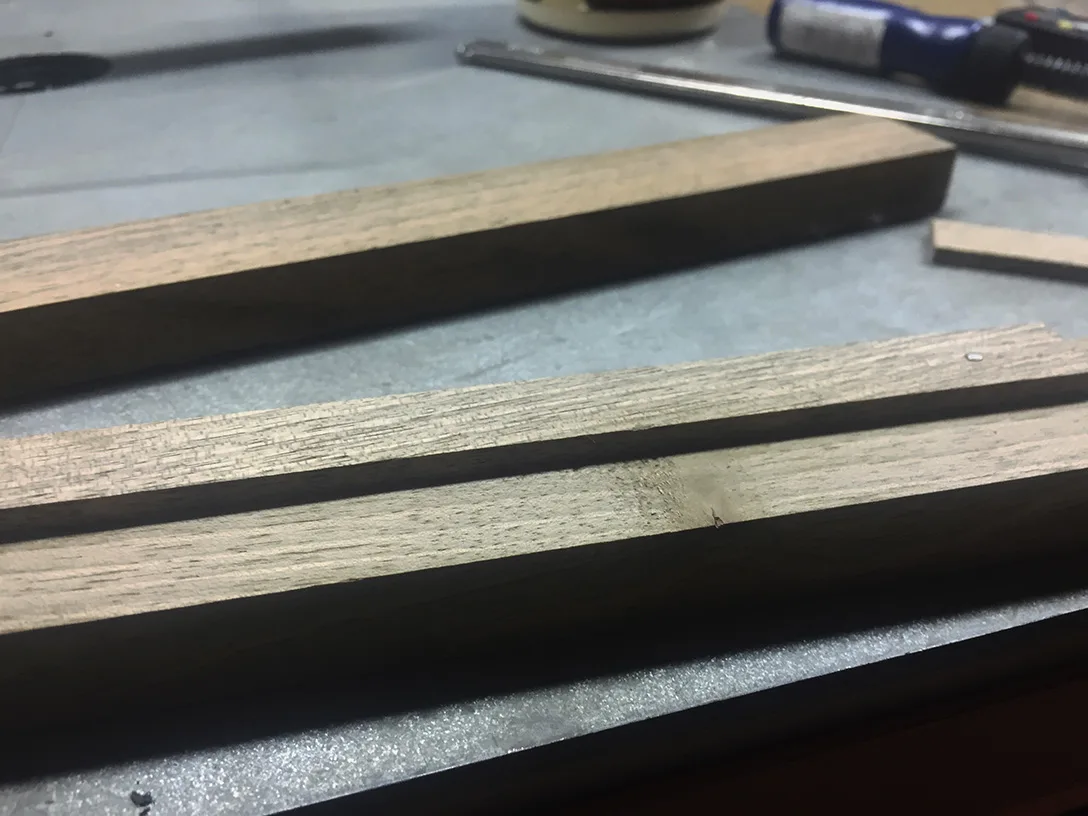
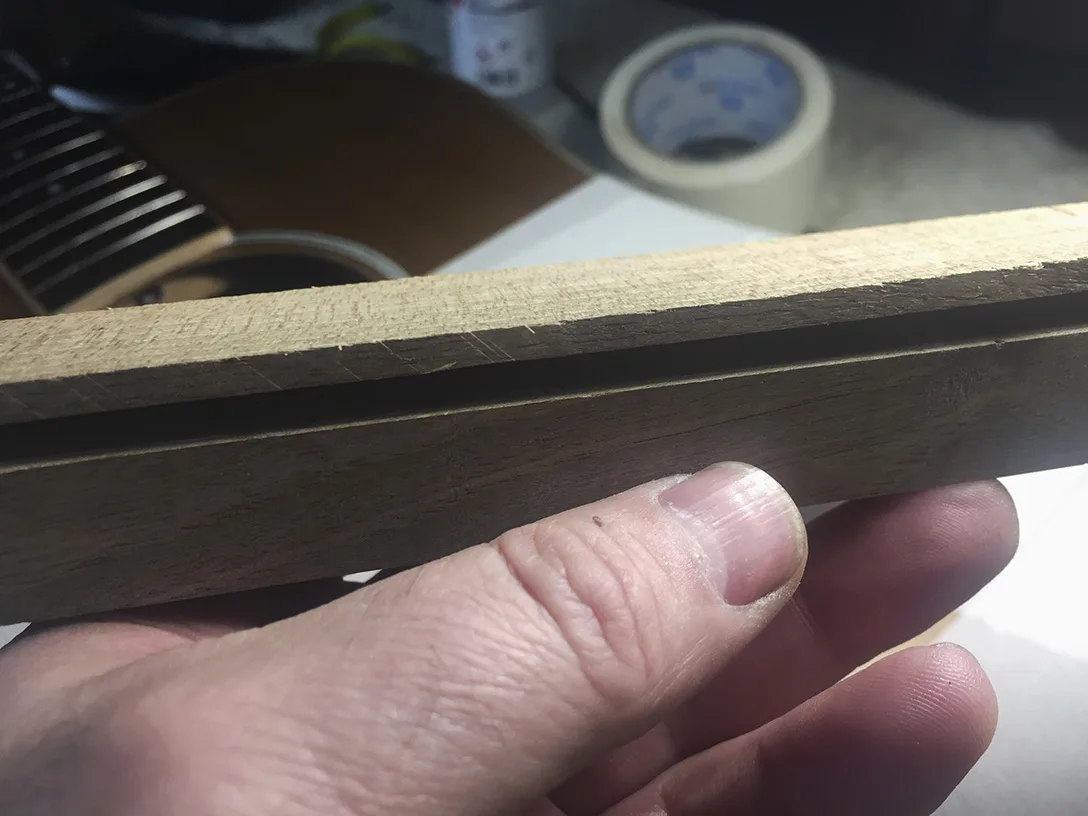
I clamp the guide to the guitar with two small clamps, parallel to the slot we want to modify
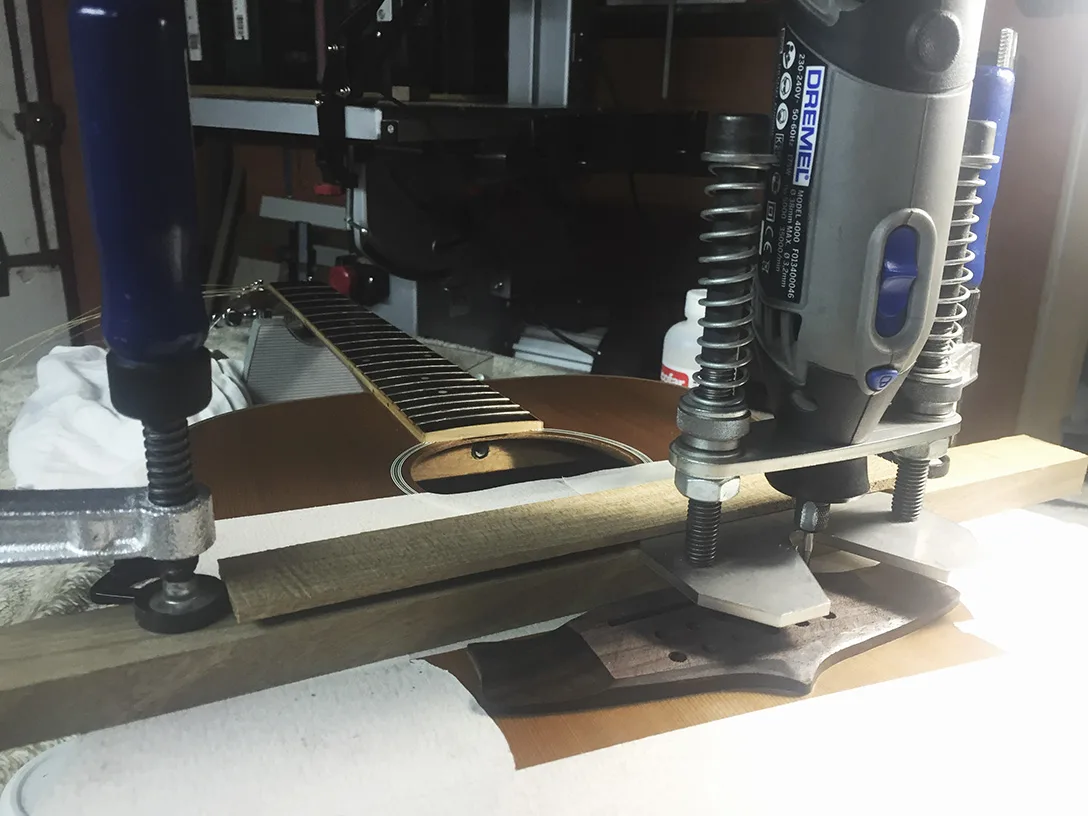
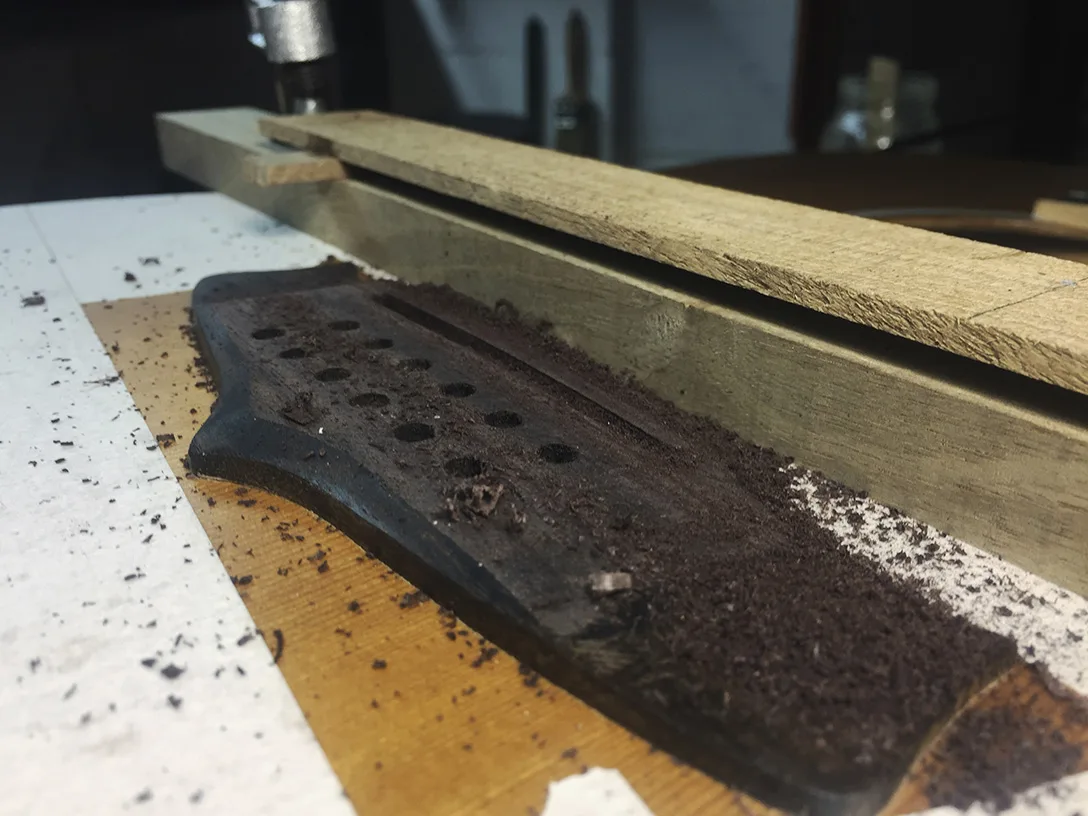
I glue two wooden stops on the left and right with Loctite so I don't overshoot at the start and end of the slot...
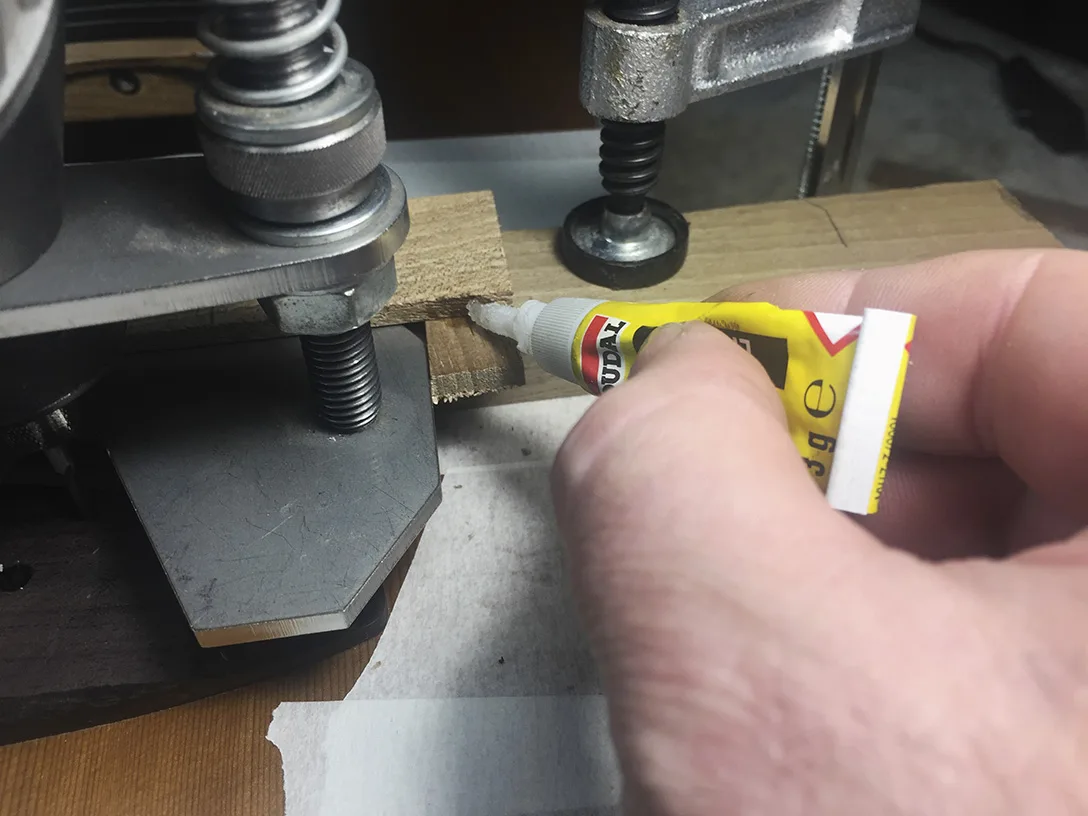
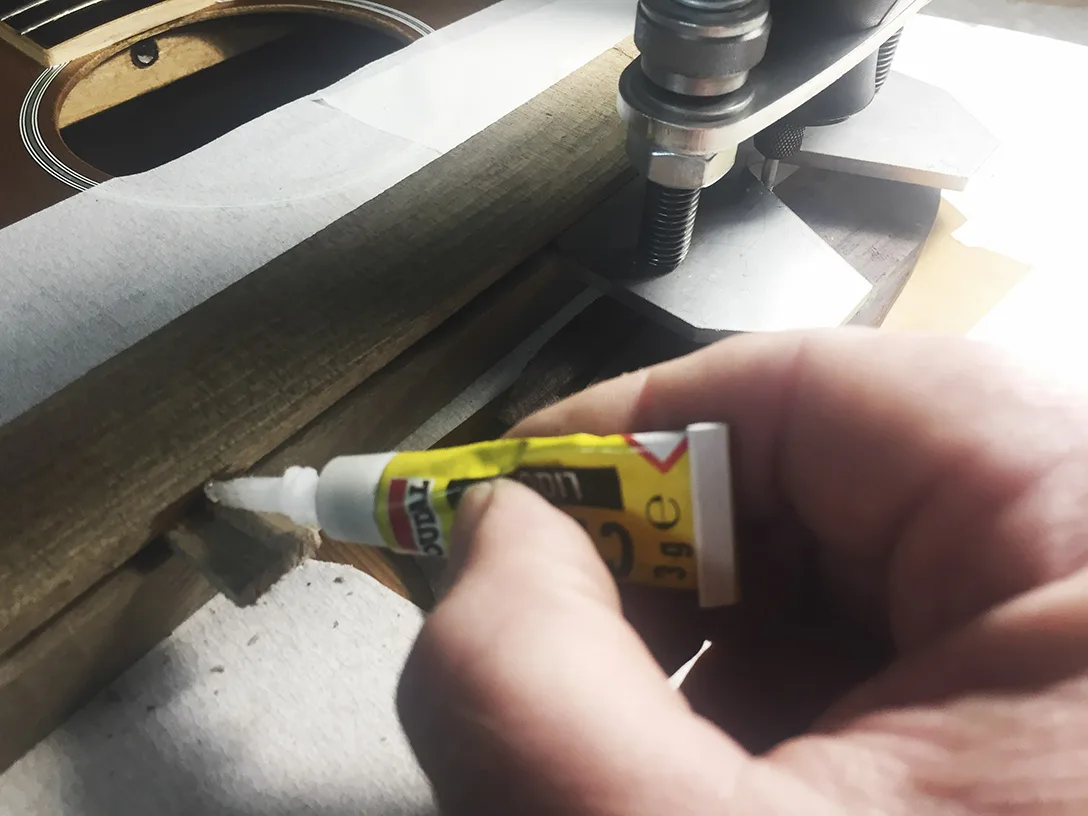
Once everything is ready and checked, I slide the router along the wooden rail I've made. To know exactly how much to go down, I use two feeler gauges that add up to 1.5 mm, which is what we need to lower it. I place the gauge between the bracket that holds the Dremel and the nut.
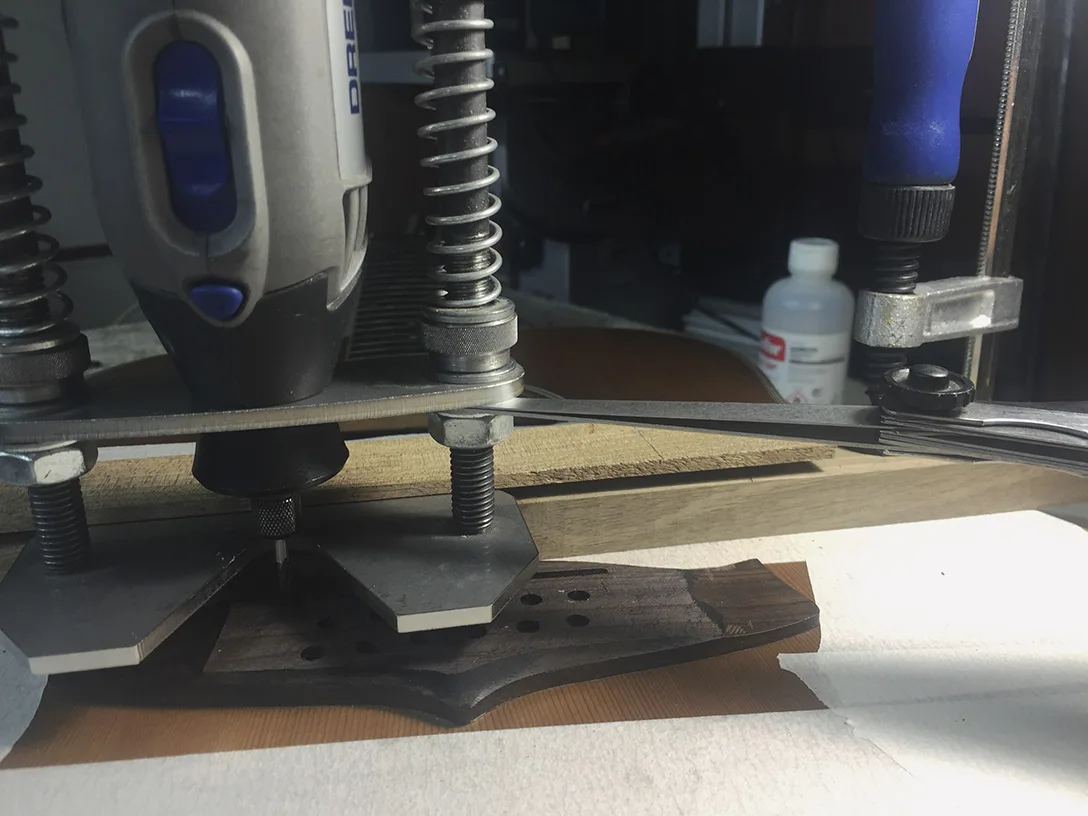
Now we know we have to wind down the knurled nut until it stops against the bottom washer. If all goes well and my calculations are right, I'll go down exactly the millimetre and a half we need.
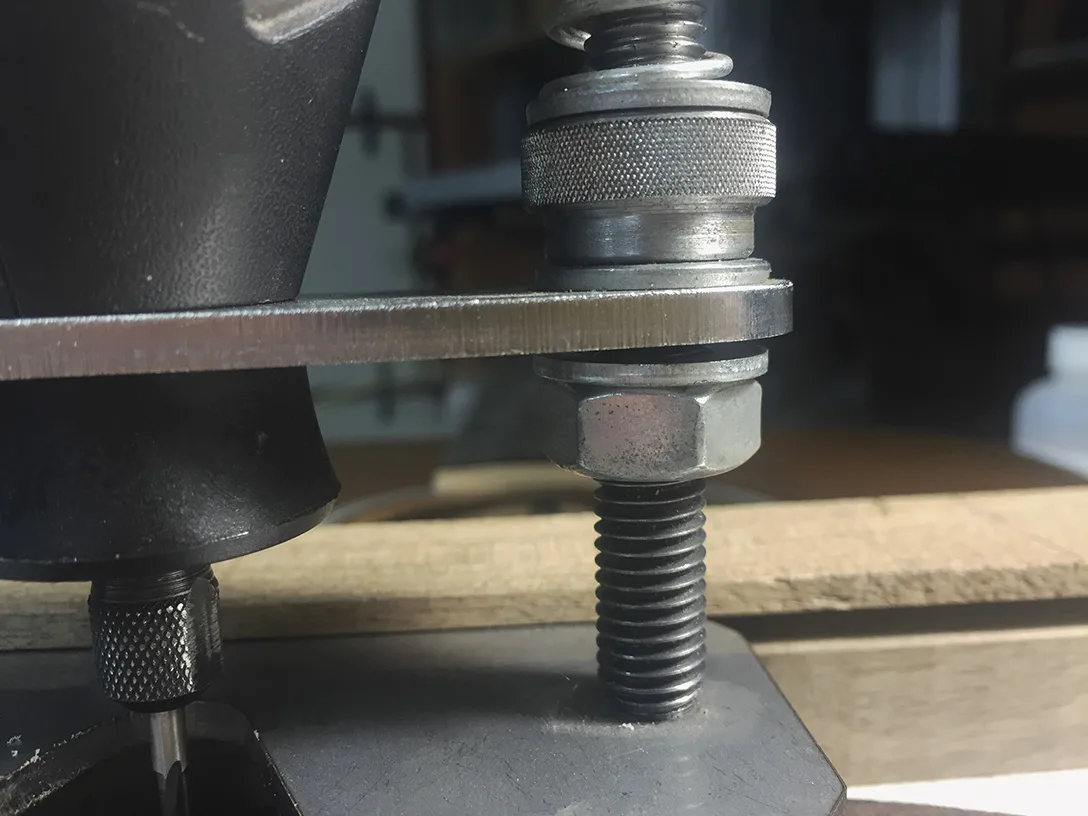
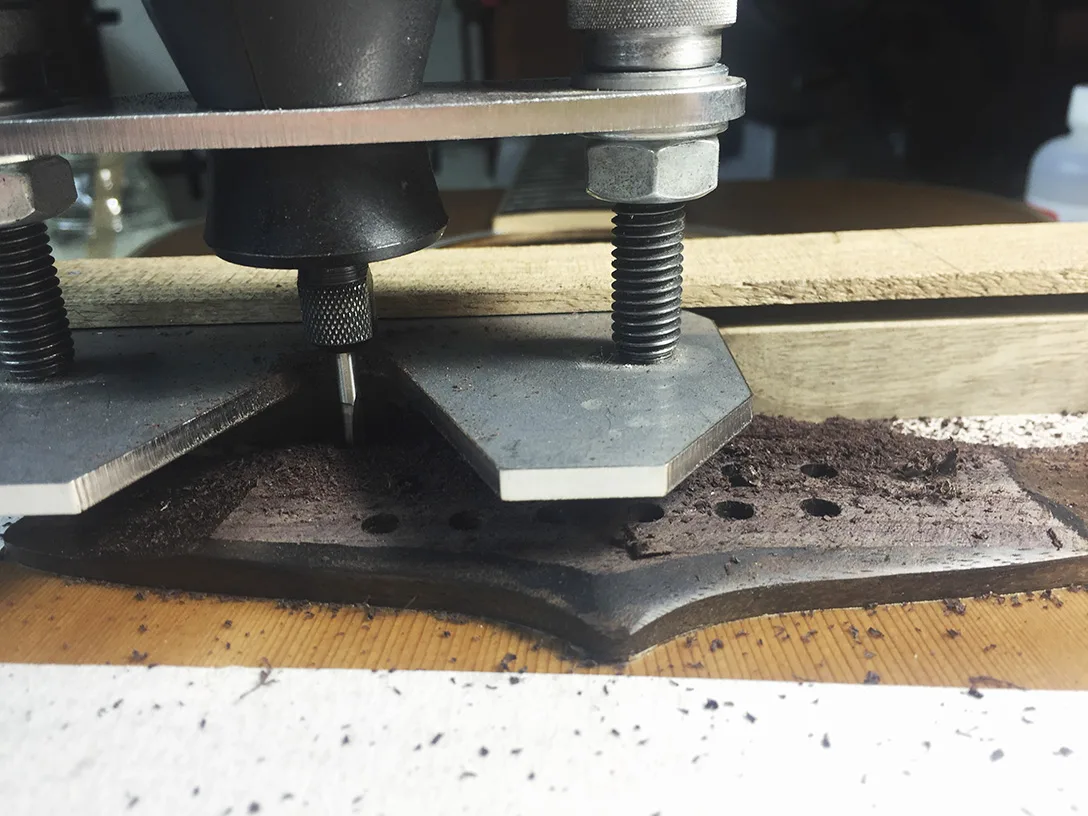
It came out as planned. Now we sand with 180 grit to remove the marks of the Japanese rasp.
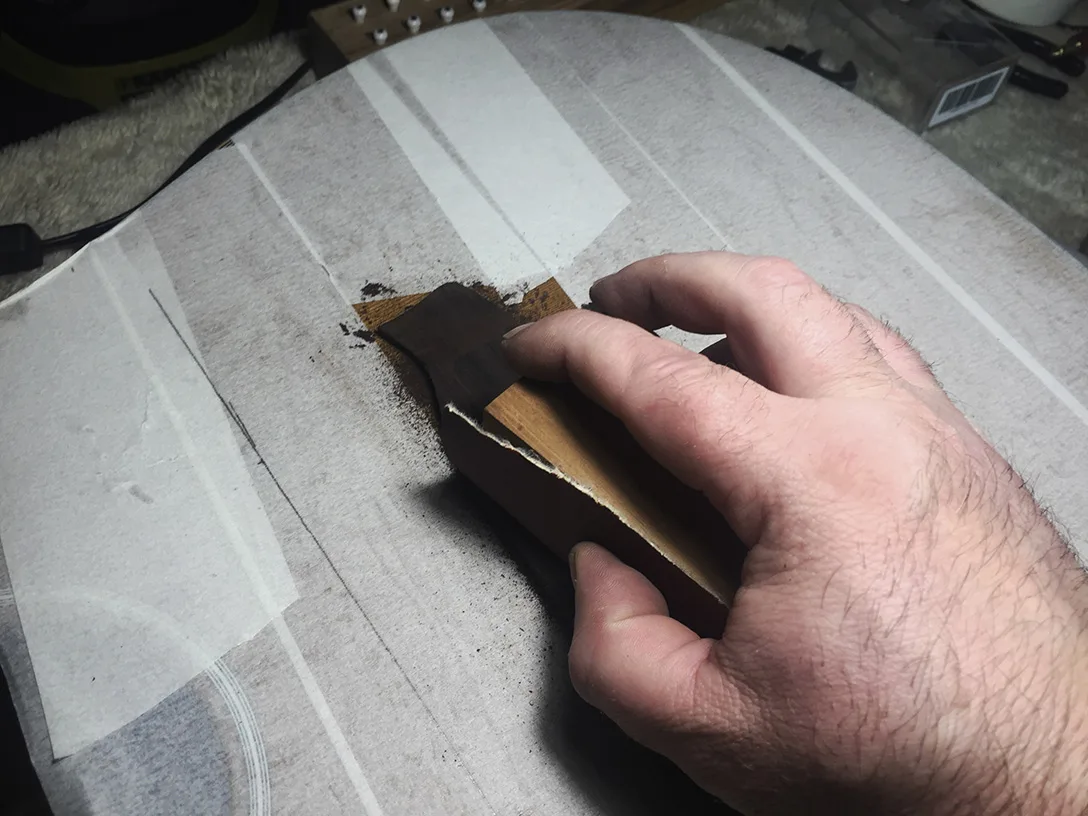
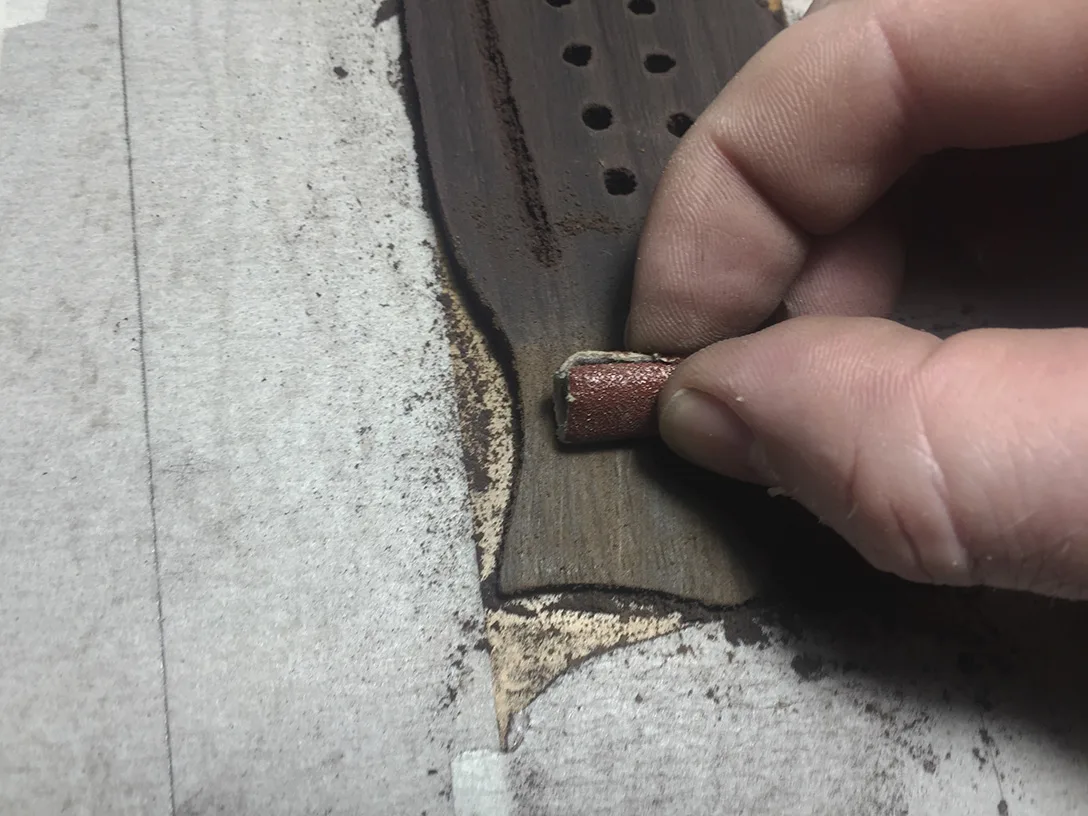
The hardest part is done. Now all that's left is to fit the saddle in its brand new slot and, if everything goes to plan, it should be at the right height.
After sanding with 180 and 400 grit, the long-awaited moment has arrived. We put the saddle in place and apply natural beeswax to the bridge like this:
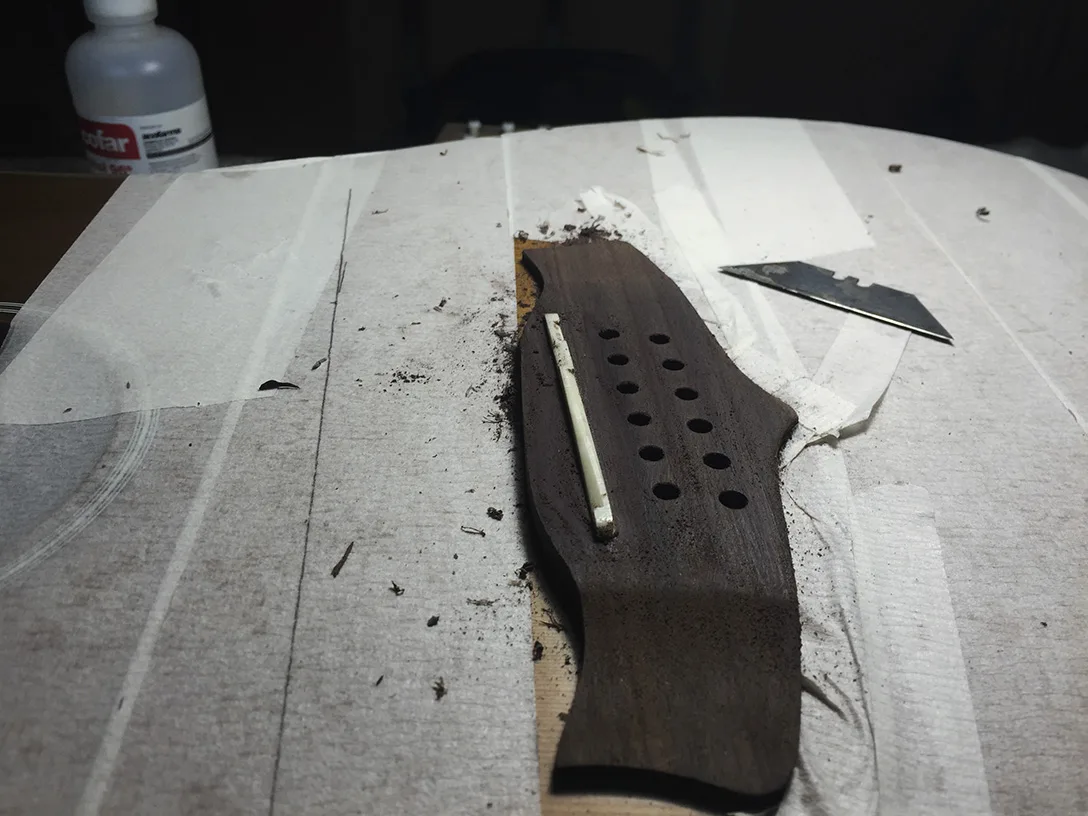
Here I touch up the saddle compensation a little with a sharp gouge, it cuts the bone beautifully...
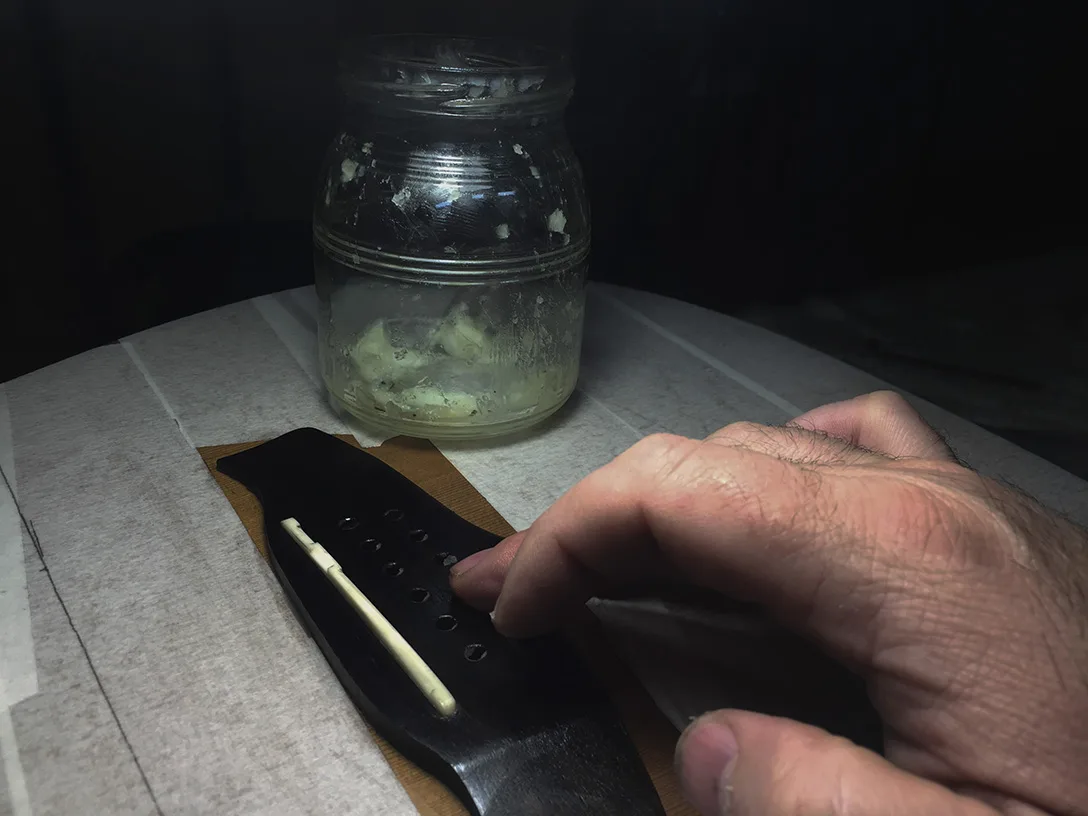
We remove the masking tape and string it up impatiently to check whether the calculations were right and we've managed to get the strings to about 1.8 - 2 mm high at the 12th fret.
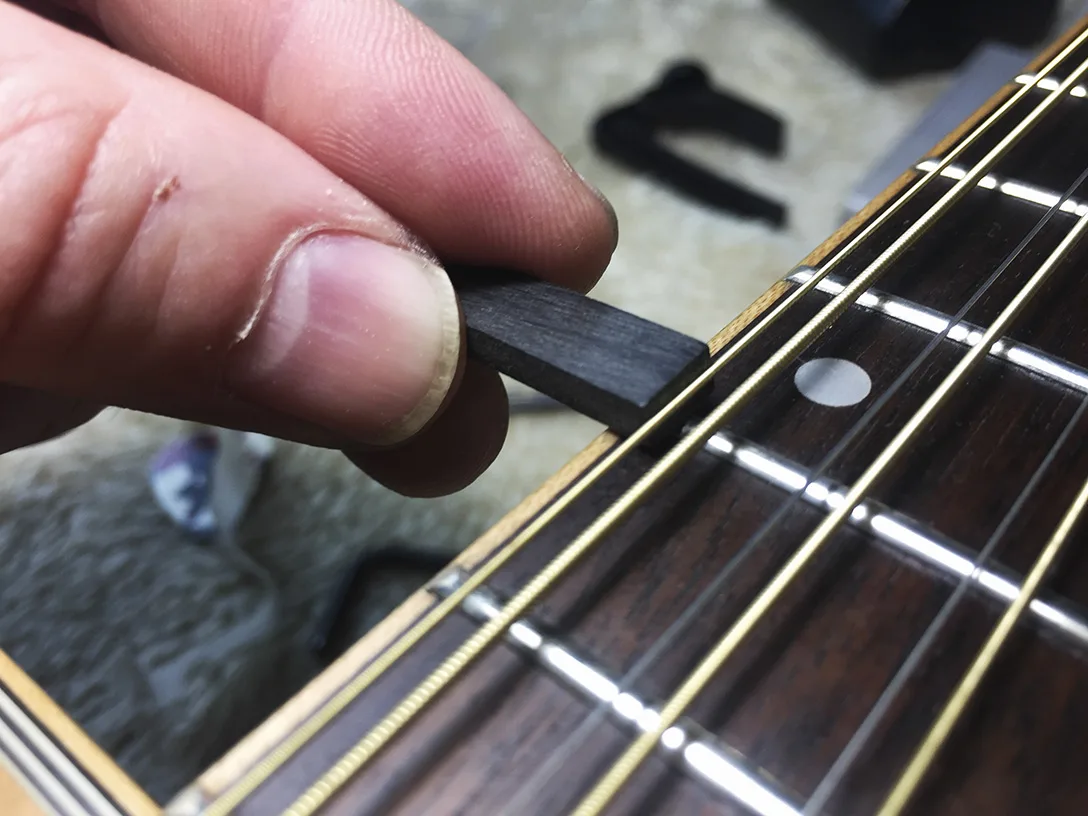
This photo is the same one we showed at the beginning before starting and, if you remember, it gave us a string height of 3.66 mm with this calibrated piece of plastic that just fitted. Now we put the same piece in to compare, and you can see how much we've managed to lower the height, almost unbelievable. Measuring with the feeler gauges it gives a height of 2.00 mm, but adjusting the truss rod we managed to get it down to 1.80 mm. Not bad at all. It's been quite a challenge, because this guitar came completely out of adjustment from the factory, with an enormous action that made it almost impossible to play. I have to say I really enjoyed doing this repair, even though it was open-heart surgery, very complex and delicate. You have to be very clear about what you're after, because one mistake and the guitar can be left unusable. See you in the next article, I hope you liked it.
Comments (0)
No comments yet.