
Restoring a 1970 Telecaster
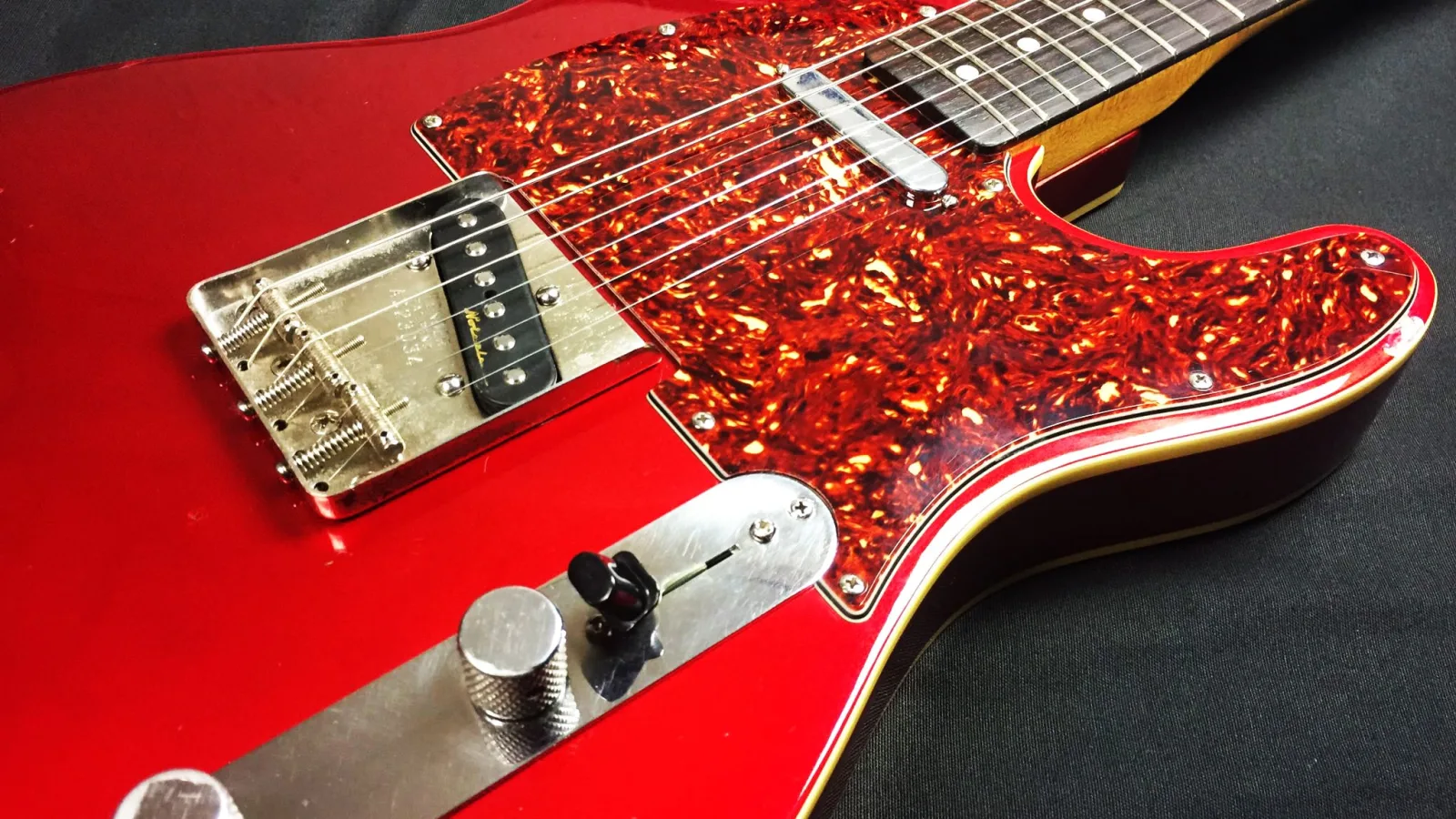
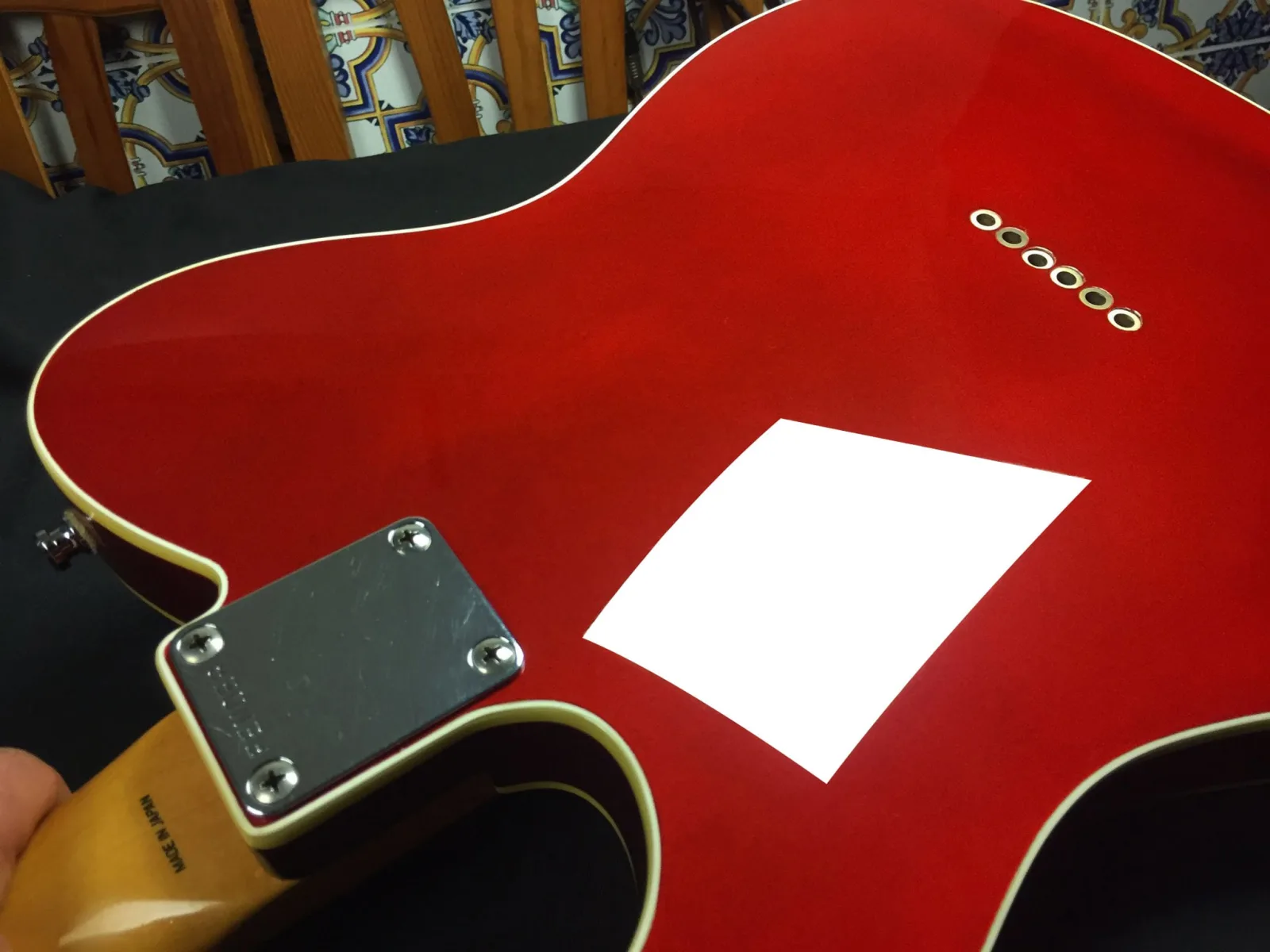
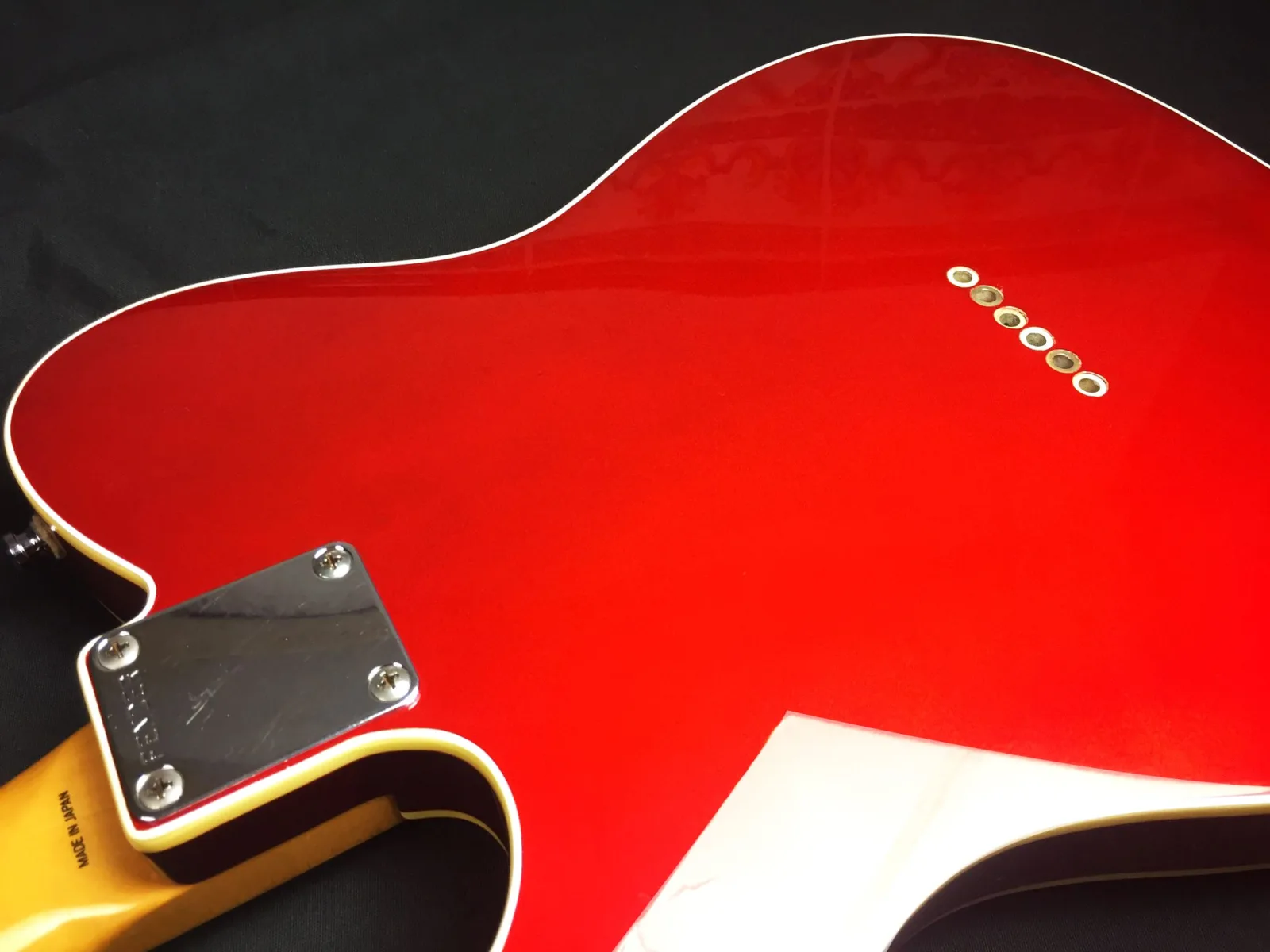
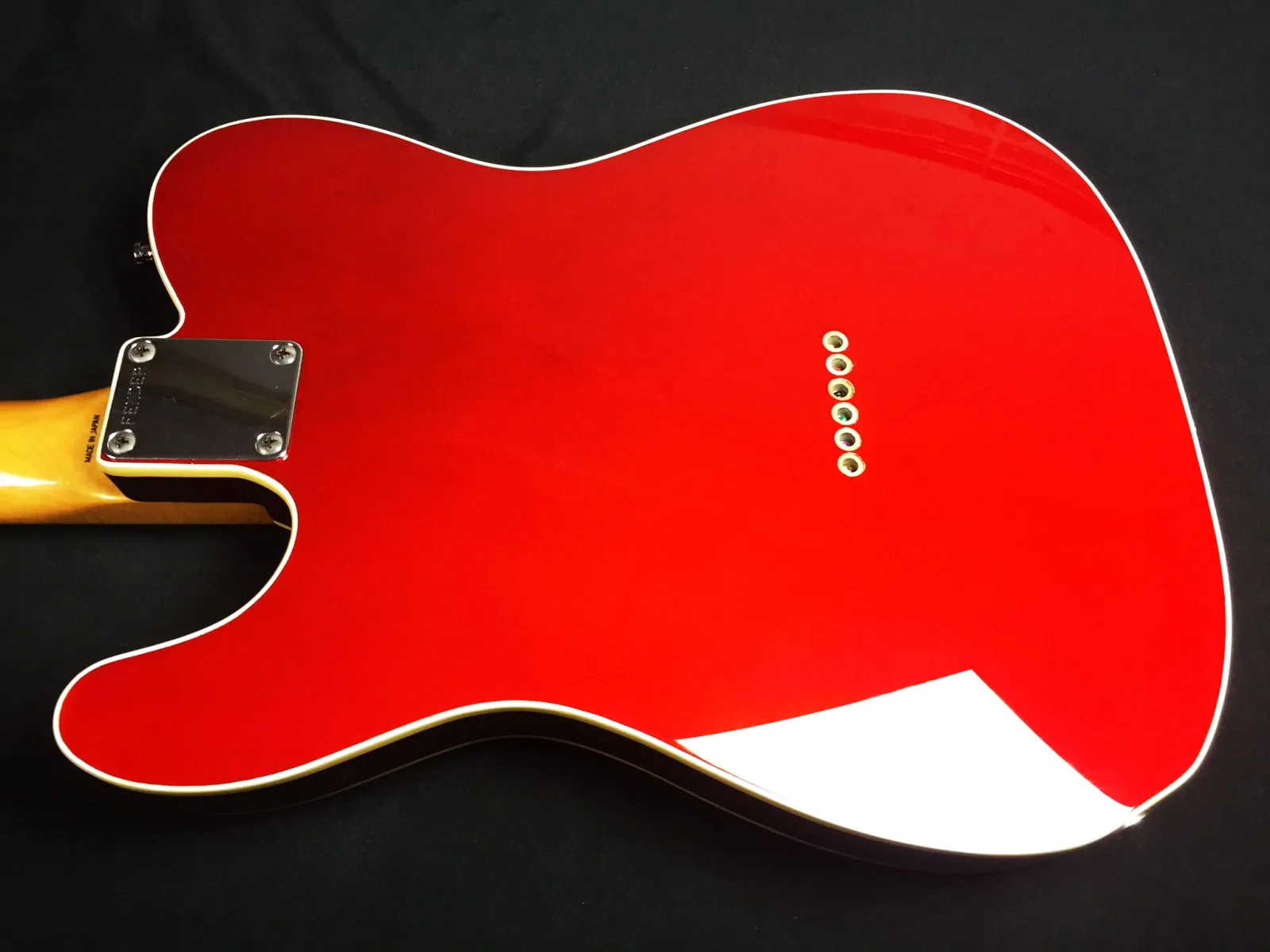
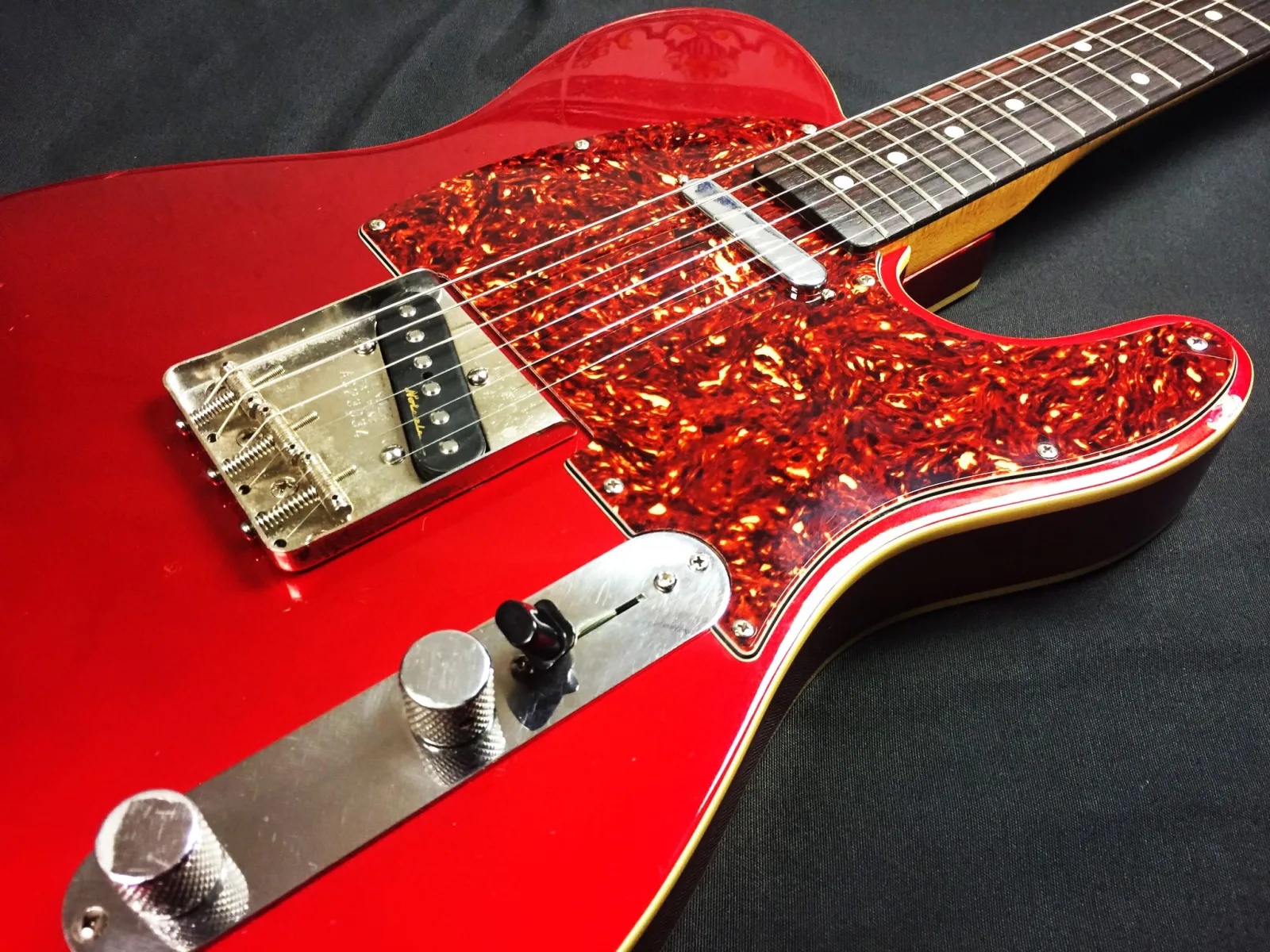
This time we have a 1970 Telecaster in the workshop for a restoration that keeps the relic touch the years have given it. We're going to completely restore the whole back, because practically all the paint is gone and the owner put stickers on it so the wood wouldn't show. The finish is the classic "Candy Apple Red", and over the course of the post we'll see what it is and how to get it.
The first thing we do is take it completely apart, and then we remove all the stickers with a spatula. Once they're off, I clean up the area with the orbital sander and an 80 grit disc. In these cases, to be safe, I rule out using heat with a heat gun and also chemical strippers, because I think it's too risky given the high chance of melting the double binding, and then things really would get complicated...
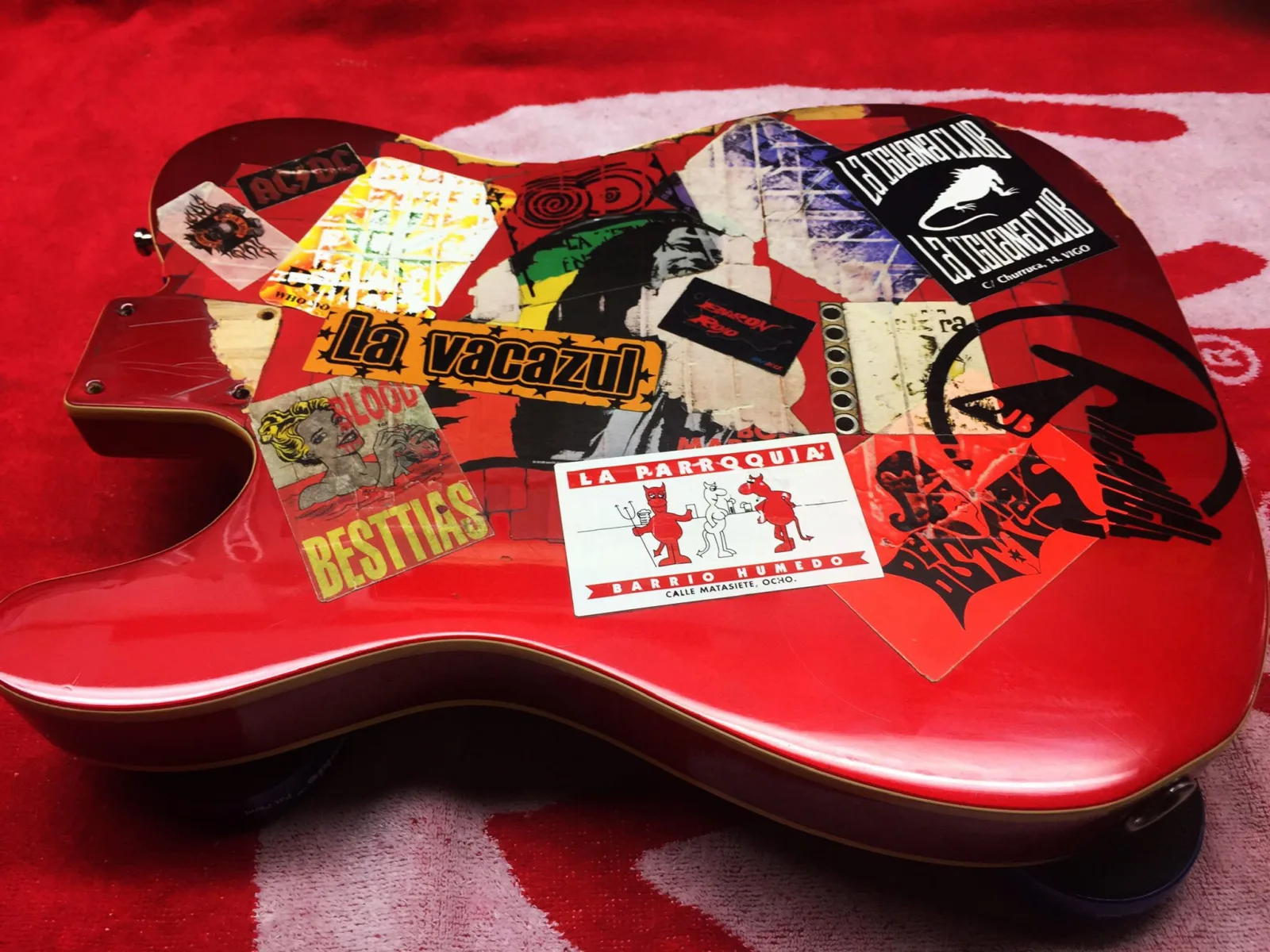
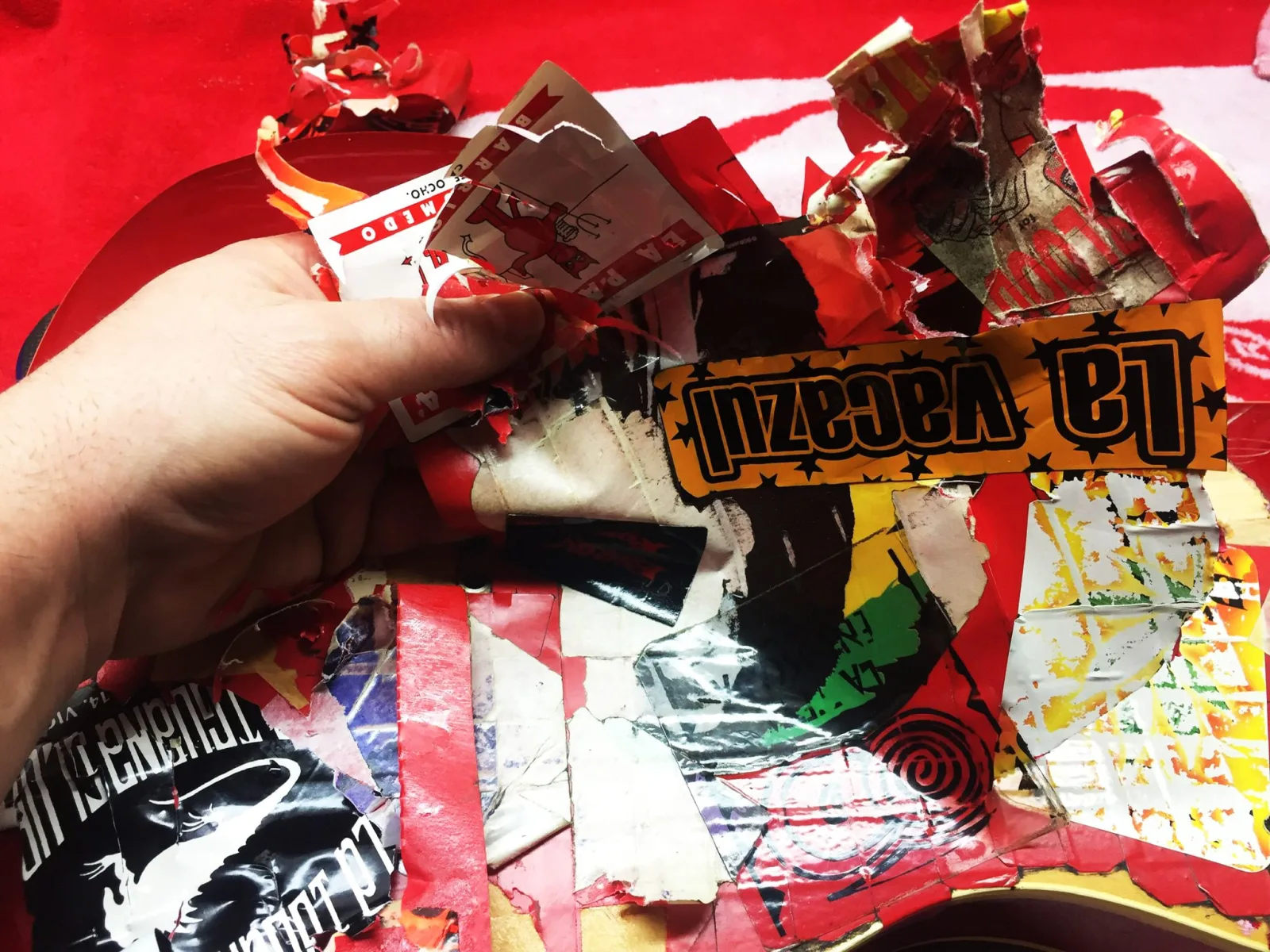
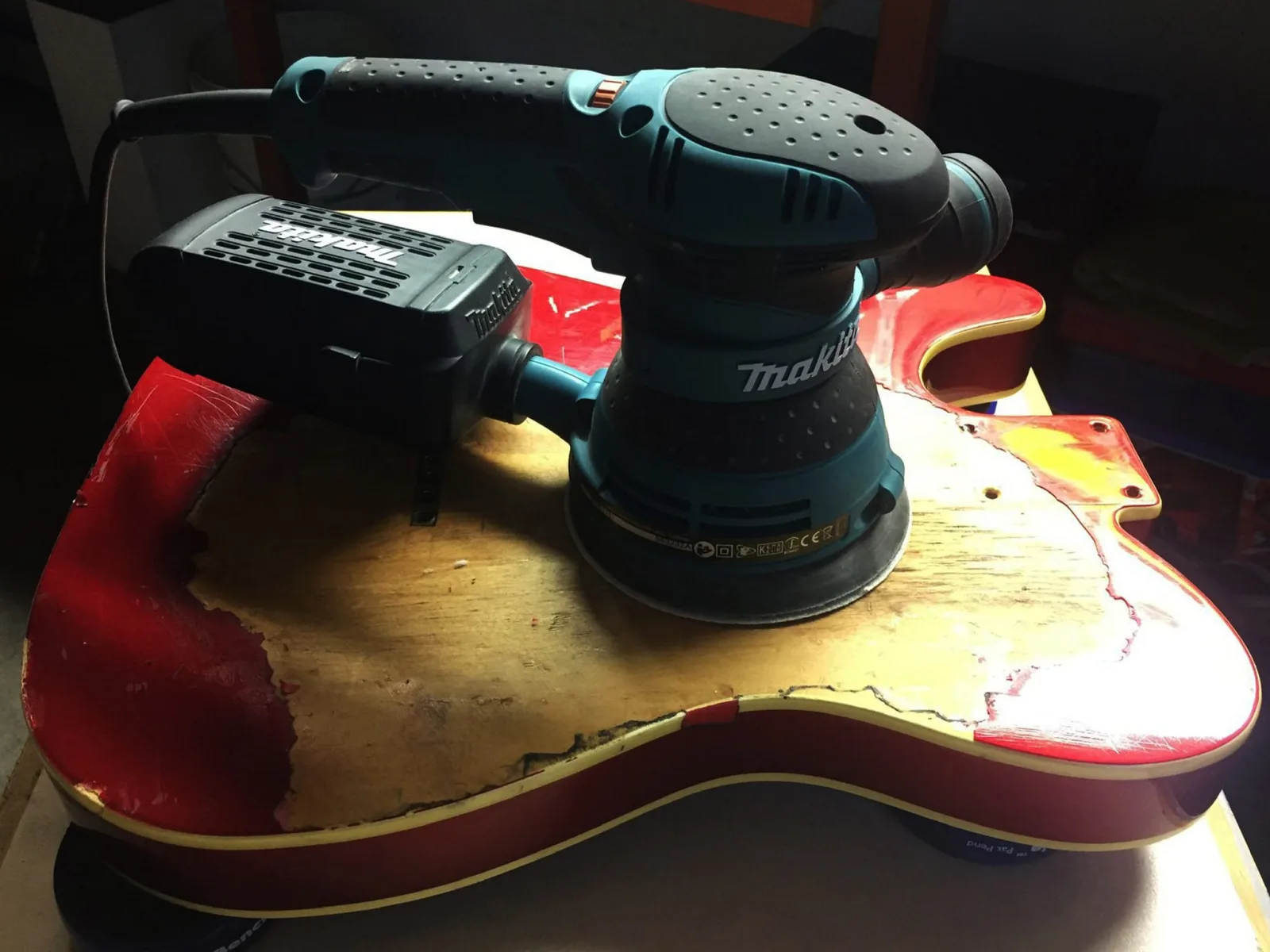
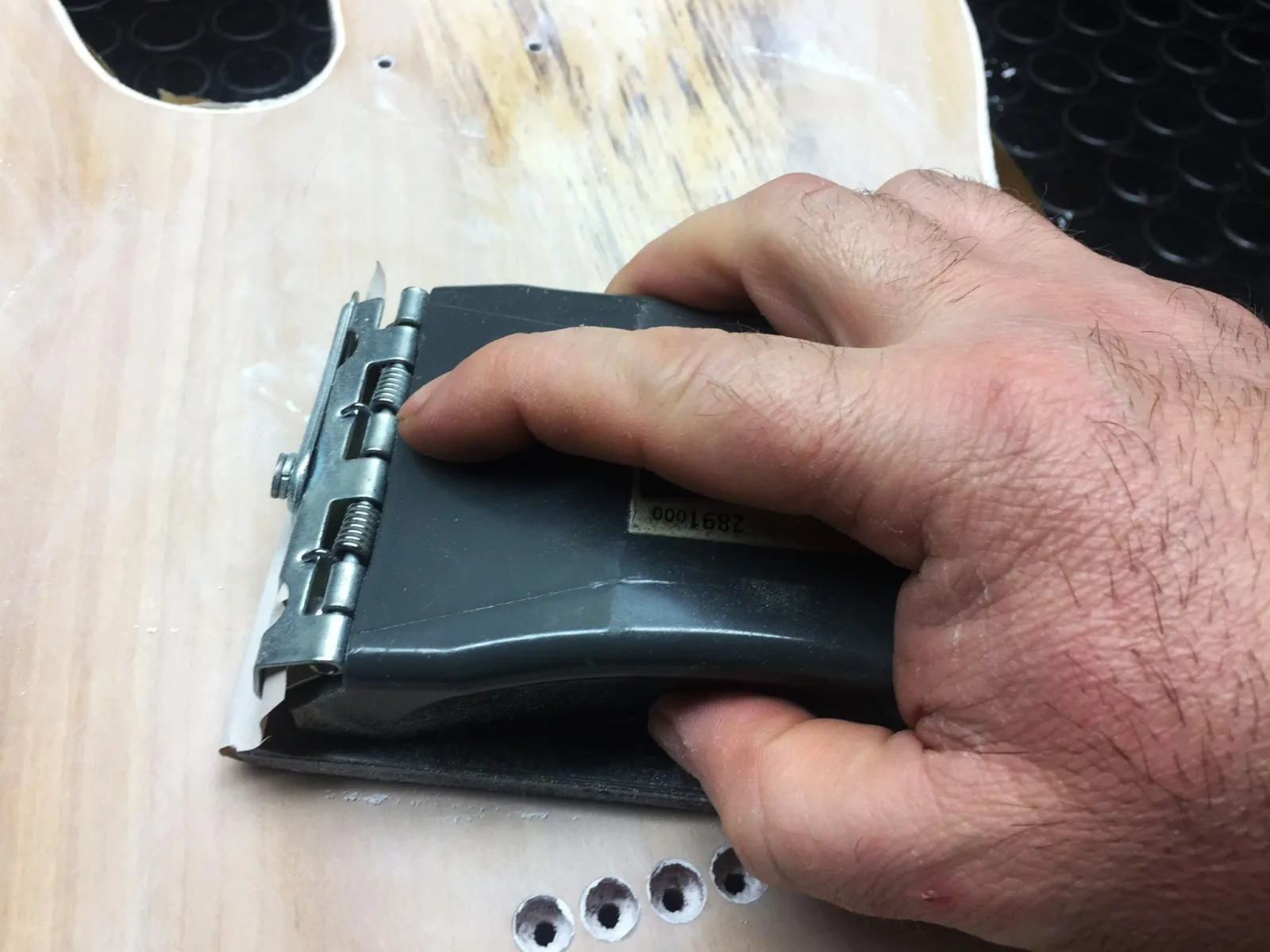
Once the whole back is well cleaned up (needless to say, you have to do it very carefully so as not to take more off one side than the other), I go over it with a card scraper and finally a sanding block with 180 grit.
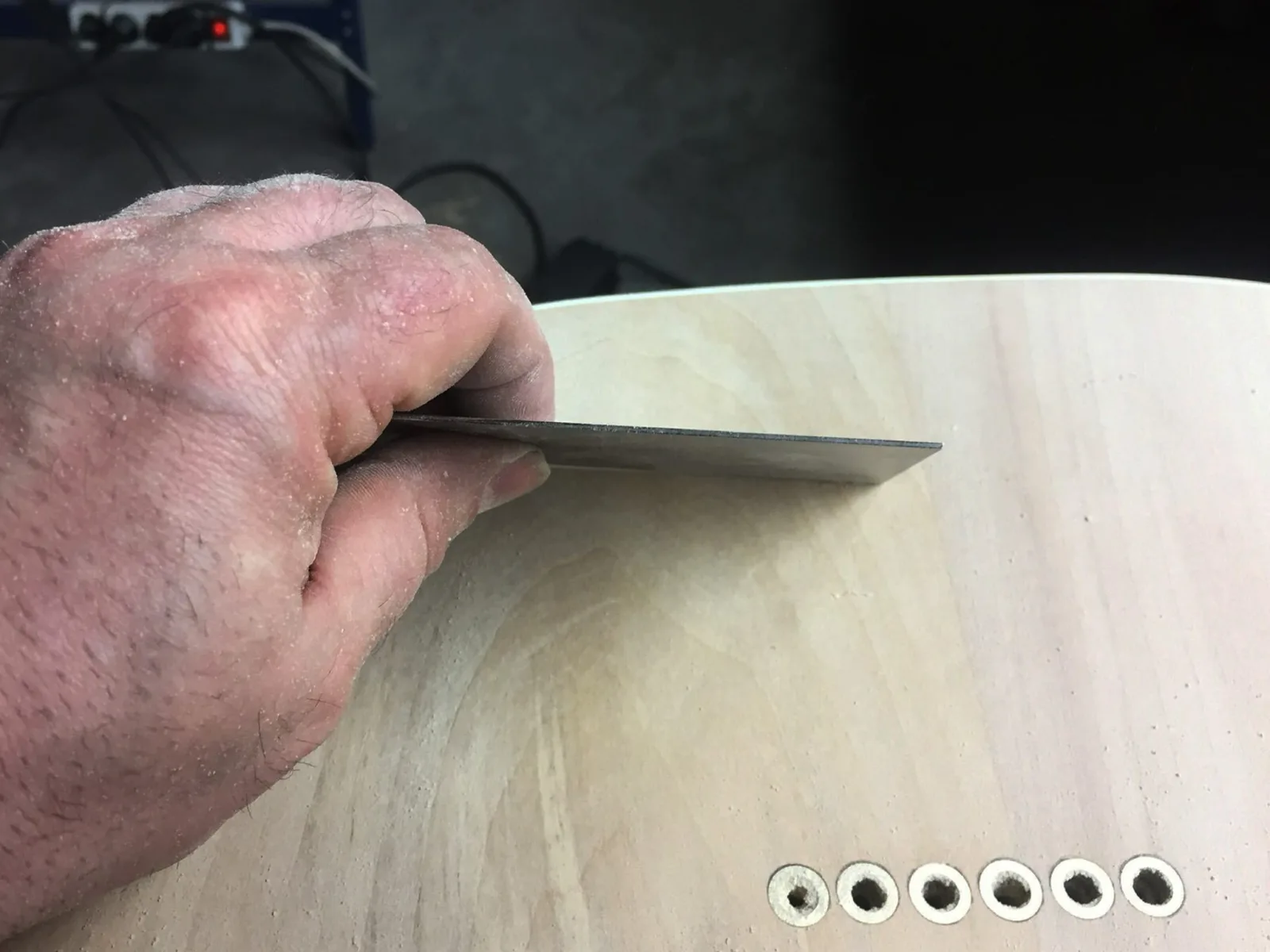
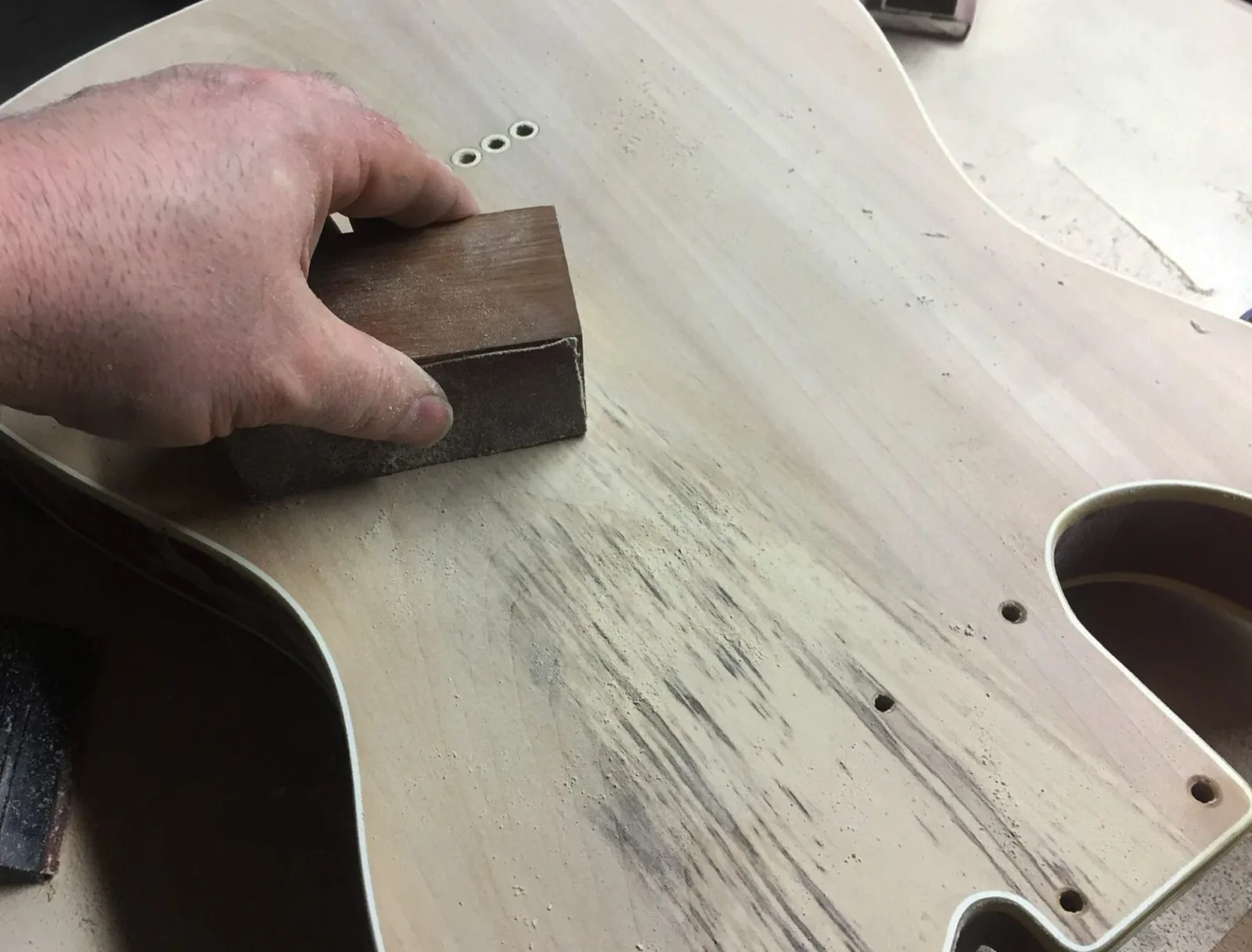
Now the surface is ready for a good coat of primer with the gun. We leave it to cure overnight and the next day we level everything well.
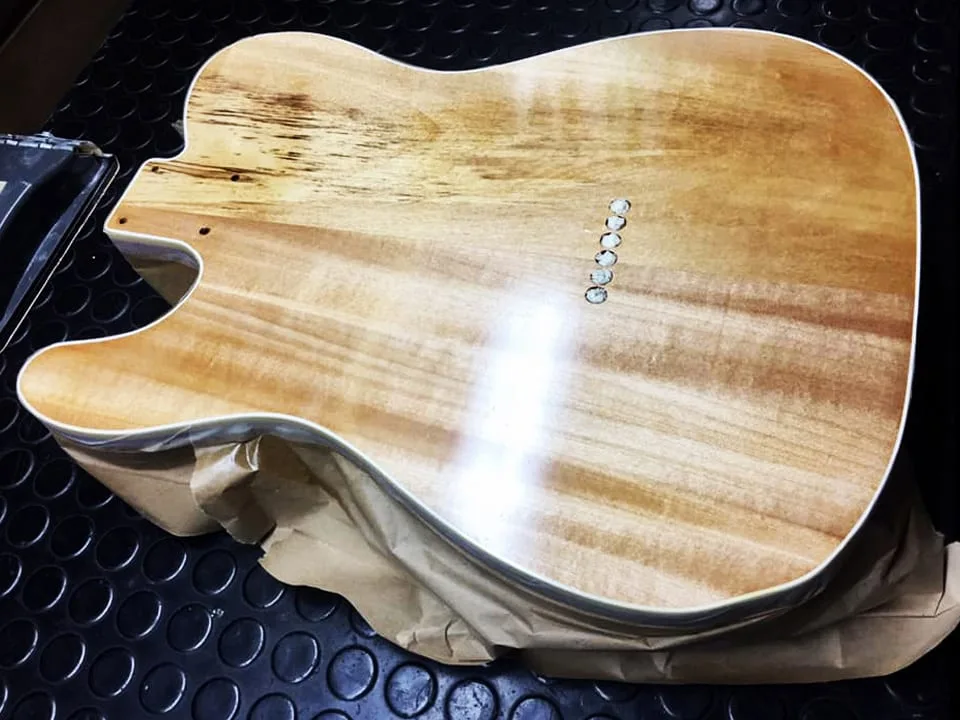
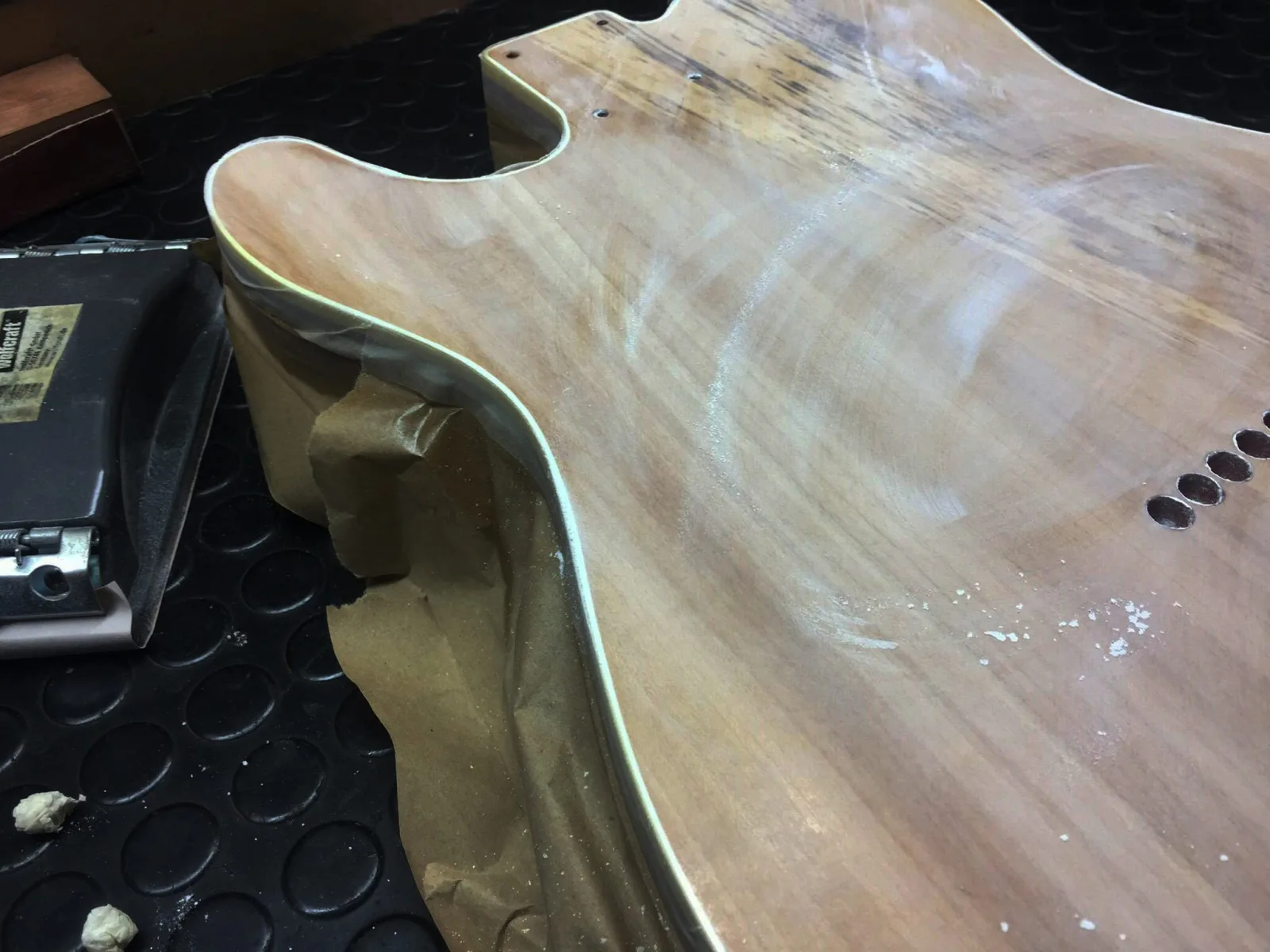
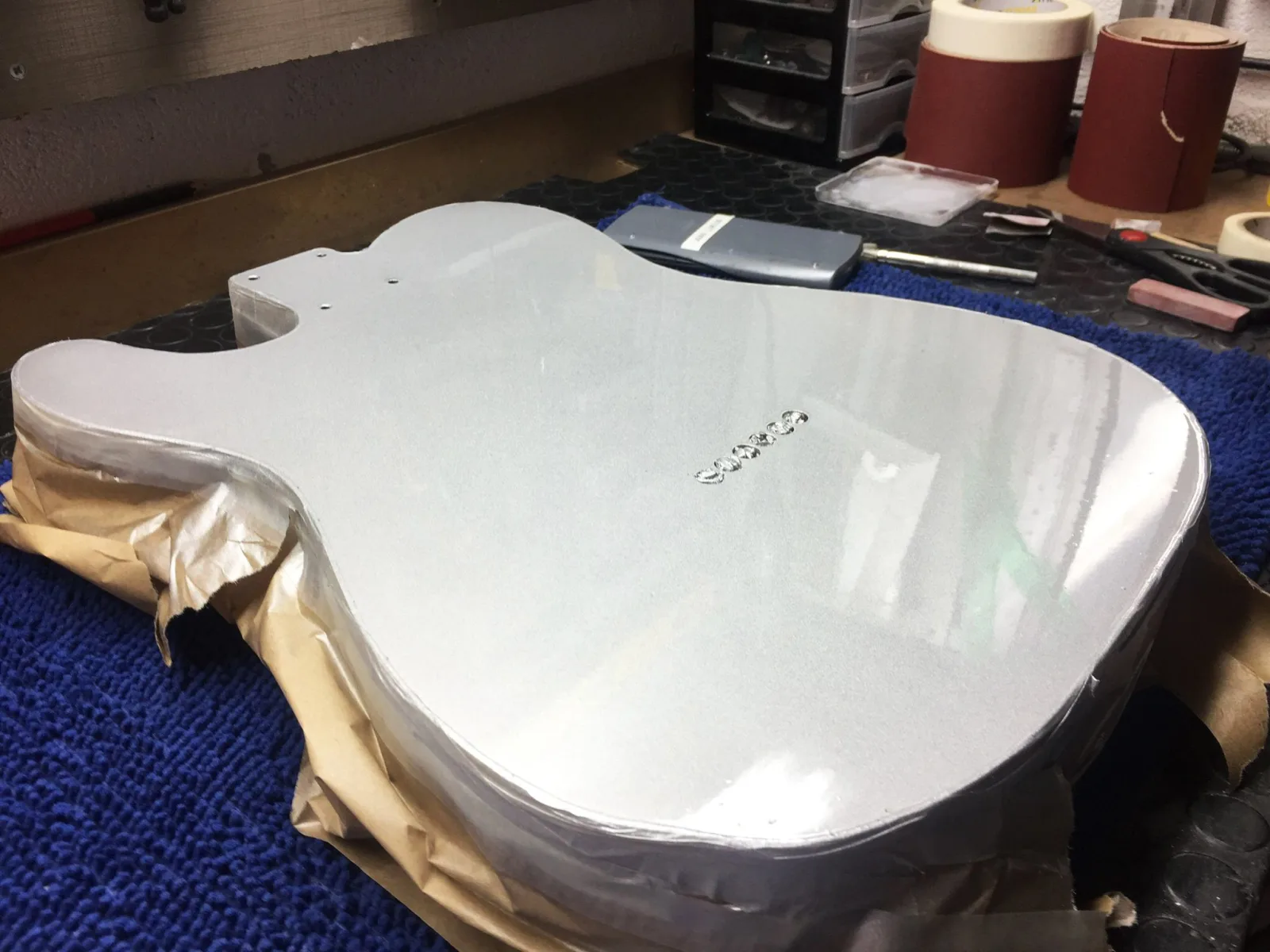
Now we apply the base for the "Candy Apple Red" finish. This very popular finish is easy to do, although a bit laborious, and the result, as the name suggests, looks like the toffee apples covered in a red caramel coating we used to eat at fairs as kids (at the Encina festival, for those of you from El Bierzo like me).
To get it, you have to apply a base colour coat, usually a metallic grey. That's all there is to it!!!
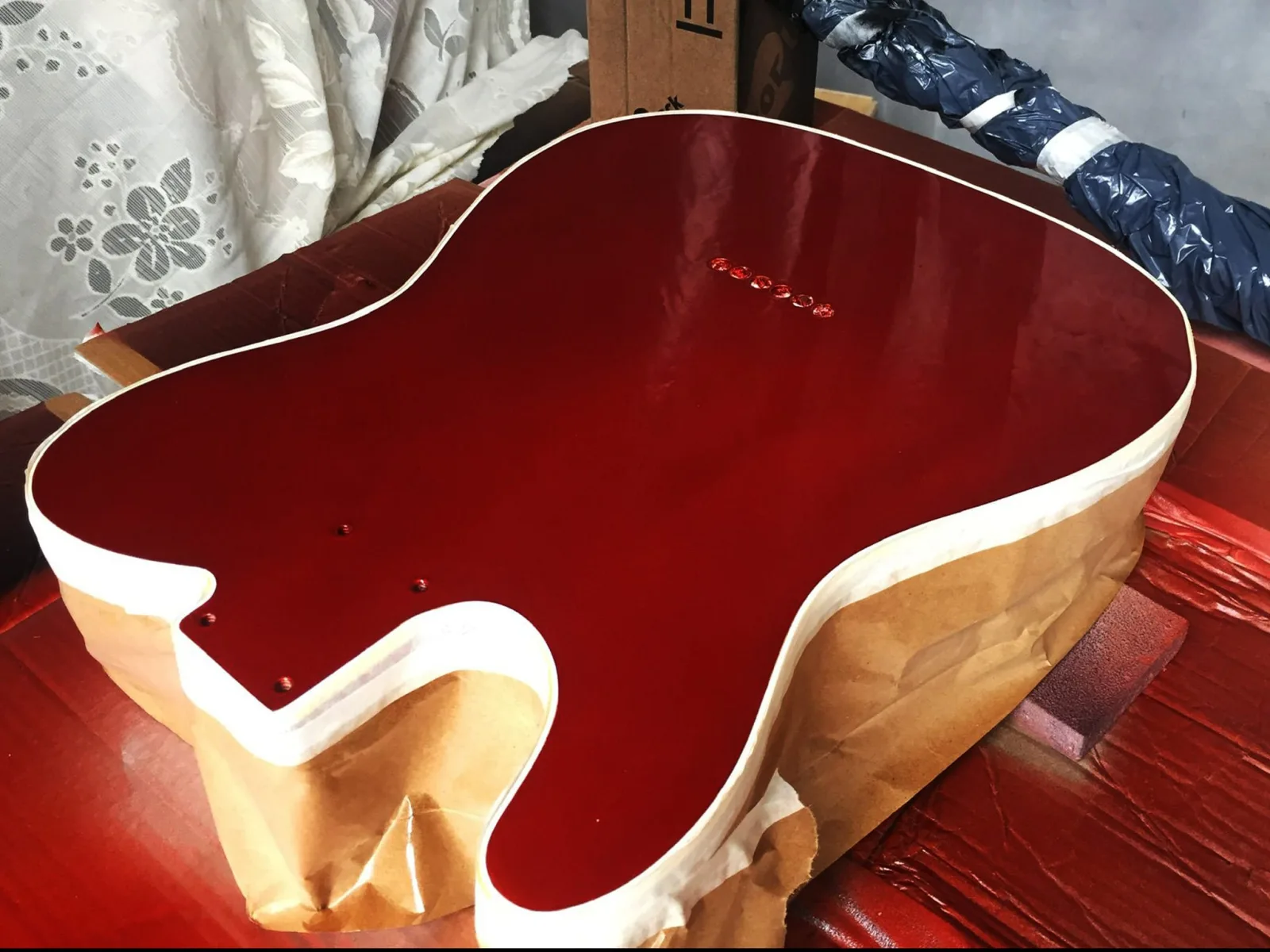
Once dry, we level the paint with 400 grit and a block and get it ready for the red, which is a semi-transparent paint you can easily find online. I use the "Nitorlack" brand. Here you have to apply as many coats as necessary to get the shade you want, especially in this case, since we're only painting the back and we have to match it as closely as possible to the rest of the guitar. Although, since it's a whole panel separate from the rest, and on the back too, we'd have to do a really bad job hehehehe for it to clash with the rest.
As always, we level the paint...
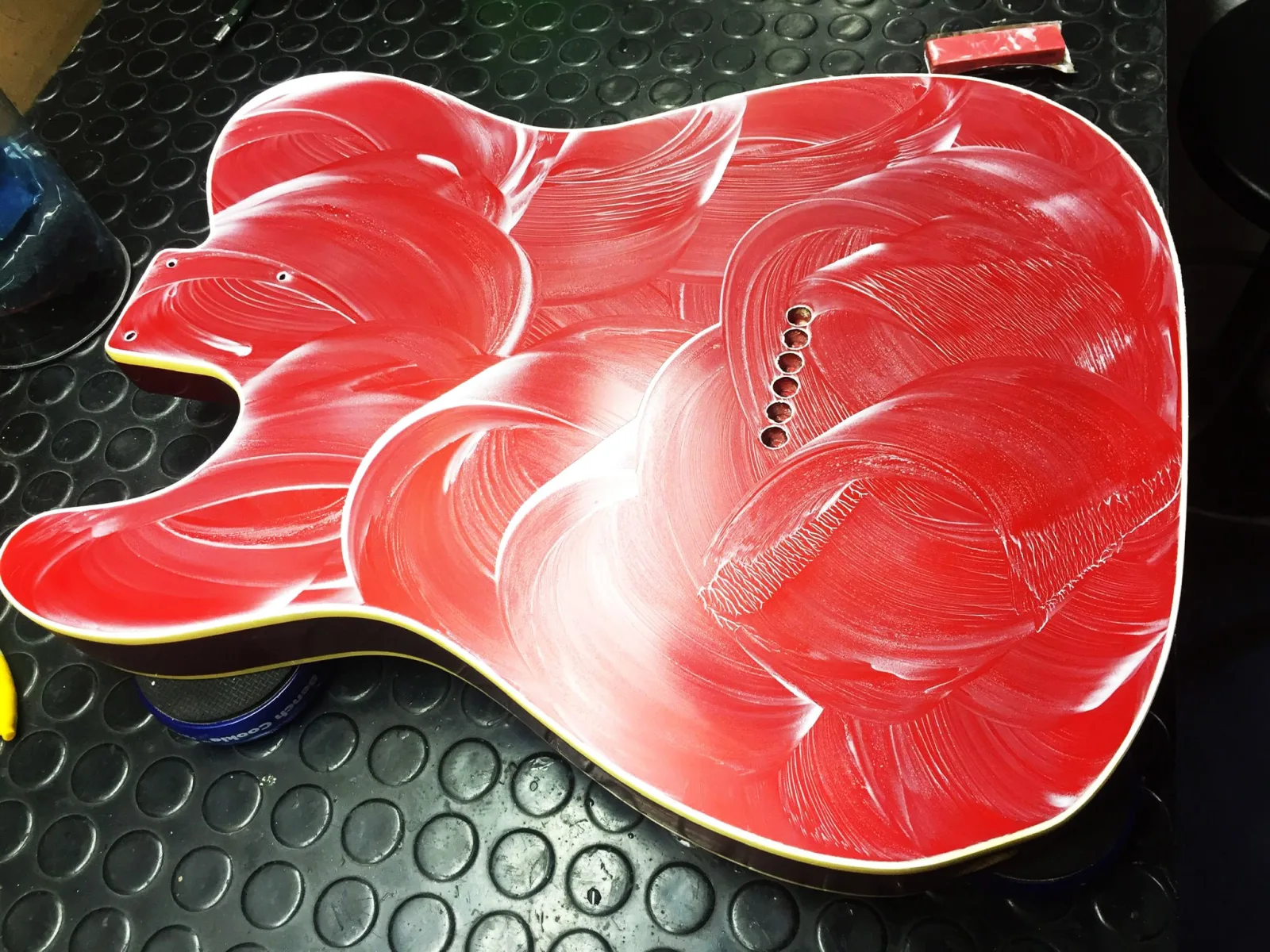
And once it's ready, we apply high-gloss clear coat generously, because the "Candy" look we want depends on it. Once that's done, we let it cure for 1 week and level it again, but this time with a less aggressive sandpaper than 400, that is, 600 or 800, because if we've been careful with every step, the paint will go on smoother each time and there'll be less levelling to do. We gradually move up the grits to 1200, 1500 and finally 2000. We always sand with warm water and a few drops of washing-up liquid to lubricate it so it slides well without scratching the clear coat.
Finally we polish. I used to do it by hand, but for this guitar I built myself a professional machine with flannel buffs and solid polishing bars. This isn't essential, because if you don't have this machine, which is normal, not everyone has one at home hehehehe, you can do it by hand without any problem and get spectacular results, with a bit more effort, that's true... Well, quite a lot, hehehe, let's not kid ourselves...
And with the job finished, this is how it looks...
I hope you liked it. See you in the next post. Remember you can follow me on Facebook and Instagram at @baladocustom. Have a great weekend!!!
Comments (0)
No comments yet.