
Types of necks: straight and with a "scarf joint" or angle
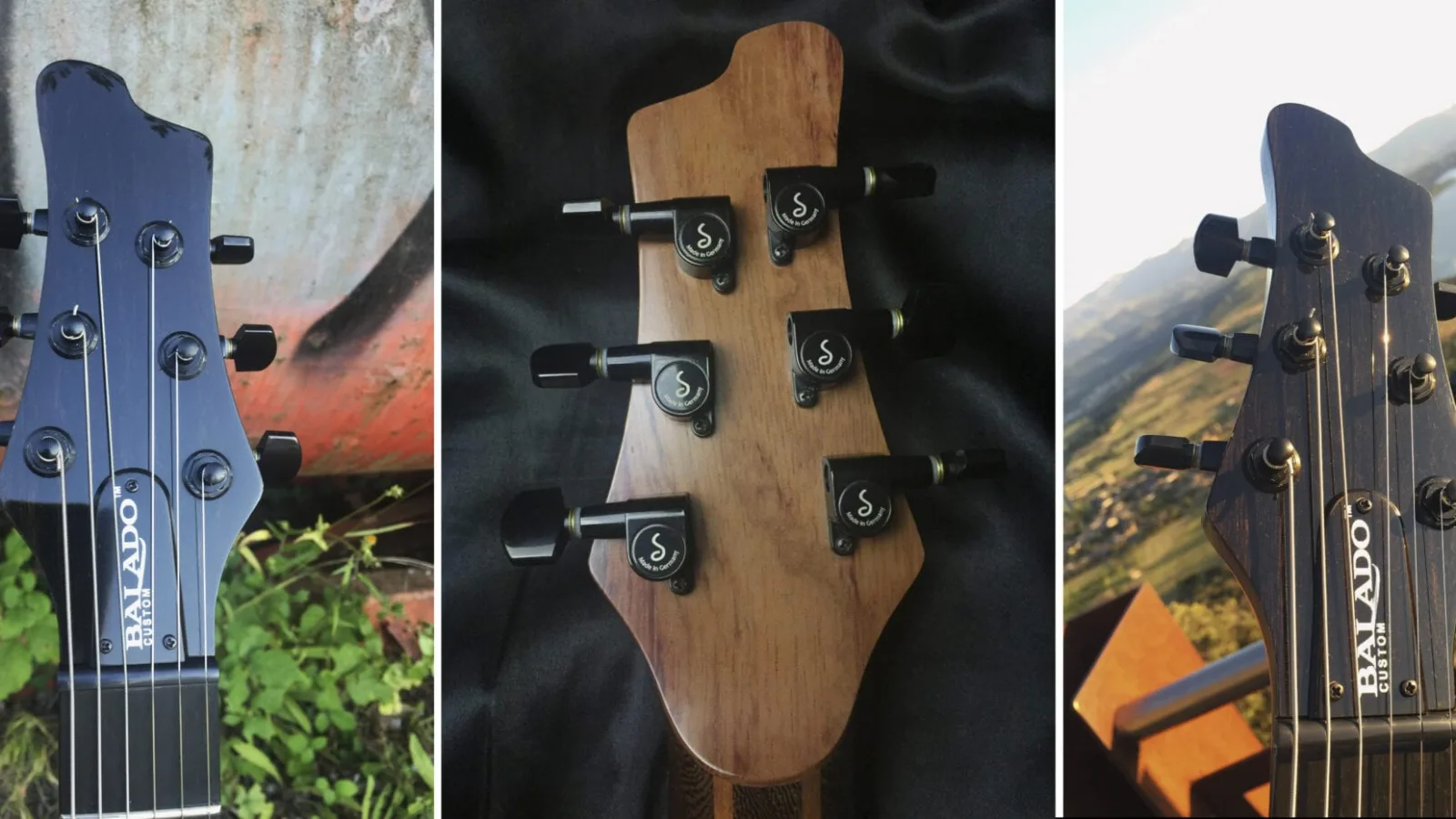
Looking at the shape of a neck, there are two types: straight, or with a certain headstock angle (the most common are usually between 13º and 17º). In this post I'm going to try to give an introduction, explaining each of them and the techniques used to give the headstock its angle.
STRAIGHT NECKS WITH NO ANGLE
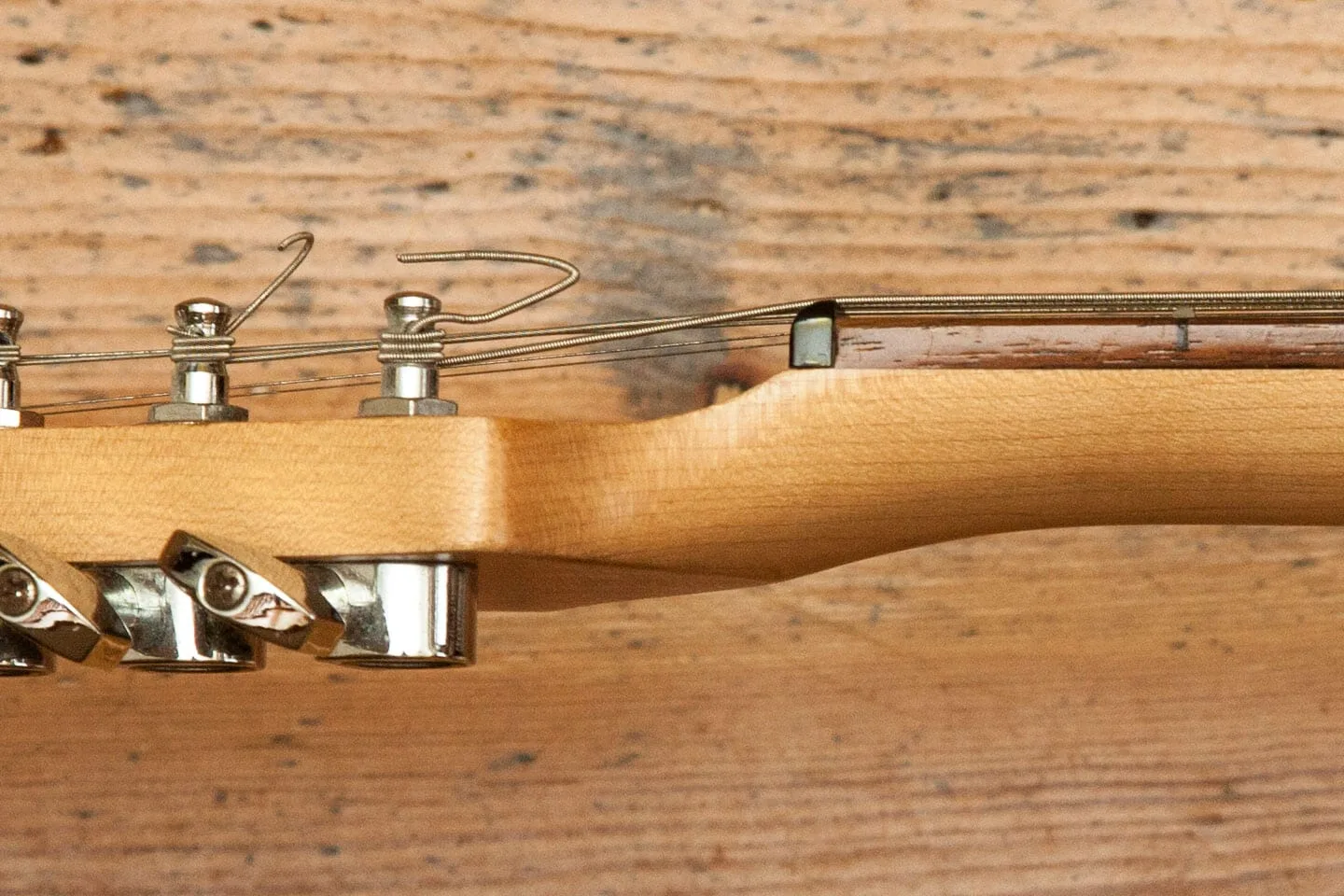
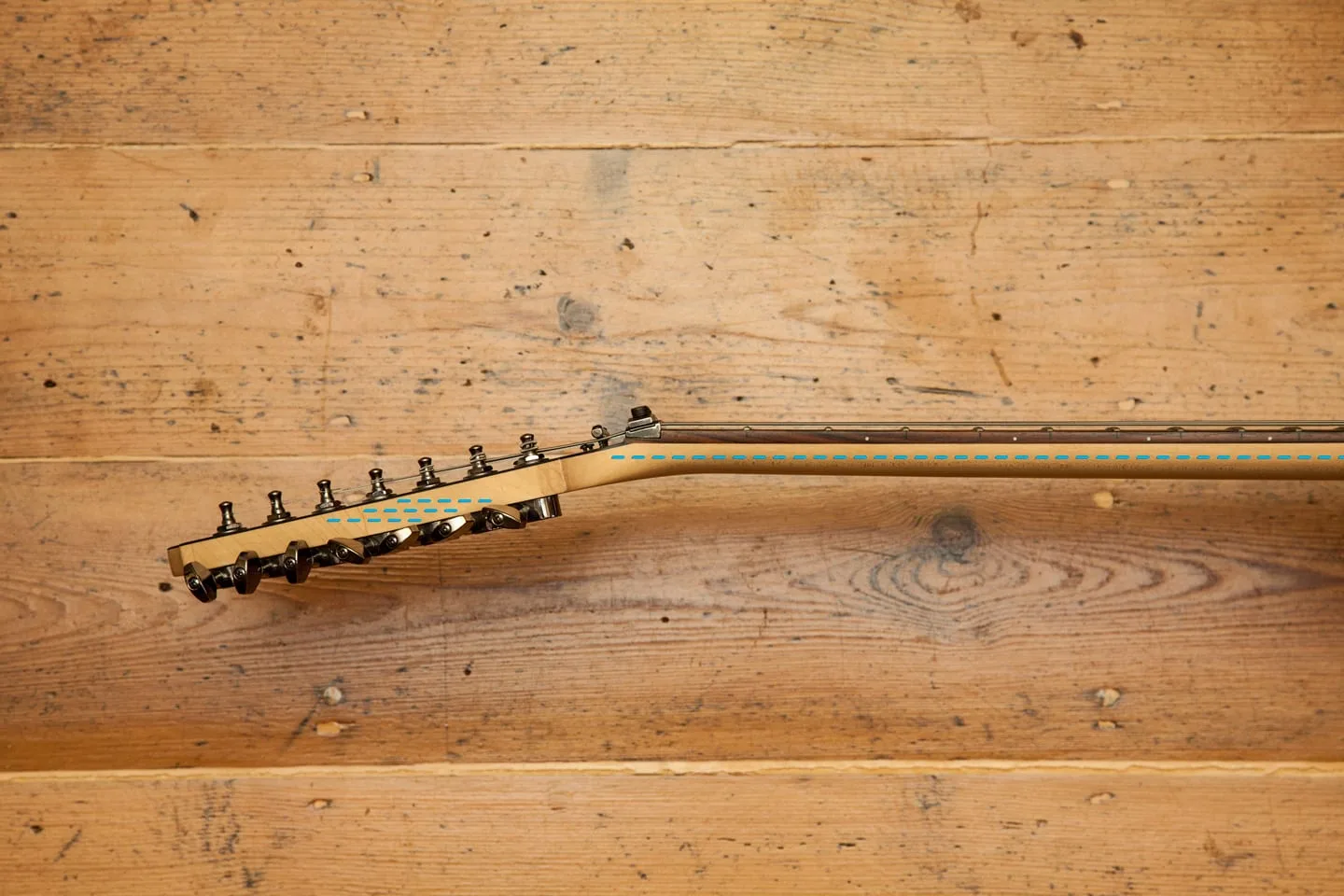
The most representative maker of this type of neck is Fender. It consists of a single, completely straight piece of wood, with no angle or joint of any kind.
Advantages:
- Strength. Since there's no joint and the wood grain runs along the whole length of the piece, the neck is practically impossible to break, at least with the use it's supposed to get.
- Savings. This type of neck uses much less material, since all you need is a piece as long as the neck, wide enough to fit the headstock and about 20 mm thick. And since they're small pieces, it's easier to find one with a figure we like.
Disadvantages:
- Shallow string angle between the nut and the tuners. The strings leave the nut almost straight, which means there's less pressure on it, which in some cases can make the string pop out when bending. It also means a bit less tone and sustain, since the nut is pressed less against the neck wood. To solve this problem, small metal parts called "string trees" are used. They're fitted on the headstock and hold down the 1st and 2nd and the 3rd and 4th strings in pairs, increasing the angle by pulling the string down.
NECKS WITH AN ANGLED HEADSTOCK
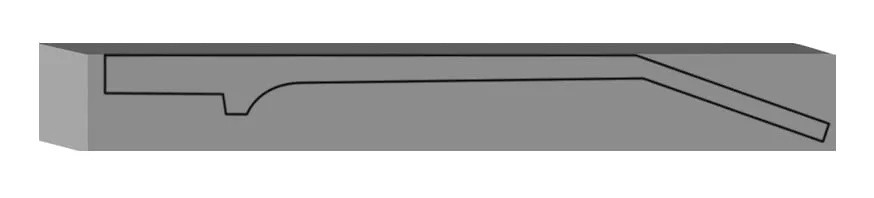
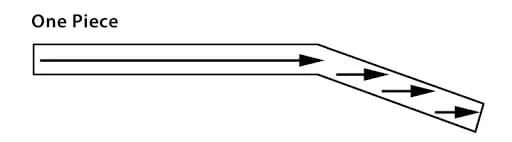
- One-piece necks with no joint. There are two types. The most recognisable and characteristic is the one Gibson uses. It's made from a single piece of wood as wide as the headstock and as thick as the headstock angle requires, that is, a piece of wood of about 10 x 10 x 66 cm. The neck profile is traced onto that piece with a template and then cut on the band saw.
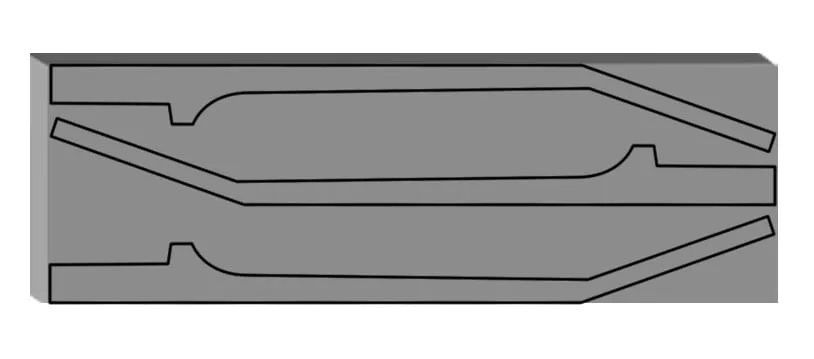
- There's also a technique similar to the previous one, which consists of tracing three pieces with the neck profile using a template and then gluing them together as a laminate or "sandwich" until you reach the full width of the neck, that is, so the headstock shape fits in the resulting piece. A maker that uses this method a lot is Ibanez in some of its series, as well as many others...
Advantages:
- We solve the problem of too little string pressure on the nut, which means better tone and sustain for the instrument.
Disadvantages:
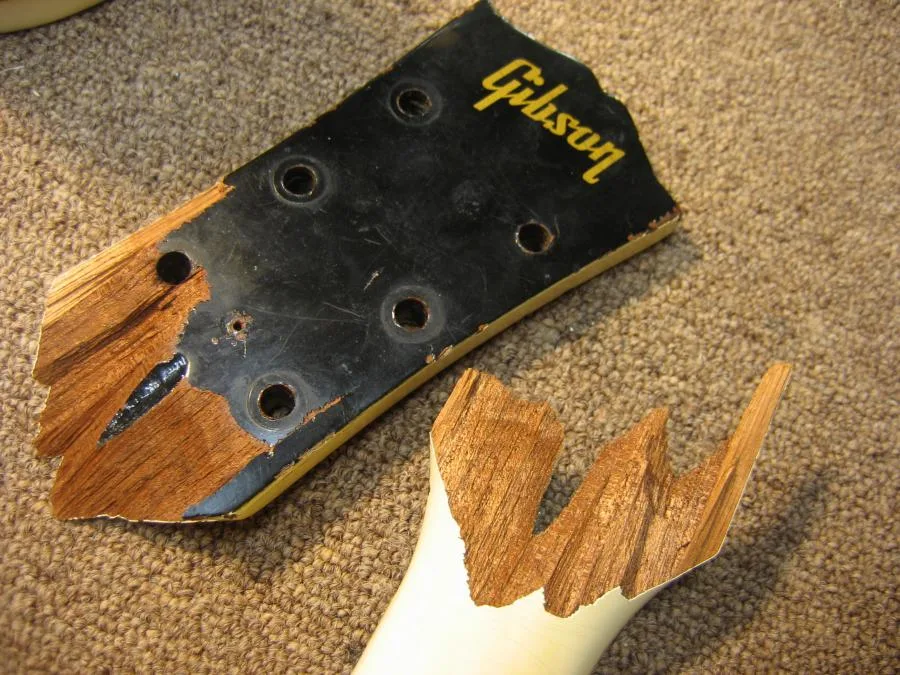
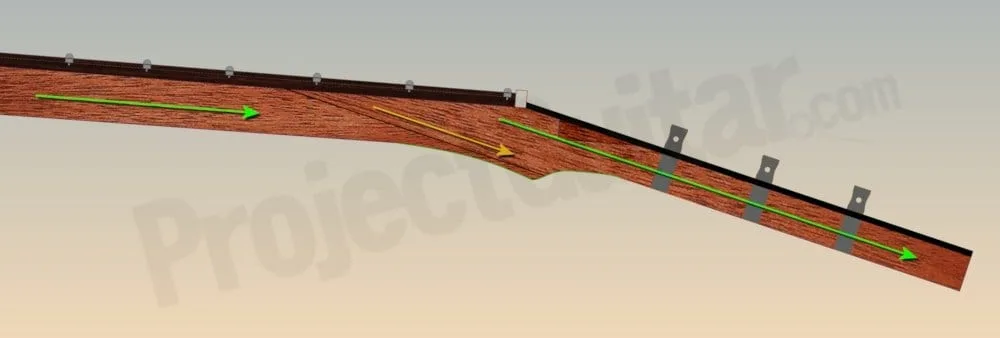
- Whether we do it as in the first diagram or the second, we're cutting across the lengthwise wood fibres in the headstock, which leaves an area of very short grain in the same direction as the rest of the neck, making it extremely weak. The greater the angle, the weaker the headstock is in that area. If we add a large truss rod access, as in the case of Gibson, we reduce even further the amount of wood reinforcing the area. That's why Gibson headstocks generally break right there, following an almost identical pattern.
- Two-piece necks with a joint or scarf joint
Unlike all the others, this type of neck is made from two pieces cut at an angle and then glued together, creating extremely strong joints. In these joints the wood fibres are never cut across, and the forces also run in the same direction.
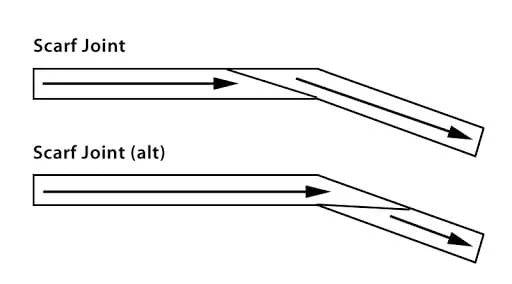
If we also add a volute, we get a very stable neck that shouldn't break under normal conditions. There are several ways of doing the glue-up:
- The headstock on top of the neck
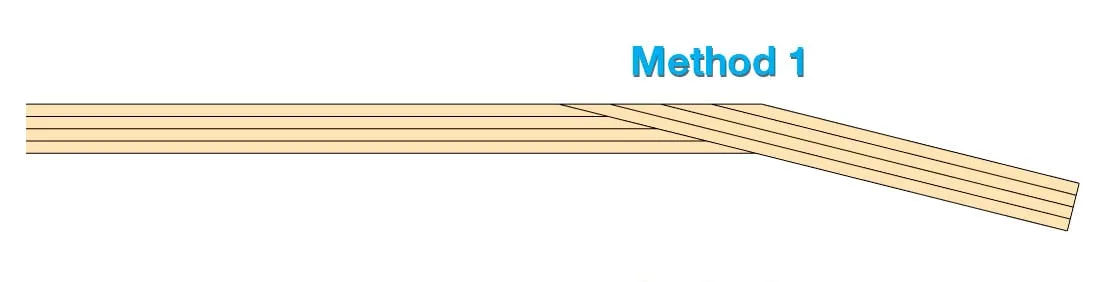
- The headstock under the neck
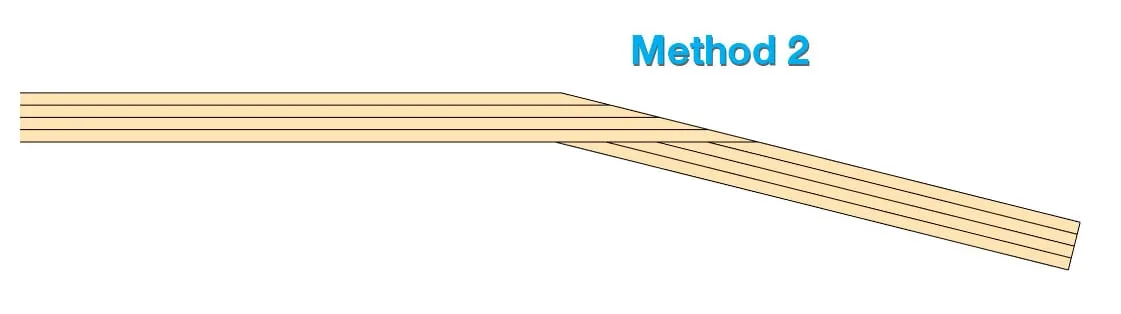
Doing it either of the two ways described above, the joint area always ends up on the back of the headstock, so if we add a wood veneer of about 1.5 mm, not only will we reinforce it even more, but we can also play with the woods to create very elegant and interesting effects.
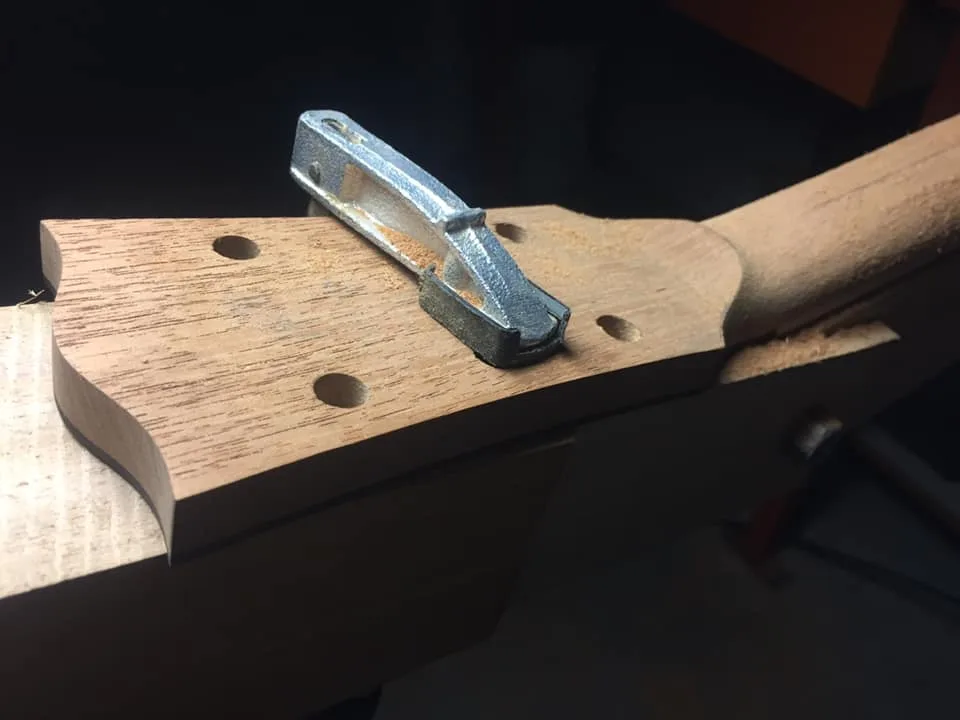
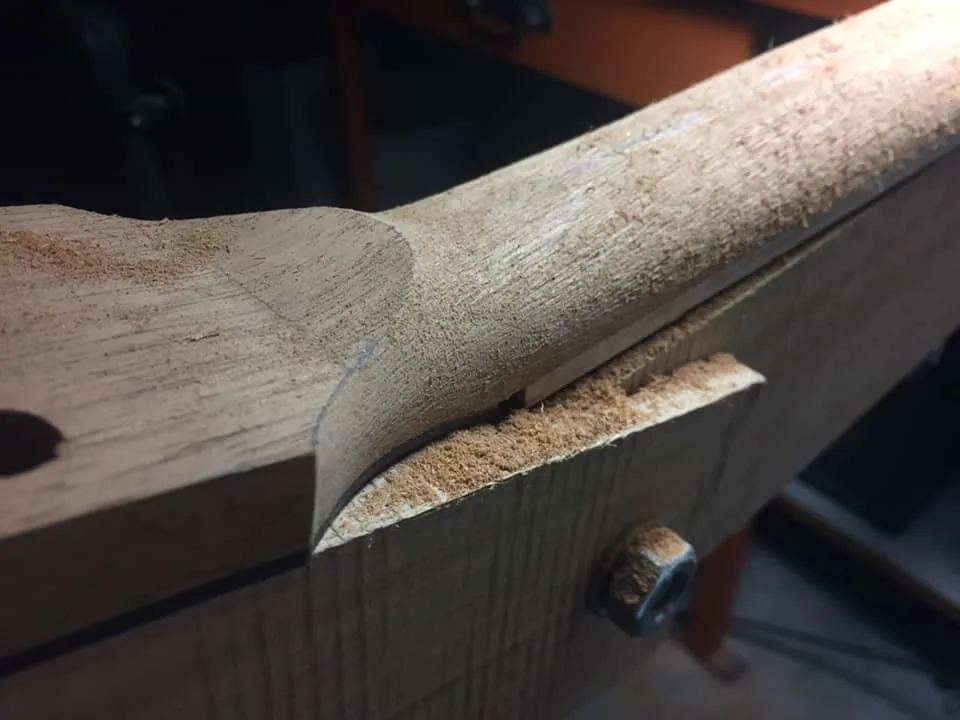
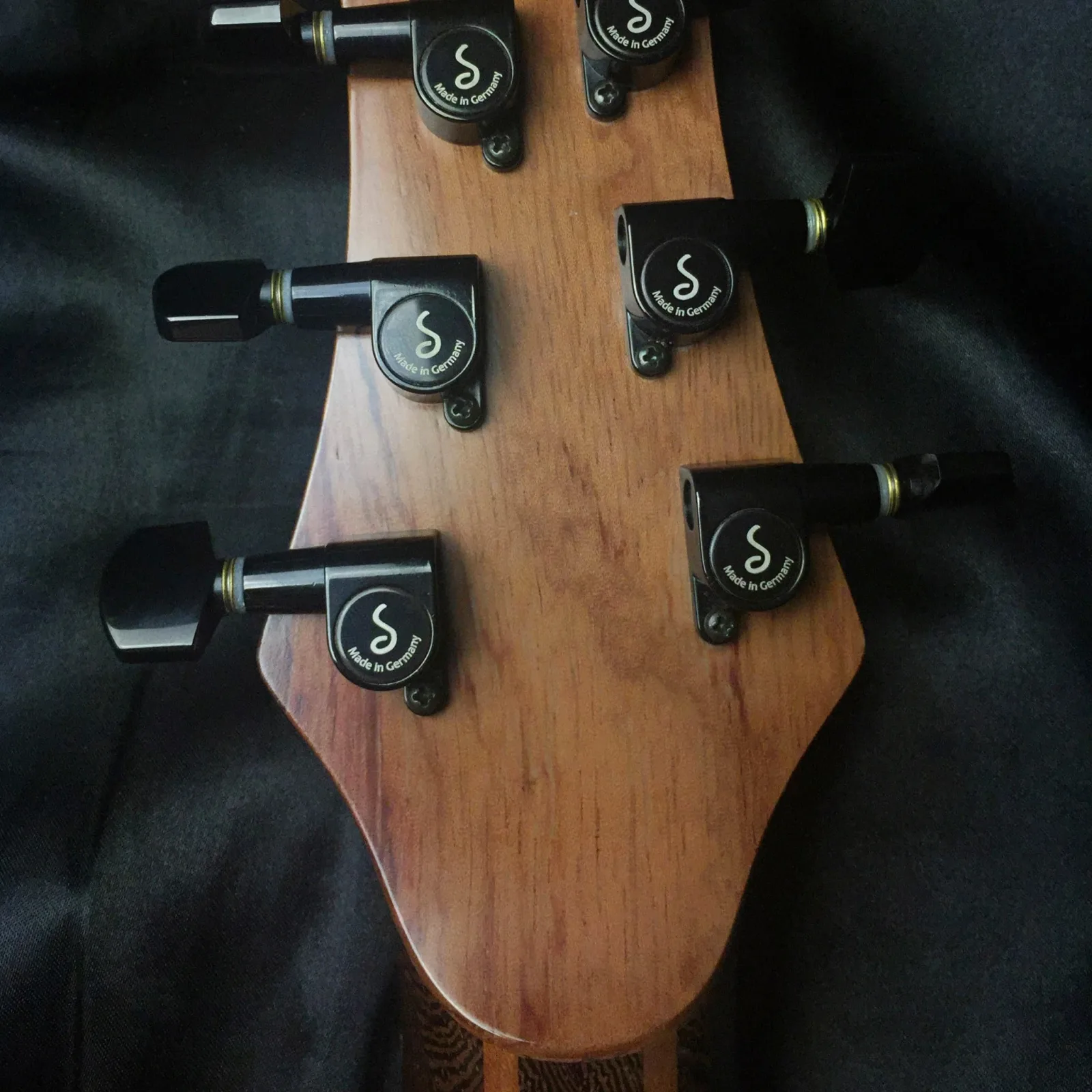
If the headstock piece is thicker when we glue it, the area where the scarf joint shows moves towards the body of the guitar. In other words, if with these two methods the joint area showed behind the headstock, increasing the thickness of the headstock piece to about 25 mm when gluing will make it show past the volute, roughly level with the first fret. It's the type of joint used by makers like Ibanez on some of their models, Jackson, etc...

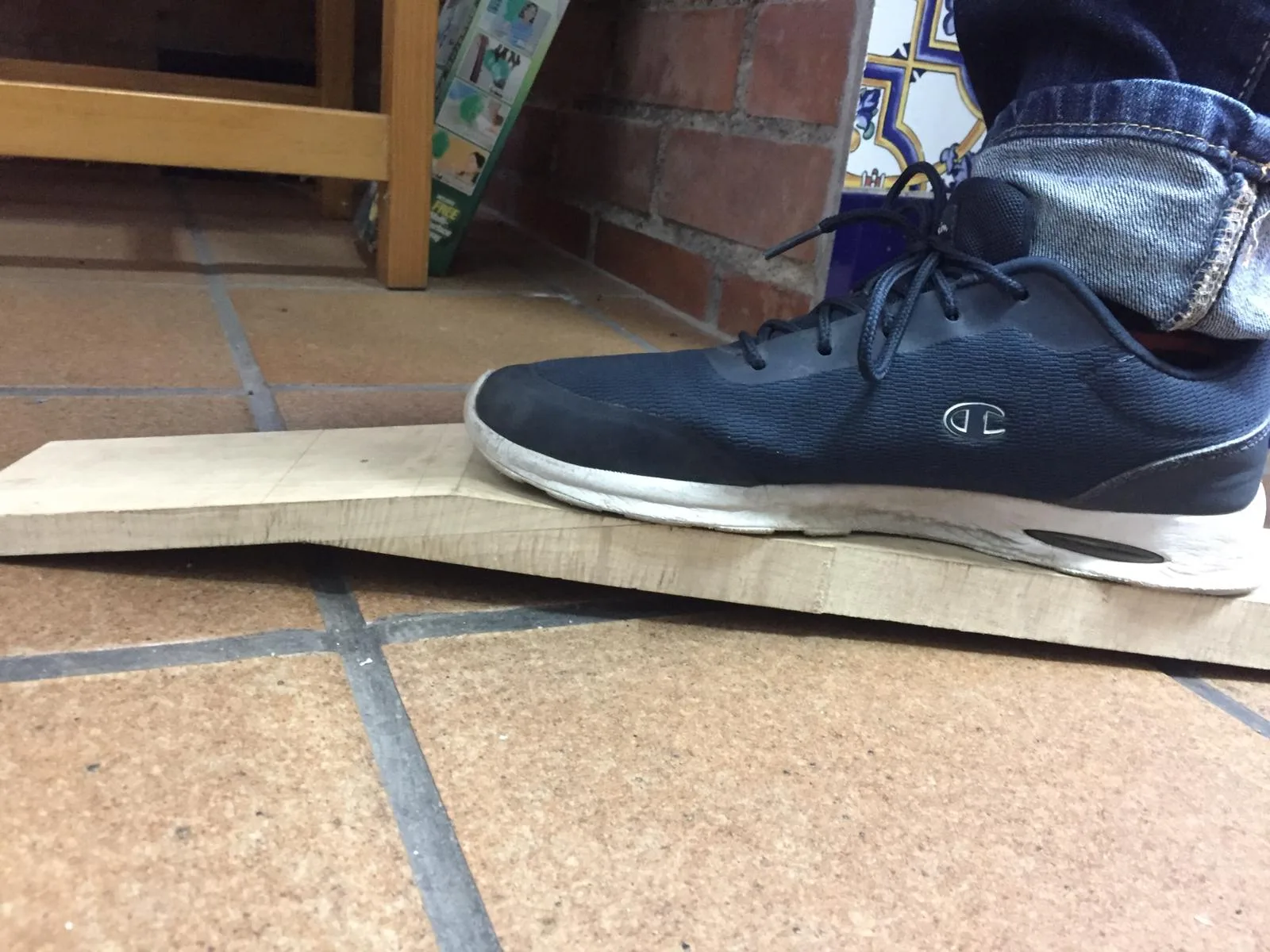
As you can see in the photo, the joint easily holds the weight of an 80 kg person with both feet off the ground.
Advantages:
- Greater strength. Since the wood fibres aren't cut, you get very stable, strong and long-lasting necks.
- More tone and sustain, which increase as we increase the headstock angle, pressing the strings harder against the nut.
- It gives us the chance to combine different woods to create very striking finishes and effects.
- A considerable saving in the amount of wood.
Disadvantages:
- Basically, the main disadvantage of making a scarf joint is time. It involves several extra processes that make the build take longer. That's the main reason why some makers DON'T use it on their guitar production lines.
Sources:
www.gluedtomusic.com, www.stewmac.com, www.projectguitar.com

Comments (0)
No comments yet.